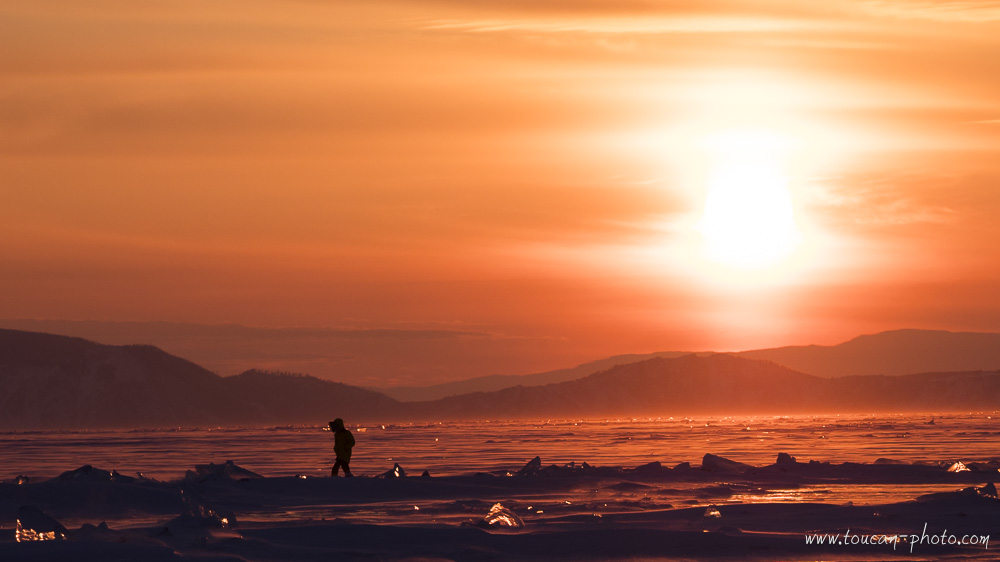
Walking across the frozen Lake Baikal at sunset
As the sun sets over the frozen surface of Lake Baikal, a lone walker crosses the ice several kilometres from the shore, revealing the extraordinary scale of the world’s oldest and deepest lake.
Every winter, when Siberian temperatures fall well below -20 °C, Lake Baikal freezes beneath a layer of ice that can exceed one metre in thickness. For several months, this immense frozen surface becomes a landscape that can be explored on foot, accompanied only by the sounds of cracking ice and the ever-changing light.
In this photograph, the solitary walker appears tiny against the vastness of the frozen lake. Stretching over 636 kilometres and reaching a depth of 1,642 metres, Lake Baikal is the world’s deepest lake, the oldest existing lake, and the largest reservoir of liquid freshwater on Earth.
Baikal’s ice is constantly evolving. Temperature changes, underwater currents and tectonic activity regularly create spectacular cracks, pressure ridges and shifting ice formations, making every winter crossing a unique experience.
I have written a detailed article about this winter journey, explaining how the ice forms, the famous pressure ridges known as toros, and sharing many more photographs from the expedition. You can read it here: Russia: The Baïkal lake during winter, frozen pearl of Siberia.