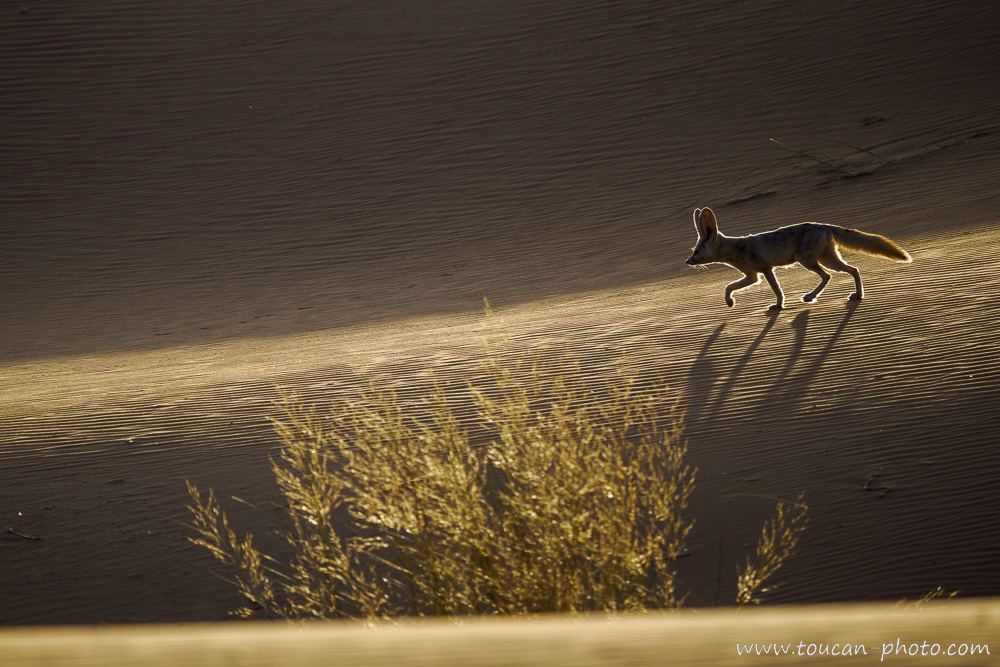
Fennec Fox (Vulpes zerda) crossing a sand dune at sunrise, Morocco
In the first light of day, a Fennec Fox (Vulpes zerda) crosses a dune in the Erg Chebbi desert. After a night spent hunting across the sands, this small fox is most likely returning to its burrow before the desert heat begins to rise.
The fennec fox is perfectly adapted to life in the deserts of North Africa. Primarily nocturnal, it waits for the coolness of the night before leaving its burrow to roam the dunes in search of food.
Its diet is remarkably varied. It feeds on insects, rodents, lizards, small birds and their eggs, while also eating fruits, roots and other plant material whenever available. This opportunistic feeding strategy allows it to survive in an environment where food resources are scarce and widely scattered.
At sunrise, the low-angle light reveals every ripple in the sand. Long shadows emphasize the shape of the dunes while the silhouette of the fennec fox stands out for a few fleeting moments before disappearing from view. As the temperature rises, the desert gradually returns to its apparent stillness.