Young fennec fox in the Moroccan desert

Young fennec fox in the Moroccan desert

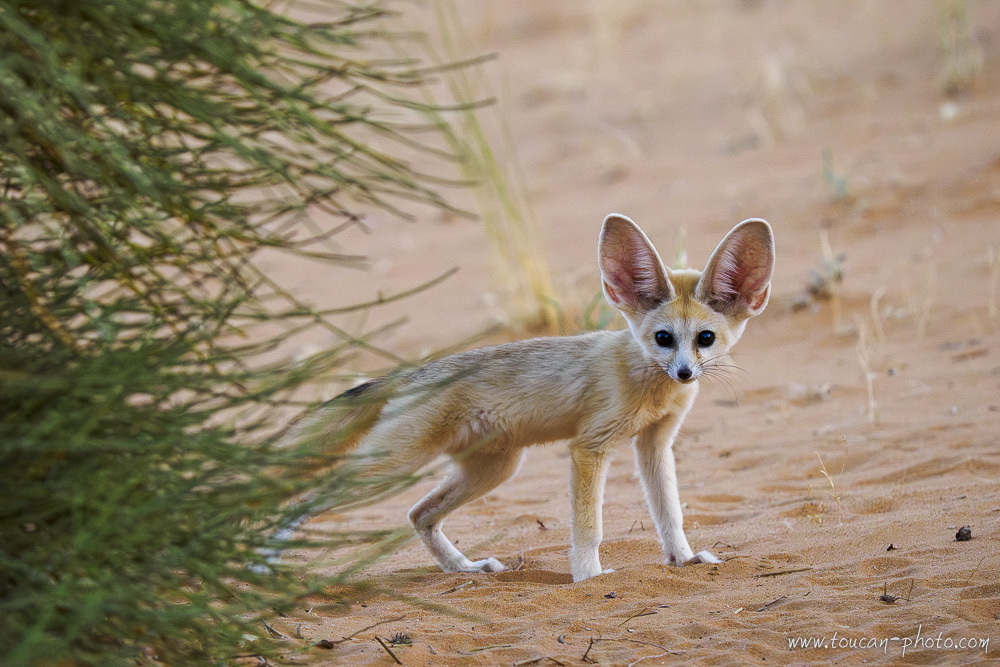
A young fennec fox pauses to observe its surroundings in the heart of the desert.

The enormous ears of the fennec fox are impossible to overlook. Far more than a distinctive feature, they are an extraordinary adaptation to desert life, allowing the animal both to dissipate heat and to detect prey hidden beneath the sand.

Measuring up to 15 centimetres in height on an animal weighing little more than two kilograms, the fennec’s ears are proportionally the largest of any wild canid. Their thin skin reveals an extensive network of blood vessels. As blood circulates through these capillaries, heat is released into the surrounding air, providing an efficient natural cooling system for survival in the extreme conditions of the Sahara.

The ears also function as highly sensitive acoustic antennas. Their mobility enables the fennec to pinpoint the movements of rodents, reptiles and even insects beneath the sand. This remarkable hearing compensates for the limited visibility often encountered among dunes and desert vegetation.
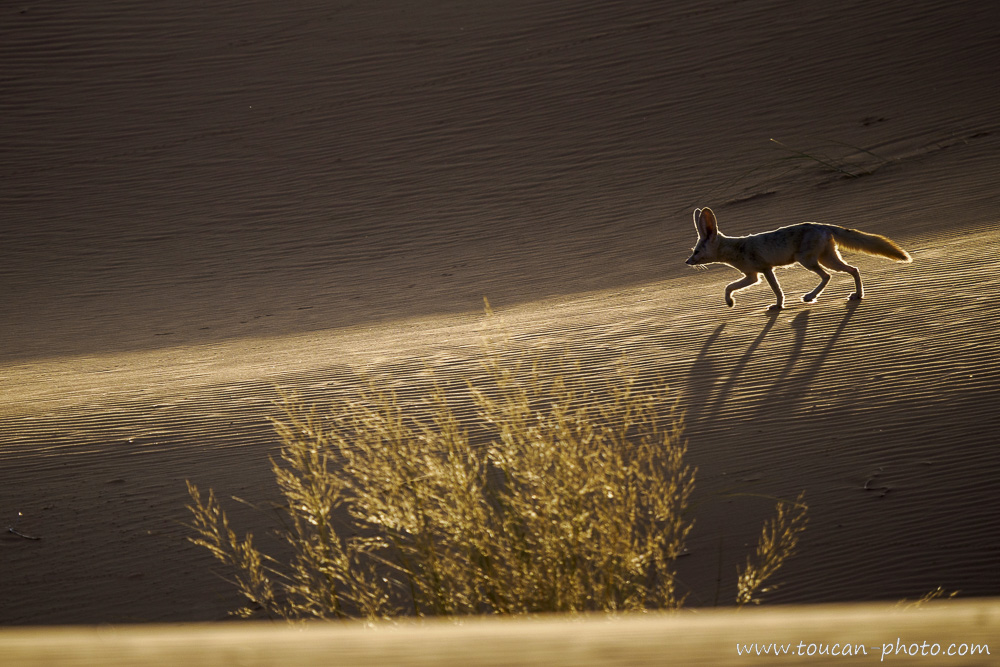

Fennec Fox (Vulpes zerda) crossing a sand dune at sunrise, Morocco

Fennec Fox (Vulpes zerda) crossing a sand dune at sunrise, Morocco

Fennec Fox (Vulpes zerda) crossing a sand dune at sunrise, Morocco

In the first light of day, a Fennec Fox (Vulpes zerda) crosses a dune in the Erg Chebbi desert. After a night spent hunting across the sands, this small fox is most likely returning to its burrow before the desert heat begins to rise.

The fennec fox is perfectly adapted to life in the deserts of North Africa. Primarily nocturnal, it waits for the coolness of the night before leaving its burrow to roam the dunes in search of food.

Its diet is remarkably varied. It feeds on insects, rodents, lizards, small birds and their eggs, while also eating fruits, roots and other plant material whenever available. This opportunistic feeding strategy allows it to survive in an environment where food resources are scarce and widely scattered.

At sunrise, the low-angle light reveals every ripple in the sand. Long shadows emphasize the shape of the dunes while the silhouette of the fennec fox stands out for a few fleeting moments before disappearing from view. As the temperature rises, the desert gradually returns to its apparent stillness.

?>