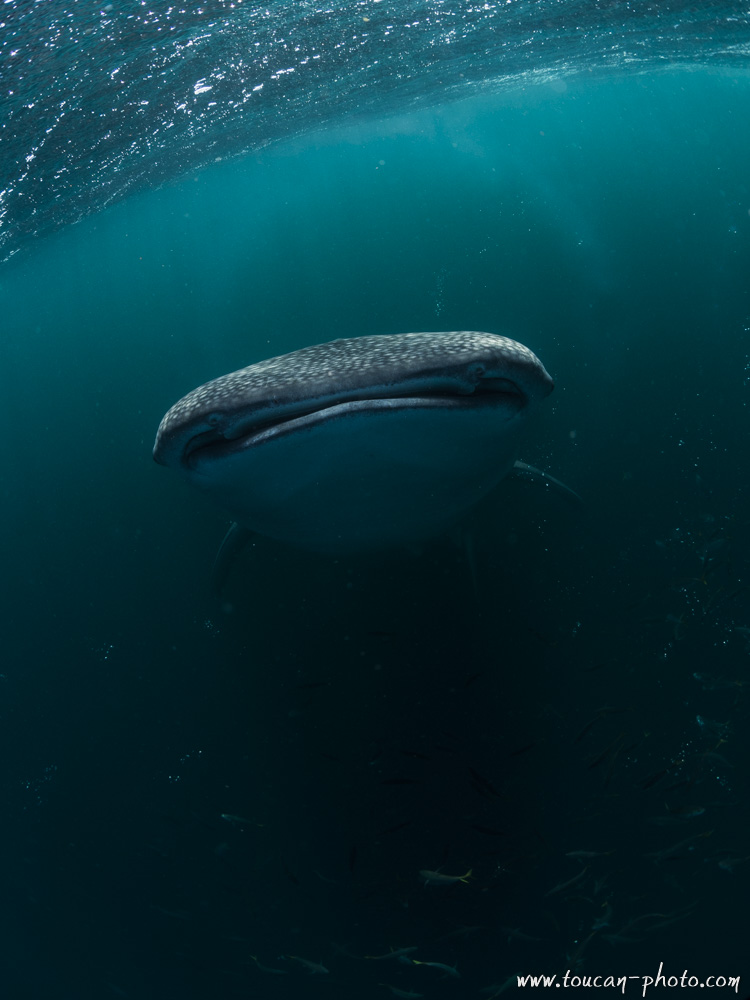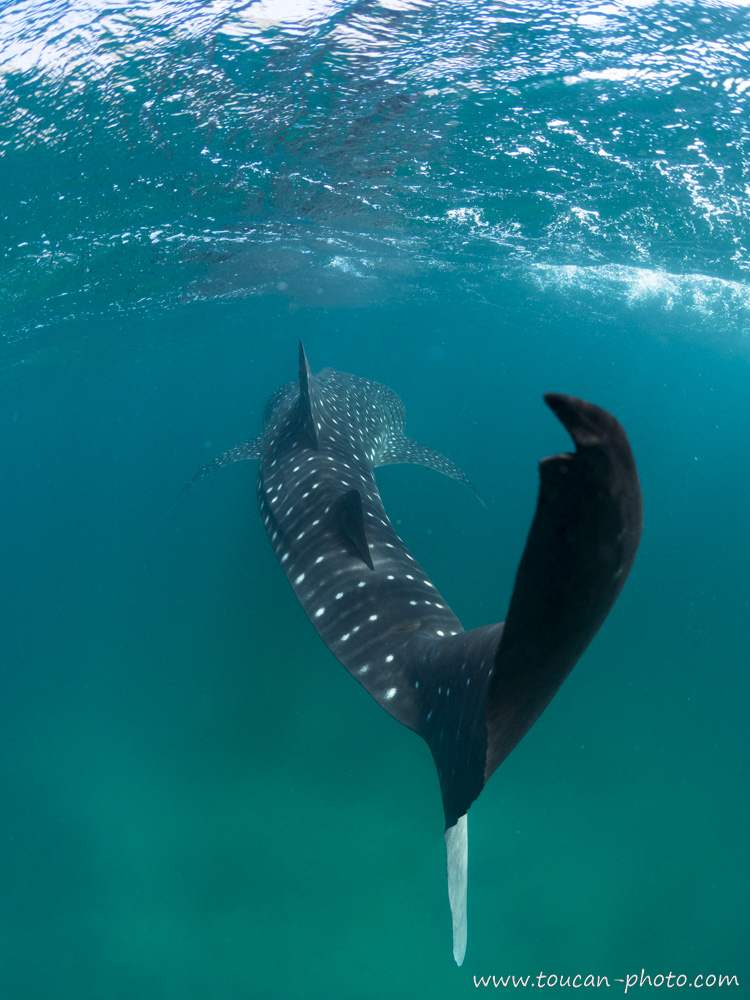
Whale shark (Rhincodon typus) in the waters of the Gulf of Tadjoura

Whale shark (Rhincodon typus) in the waters of the Gulf of Tadjoura - Djibouti

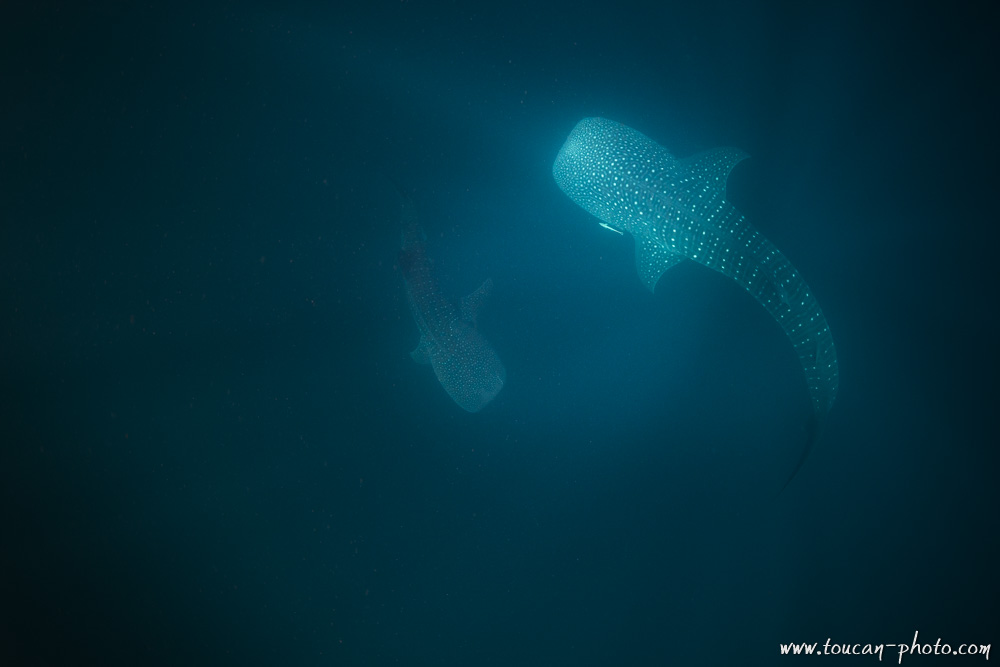
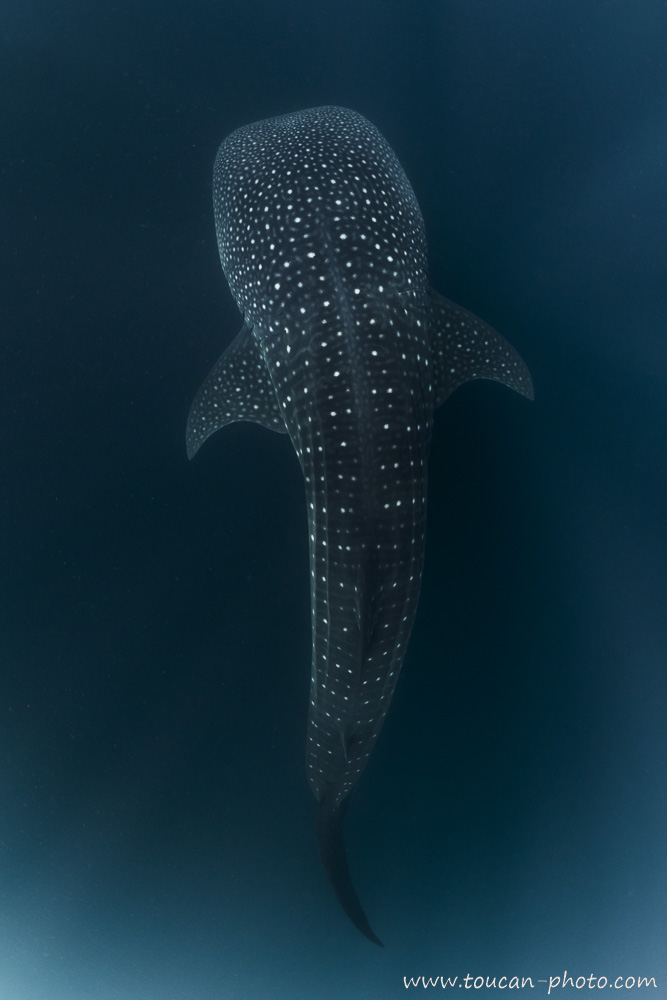
Silhouette of a whale shark (Rhincodon typus) in the Gulf of Tadjoura – Djibouti

Emerging from the depths of the Gulf of Tadjoura, the whale shark reveals its massive silhouette, adorned with a constellation of white spots unique to each individual.

Despite its impressive size, this sea giant is a harmless filter feeder that lives almost exclusively on plankton. In the waters of Djibouti, encountering the world’s largest fish is a moment of suspended grace. Its thick, starry skin acts like a digital fingerprint, allowing researchers to identify and track individuals across the oceans.

This top-down view highlights the whale shark’s hydrodynamic elegance. Moving with majestic slowness, it reminds us of the vulnerability of giants in a changing environment. Protecting its feeding grounds, as seen here in the Horn of Africa, is vital for the survival of this iconic species, currently listed as endangered.
Whale Shark (Rhincodon typus) – Djibouti

Whale Shark (Rhincodon typus) - Djibouti

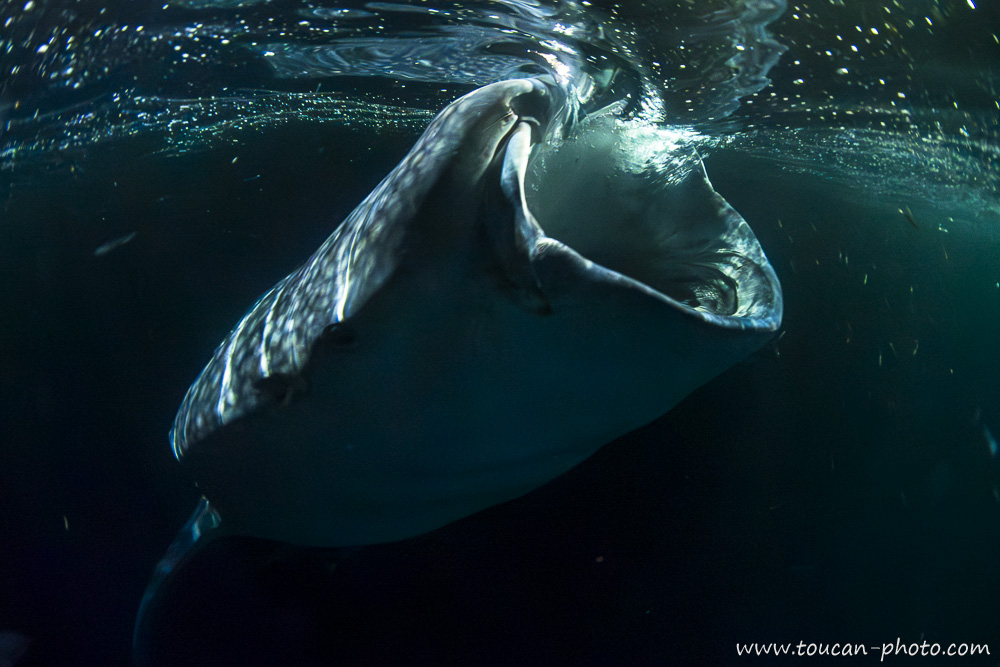
Whale Shark (Rhincodon typus) – Djibouti.

In the deep, dark waters of the Gulf of Tadjoura, off the coast of Djibouti, a majestic silhouette emerges: the whale shark, the world’s largest fish.

Despite its 12 to 18 meters in length, this giant is completely harmless to humans. Its existence is governed by a simple yet formidable feeding strategy: it swims slowly with its mouth agape, filtering up to 6,000 liters of water every hour to capture plankton and tiny suspended prey. Each day, it can ingest several dozen kilograms of food. The nutrient-rich waters of Djibouti, particularly between October and February, become a crucial gathering point for these behemoths, offering observers the unforgettable sight of a gentle giant gliding through the vast blue.

?>