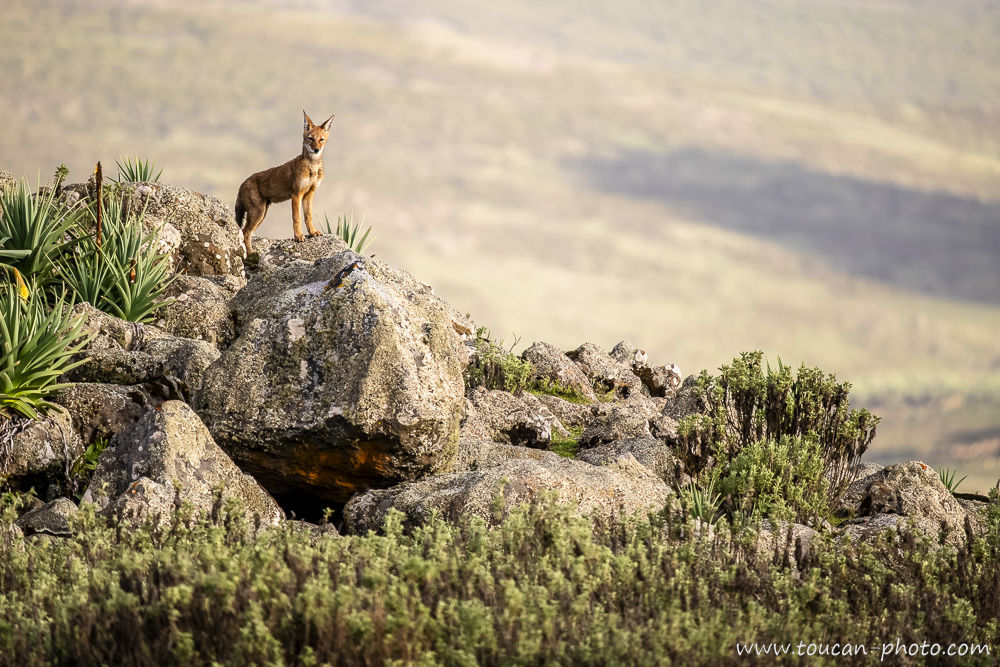
Young Abyssinian wolf scanning the pack’s territory

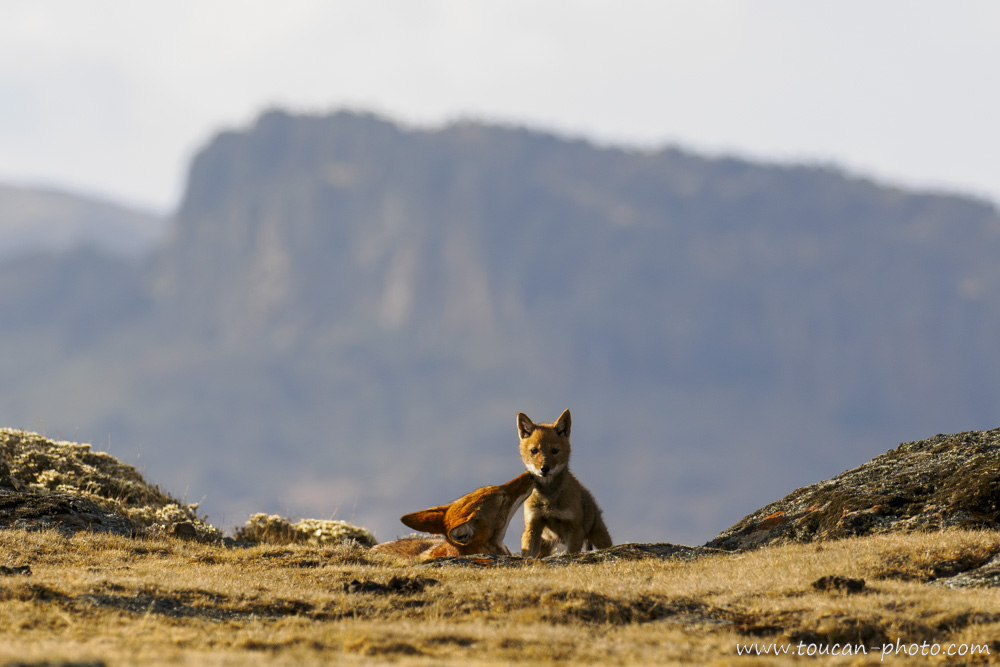
Young Abyssinian wolf scanning the pack's territory - Ethiopia

Young Abyssinian wolf scanning the pack’s territory – Ethiopia

Perched on a rocky outcrop, this young wolf is beginning to adopt the postures of an adult. Still inexperienced, he gazes across the high plateaus, learning to read the landscape and spot the movements around him.

For the Abyssinian wolf, vigilance is an essential part of growing up. Every individual plays a part in defending the family home range—a vital space closely linked to the abundance of rodents the pack relies on. By gradually taking his place on the high points, the juvenile learns this fundamental role, a quiet but decisive step toward adulthood.

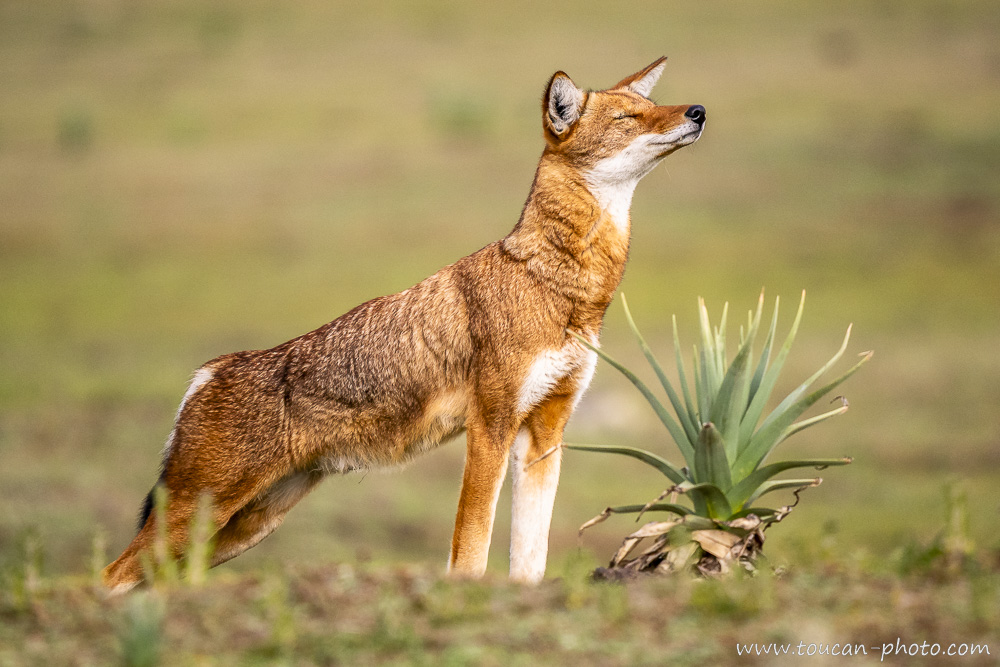
Ethiopian Wolf, Nose to the Wind

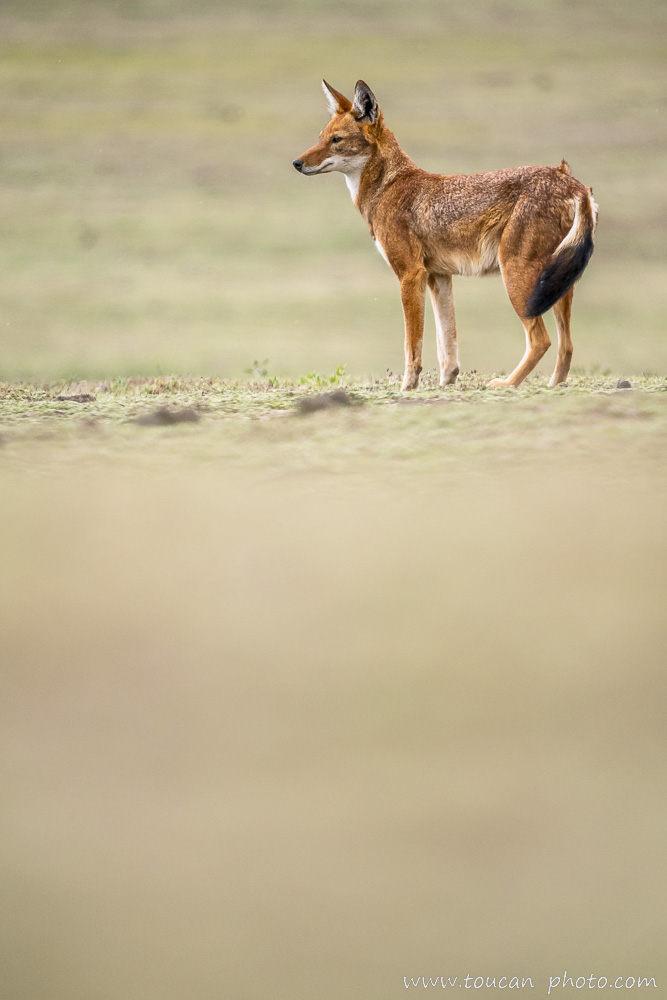
Ethiopian wolf (Canis simensis) catching a scent in the Bale Mountains, Ethiopia

Ethiopian wolf (Canis simensis) catching a scent – Bale Mountains, Ethiopia

The Ethiopian wolf (Canis simensis), also known as the Simien jackal, is the world’s rarest wild canid, endemic to the highlands of Ethiopia. A rodent-hunting specialist, it moves gracefully through alpine meadows.

In this image, an individual lifts its head into the morning breeze—perhaps tracking prey or simply attuned to the subtle cues of its environment. With fewer than 500 individuals remaining in the wild, every observation is a profound privilege. Its russet coat, slender muzzle, and poised silhouette make it a quiet but powerful symbol of Ethiopia’s unique natural heritage.

The Ethiopian Wolf, Sentinel of the Abyssinian Highlands

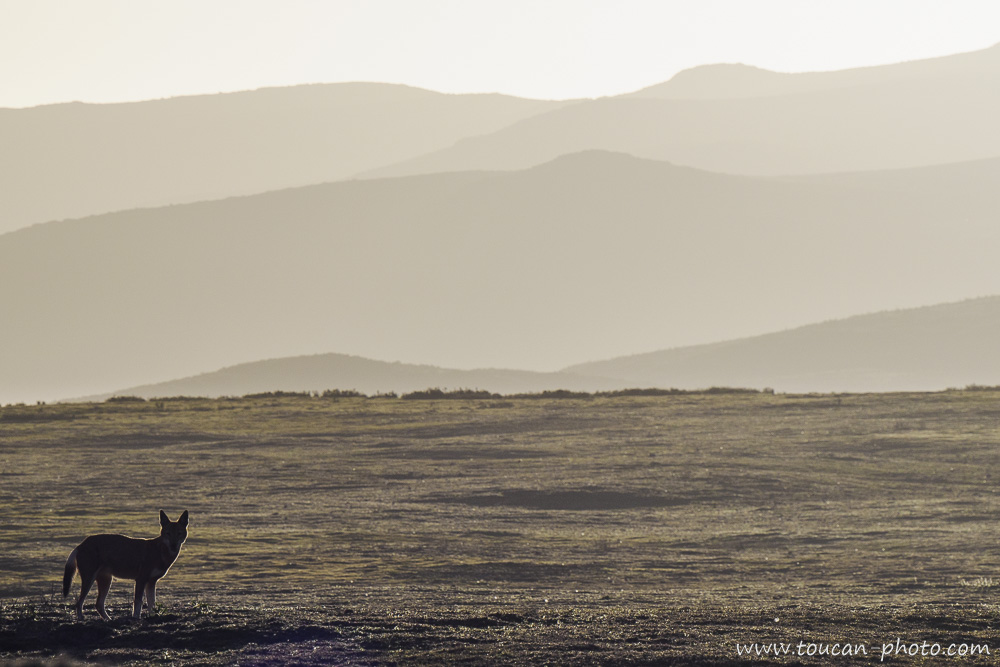
Ethiopian Wolf (Canis simensis) standing in the tall grass, Ethiopia

A silhouette that stands still, watchful, in the silence of the high plateaus.

At the edge of dawn, across the vast expanses of the Ethiopian highlands, the Ethiopian Wolf (Canis simensis) embodies elegance and discretion.

Its silent steps lead it through the high-altitude pastures, where it scans every movement in the grass, stalking its favorite prey—primarily endemic rodents. This image reveals the profound harmony between the animal and its environment: soft lines, diffused light, and a suspended silence. As a critically endangered species, this solitary predator of the Simien and Bale mountains is a symbol of the raw and fragile beauty of Abyssinia.

The Abyssinian Wolf, Watcher of the Ethiopian Highlands

Ethiopian Wolf (Canis simensis) on the Ethiopian highlands

The Ethiopian Wolf, guardian of the Abyssinian highlands.

Standing alone on the Abyssinian highlands, the Ethiopian wolf scans the horizon, a fragile witness to a unique high-altitude ecosystem.

This slender predator, perfectly adapted to the vast alpine spaces, is now one of the most endangered mammals on the African continent. Suffering from habitat fragmentation and diseases transmitted by domestic dogs, only about 500 individuals are thought to remain in the wild. Its reddish silhouette against the moorlands embodies the wild and precarious beauty of the Bale and Simien Mountains, where every individual is vital to the survival of this endemic species.

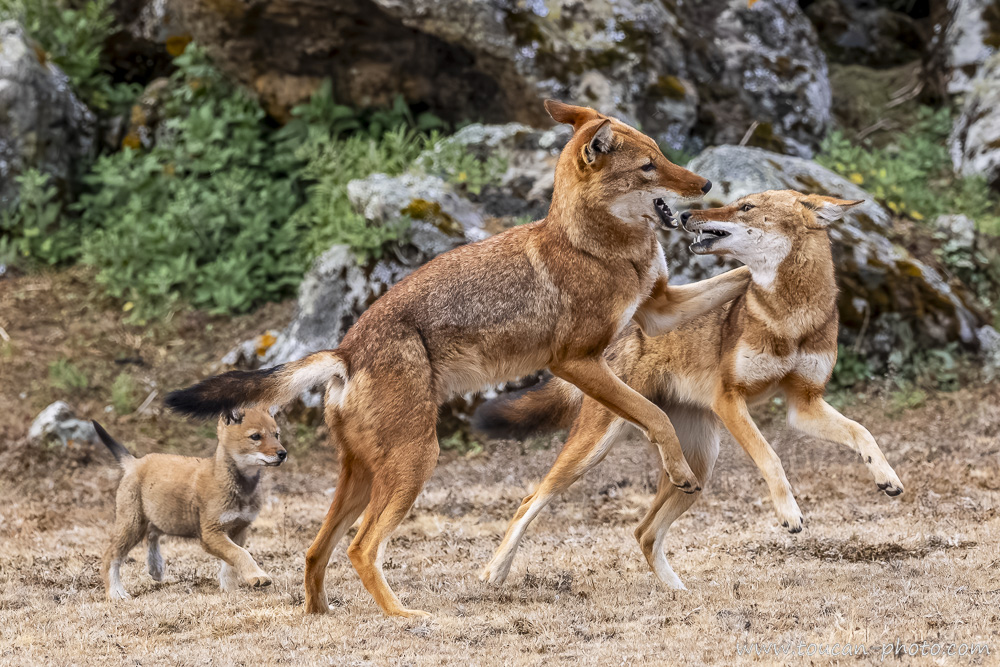
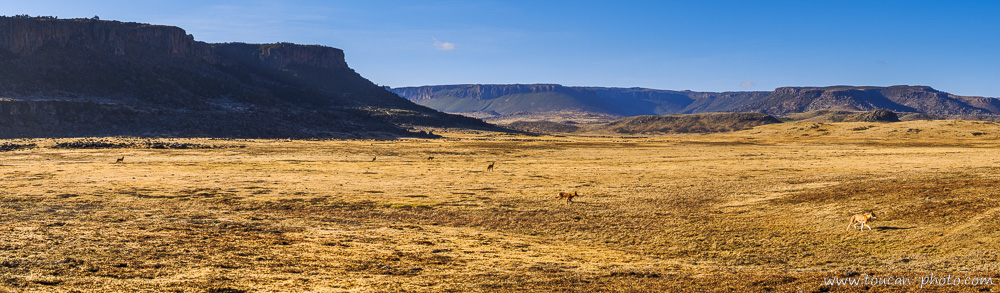
Pack of Abyssinian Wolves on Patrol in the Bale Mountains (Canis simensis), Ethiopia


Pack of Abyssinian Wolves on Patrol in the Bale Mountains (Canis simensis), Ethiopia

Pack of Abyssinian Wolves on Patrol in the Bale Mountains (Canis simensis), Ethiopia


👁️ Click to see the 360° virtual tour

Abyssinian wolves feed almost exclusively on rodents. Their habitat is limited to the high plateaus and mountains of Ethiopia, where rodent density is particularly high. In the Bale Mountains, where this photo was taken, up to 6,000 rodents can be found per square kilometer.

This diet has shaped their behavior: unlike other wolf species that hunt large prey in packs, Abyssinian wolves hunt alone.
Yet each morning, before spreading out to search for food, clan members carry out a joint patrol across their territory.

On this particular day, six wolves from the Meguiti clan were roaming their land, ensuring no intruders had trespassed.
?>