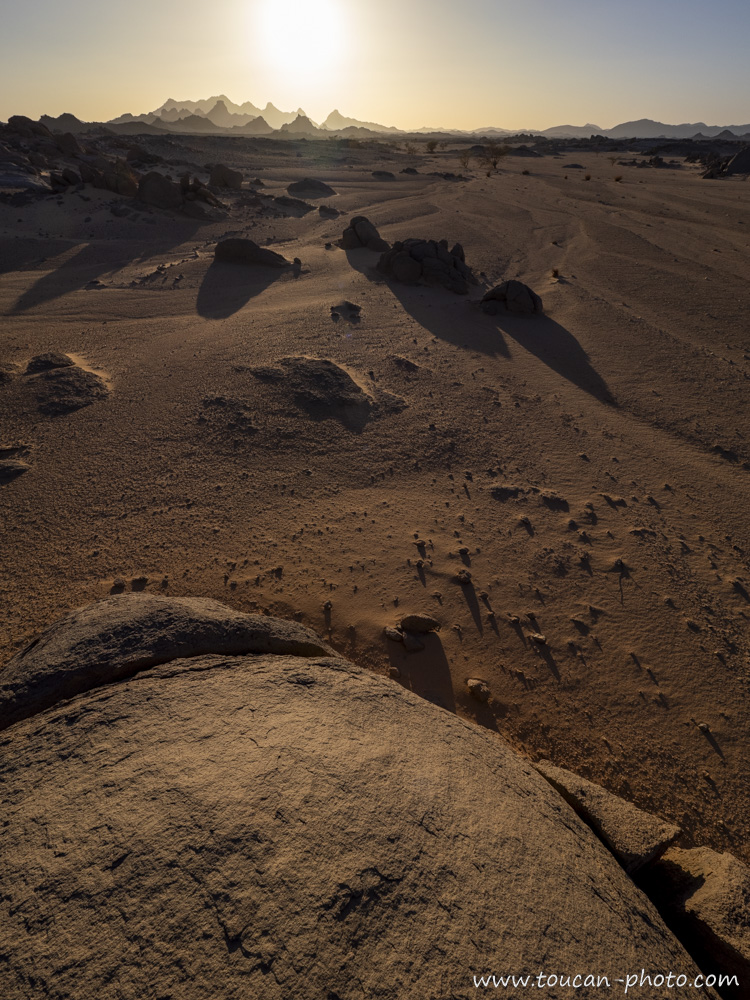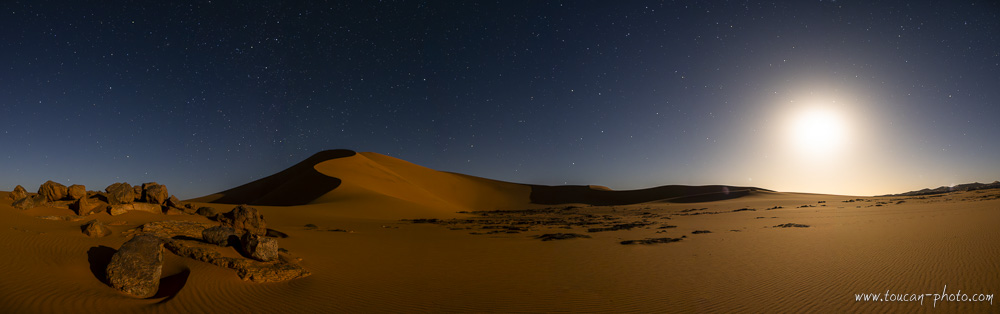
A full moon night in the Tassili n’Immidir, Sahara Desert, Algeria


A full moon night in the Tassili n'Immidir, Sahara Desert, Algeria

A full moon night in the Tassili n’Immidir, Sahara Desert, Algeria


👁️ Explore the panorama

Close to midnight, the Sahara reveals a landscape that few travellers ever experience: a vast, silent desert illuminated only by the light of the full Moon.

This panoramic photograph was taken in the Tassili n’Immidir, a vast sandstone plateau in the heart of the Algerian Sahara. Far from any artificial light, the full Moon alone is enough to reveal the dunes, rocky outcrops and delicate ripples sculpted into the sand.

Although the full Moon is nearly 400,000 times less luminous than the Sun, it still provides enough light for our eyes to adapt gradually to the darkness and perceive the landscape with surprising clarity. Shadows become visible, contrasts emerge, and the desert takes on an almost dreamlike atmosphere.

This image is a panoramic composition created by stitching together multiple photographs, capturing the unique atmosphere of this Saharan night. If you would like to explore the scene in high resolution and immerse yourself in the landscape, simply click on the image or the link above to open the panorama.
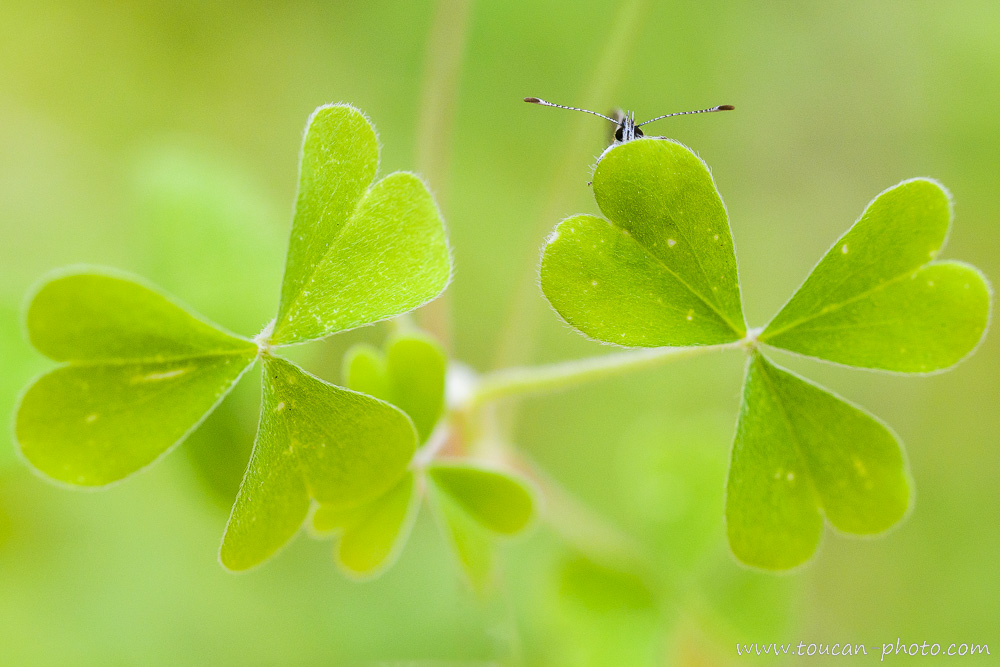
Grass Jewel butterfly (Freyeria trochylus) playing hide and seek behind an Oxalis leaf

Grass Jewel (Freyeria trochylus) behind an Oxalis leaf

Grass Jewel (Freyeria trochylus) playing Hide-and-Seek behind an Oxalis leaf.

A tiny and poetic encounter where wildlife blends into flora with rare delicacy.

The Grass Jewel is considered one of the smallest butterflies on the planet, with a wingspan rarely exceeding 18 mm. This photograph perfectly illustrates its natural discretion as it shelters behind the characteristic lobes of an Oxalis leaf.

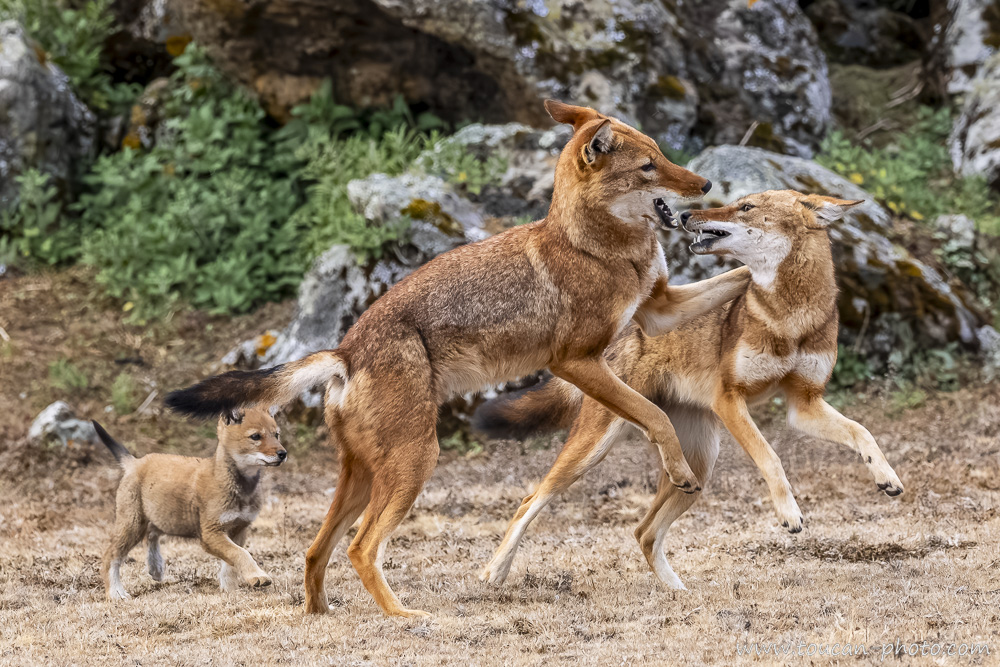
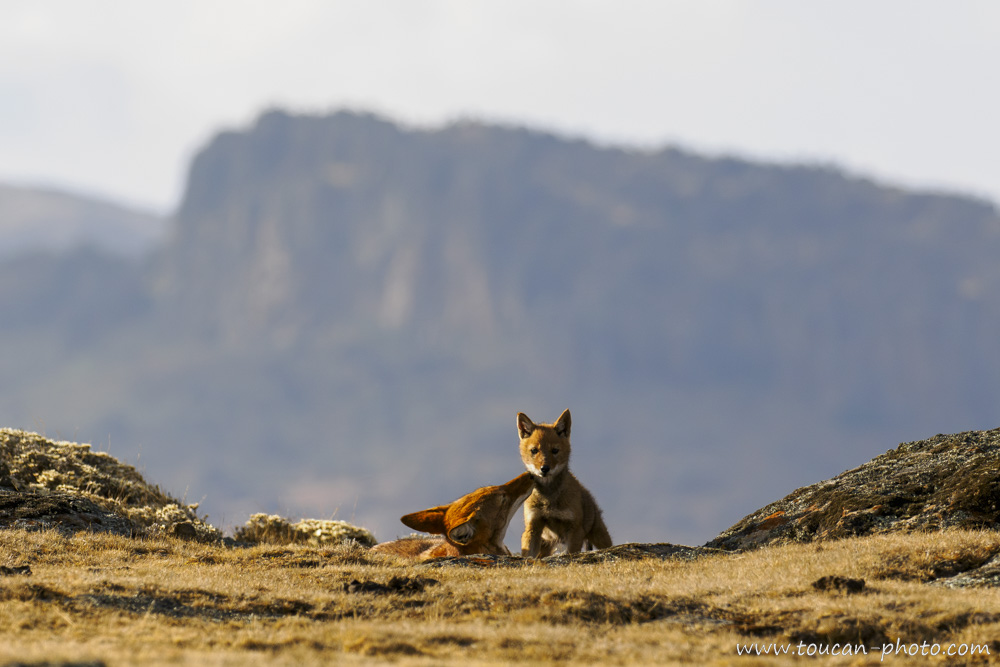
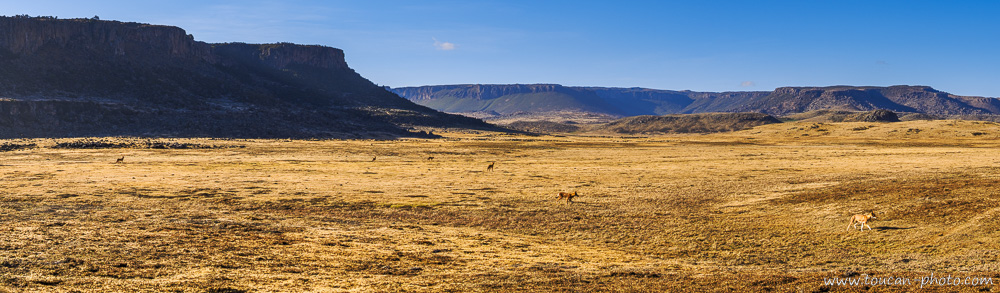
Pack of Abyssinian Wolves on Patrol in the Bale Mountains (Canis simensis), Ethiopia


Pack of Abyssinian Wolves on Patrol in the Bale Mountains (Canis simensis), Ethiopia

Pack of Abyssinian Wolves on Patrol in the Bale Mountains (Canis simensis), Ethiopia


👁️ Click to see the 360° virtual tour

Abyssinian wolves feed almost exclusively on rodents. Their habitat is limited to the high plateaus and mountains of Ethiopia, where rodent density is particularly high. In the Bale Mountains, where this photo was taken, up to 6,000 rodents can be found per square kilometer.

This diet has shaped their behavior: unlike other wolf species that hunt large prey in packs, Abyssinian wolves hunt alone.
Yet each morning, before spreading out to search for food, clan members carry out a joint patrol across their territory.

On this particular day, six wolves from the Meguiti clan were roaming their land, ensuring no intruders had trespassed.

?>