Today it is particularly hot. The air is dry and it hasn’t rained for months, yet you are crossing the vast desert. Your goal is the mountain on the far side. There lives Kon, the servant god who carries messages from the Earth to the Heavens. In exchange for the offering you bring, he might deliver your plea: a desperate request for the celestial gods to bring rain once more to your village’s crops.
To find your way to the mountain, you follow strange paths etched into the ground. These paths have never been seen in their entirety by human eyes. To do so, one would need to fly like a condor—but that gift, like these drawings, is reserved for celestial birds and the gods.
The Geoglyphs
The Nazca civilization (200 to 600 AD) left behind a unique archaeological footprint: the Nazca geoglyphs. These were etched over 1,500 years ago onto an arid plateau on Peru’s west coast and have been part of the UNESCO World Heritage list since 1994.
These drawings are staggering in scale: the longest line stretches 11 km, while animal figures can reach several hundred meters. More than 350 figures have been identified across a 500 km² area. The Nazca people, who worshipped deities from the mineral and animal worlds, represented their sacred bestiary through these geoglyphs.
Protected from wind and receiving less than 30 mm of rain per year, the plateau has preserved these works through the ages. Despite some modern damage—such as the “Lizard” being cut in half during the construction of the Pan-American Highway—they remain a testament to Nazca artistic genius.
Location of the Nazca geoglyphs
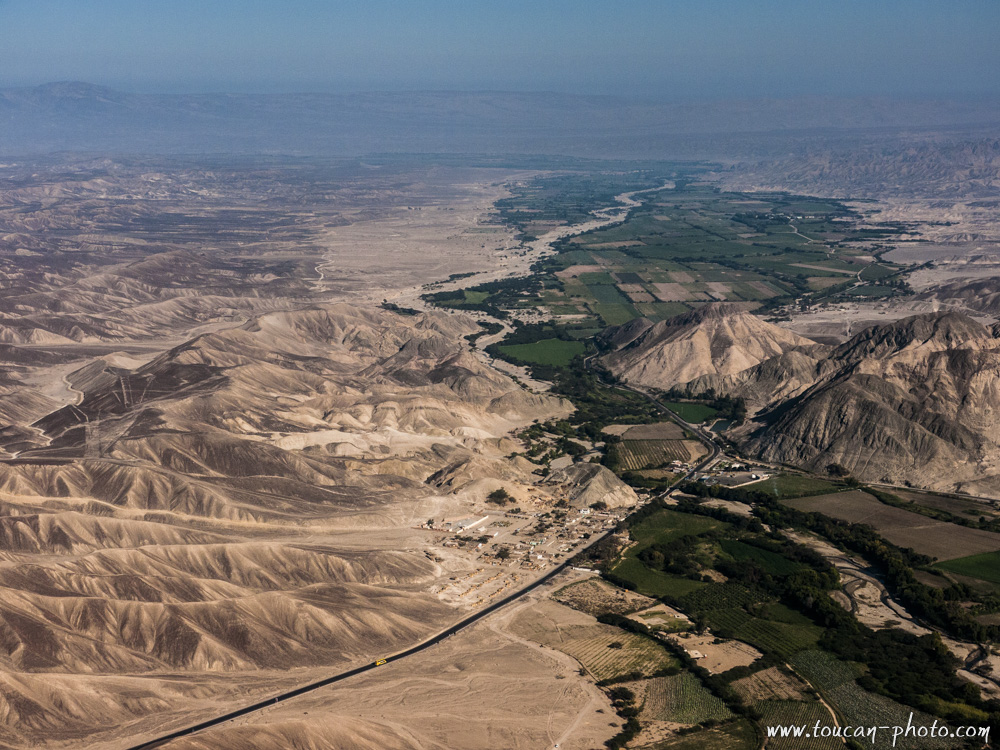
A farming strip surrounded by the Nazca desert
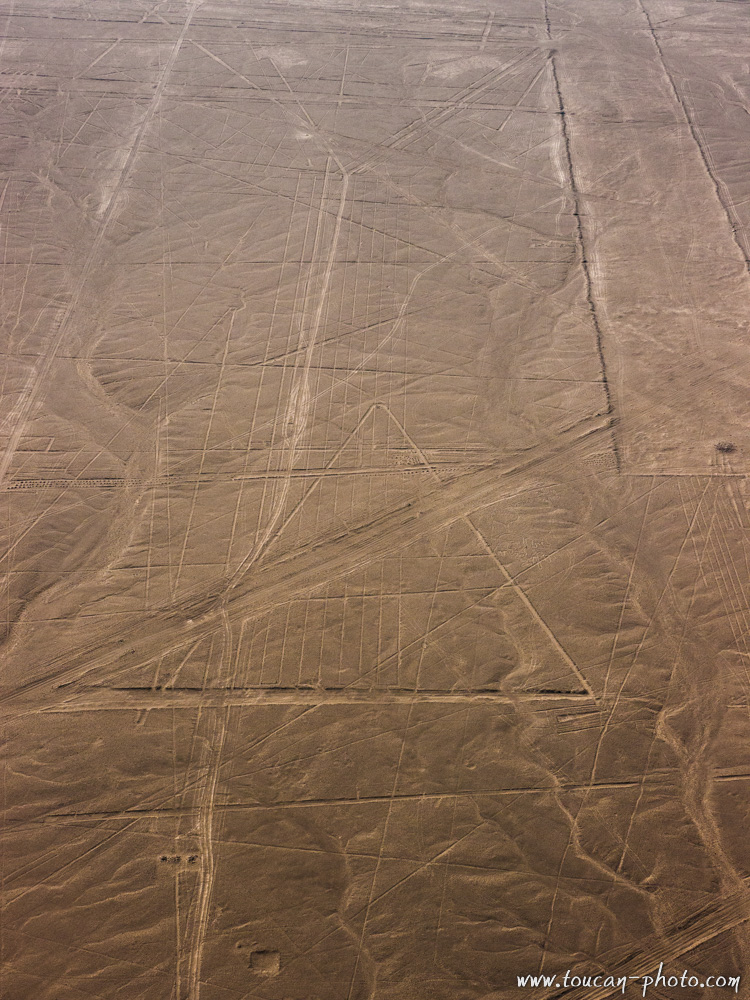
Geometric forms: triangles, lines, and stripes
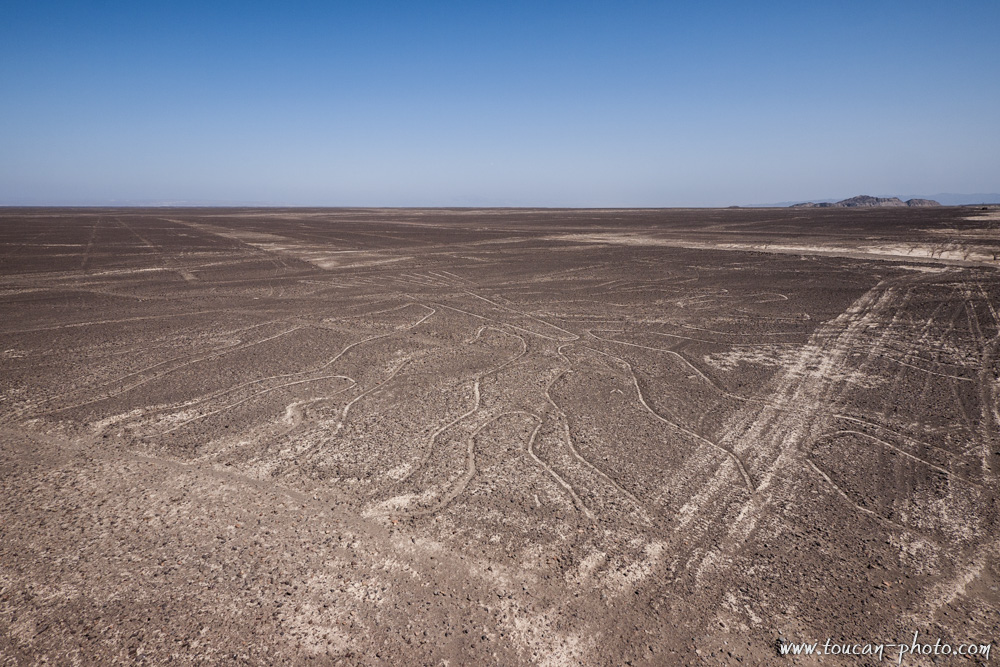
From the 13-meter watchtower, the figure of “The Tree” does not yet reveal its full shape
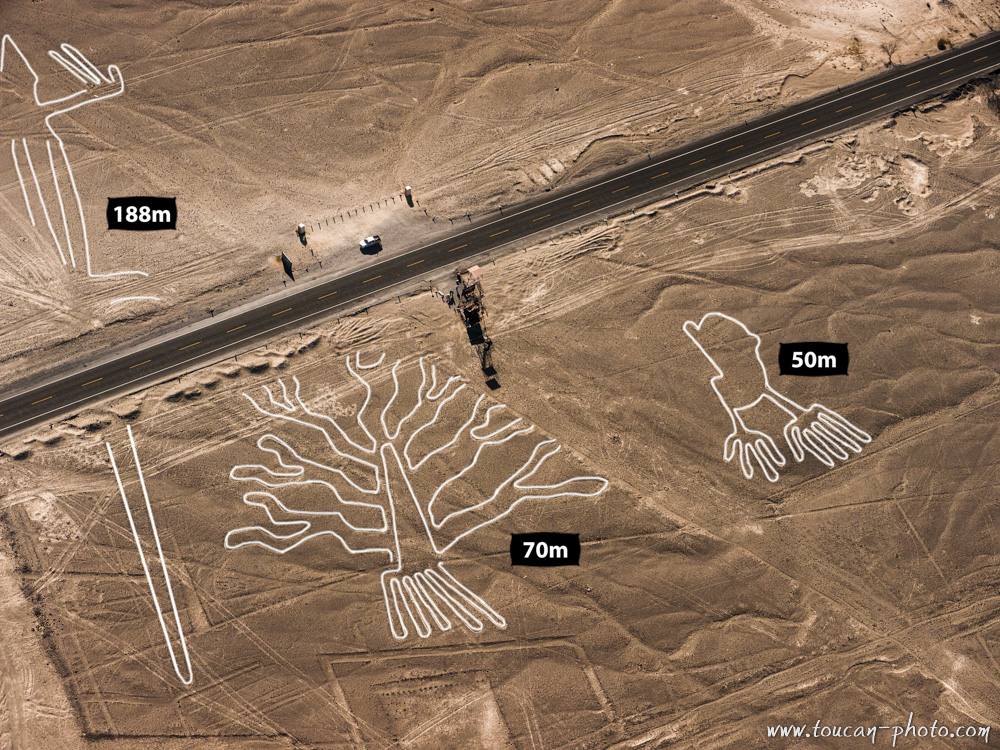
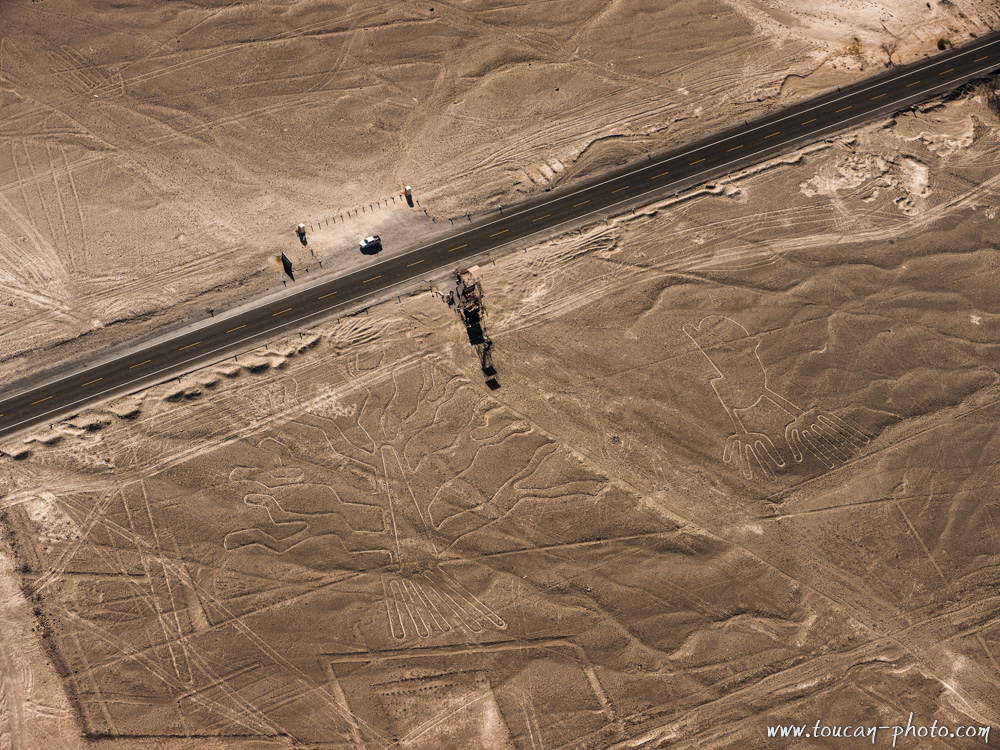
Aerial views are necessary to recognize “The Tree,” “The Frog,” and “The Lizard” (cut by the road).
Construction
The Nazca desert floor consists of a thin layer of dark, ferrous stones covering a lighter gypsum subsoil. To “draw,” the Nazca removed the dark surface stones to reveal the light ground beneath. These stones were either piled along the edges to increase contrast or removed entirely. The precision of these geoglyphs proves a sophisticated understanding of arithmetic and design. Without the ability to fly, they successfully created perfect geometric shapes and perfectly straight lines stretching for kilometers using ropes and wooden stakes, or by scaling up smaller models designed on grids.
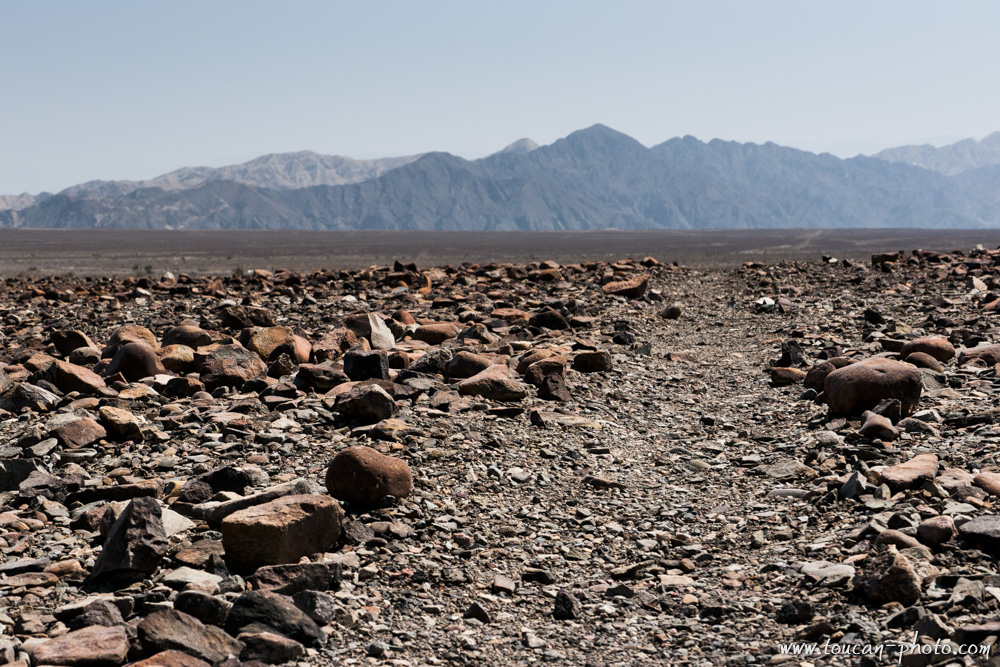
Oxidized stones were moved aside to reveal the clearer ground beneath
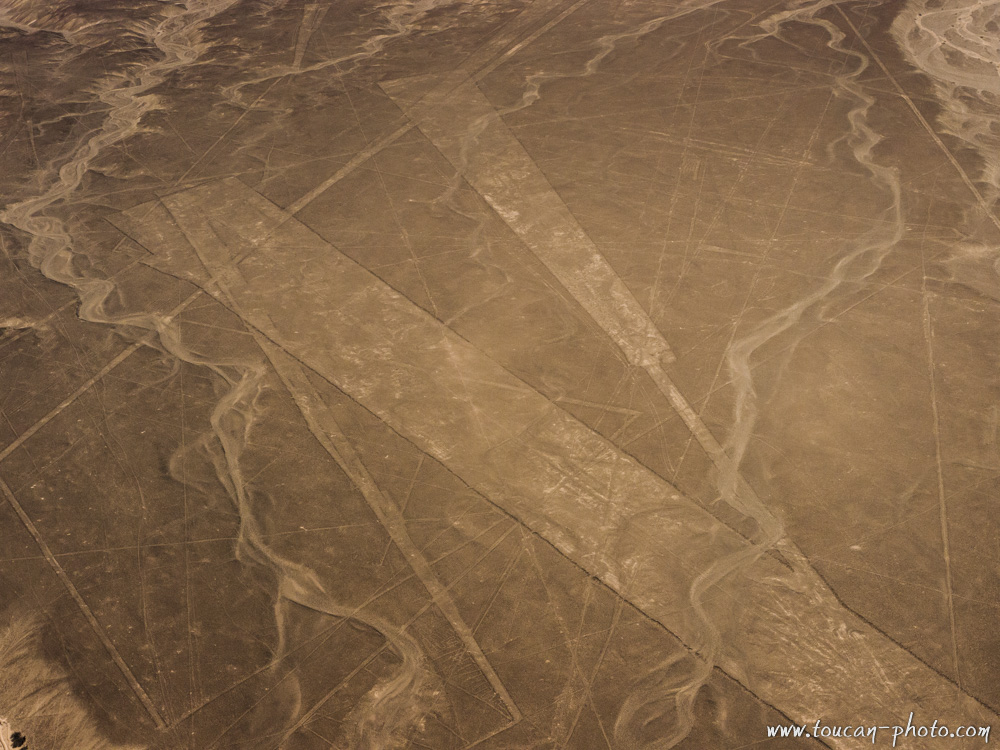
Perfect geometric forms
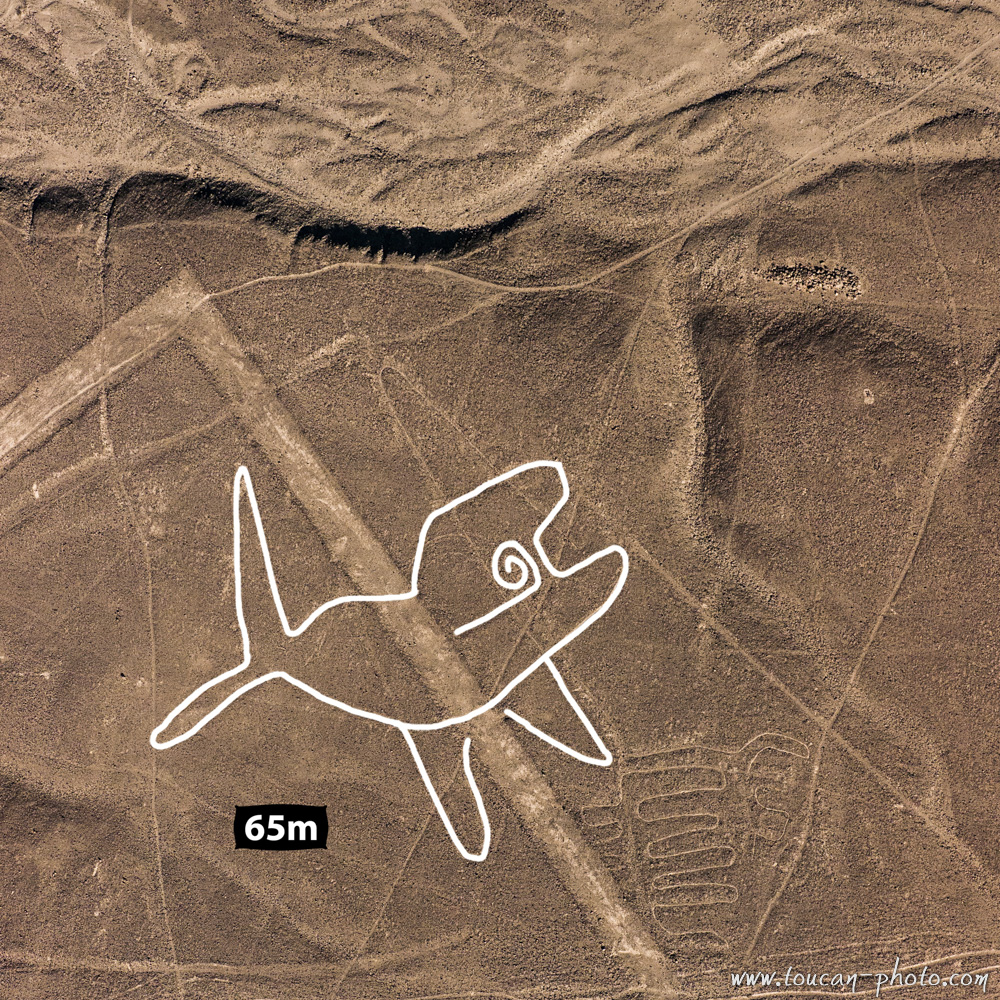
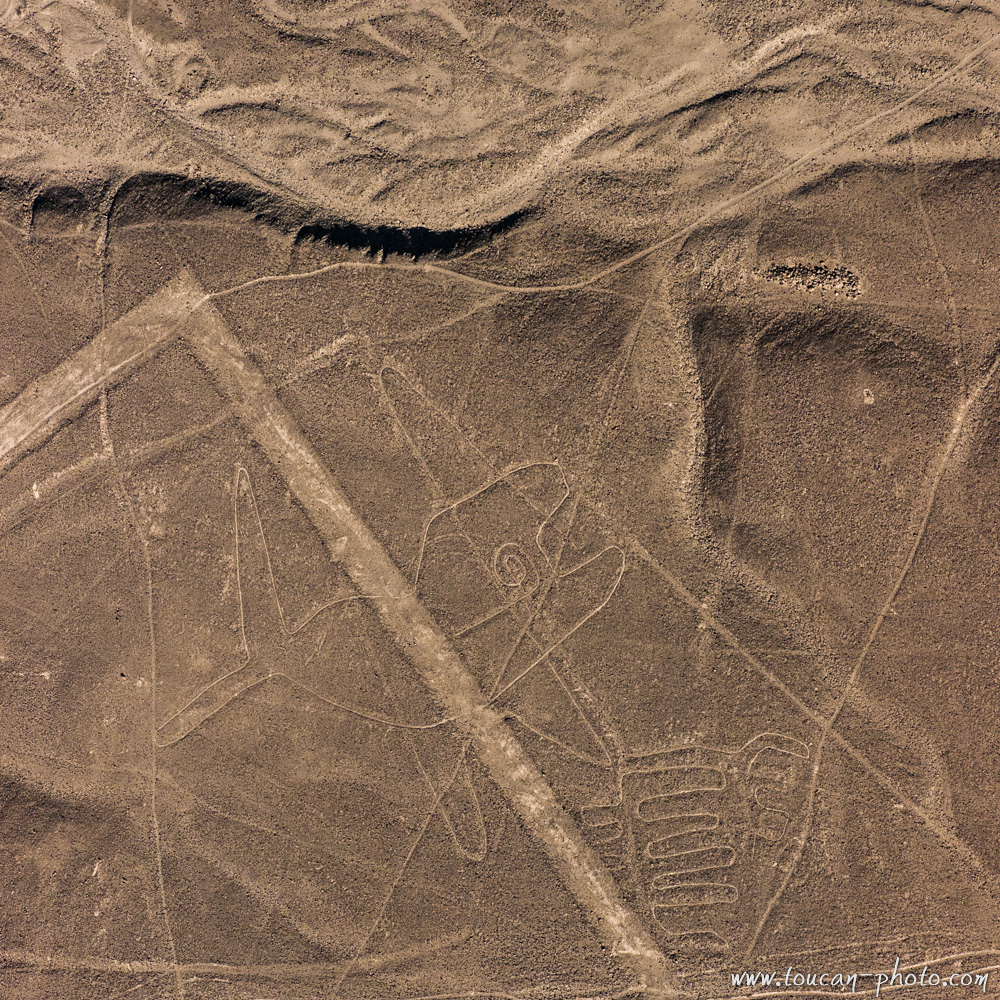
“The Whale”: Nazca life was deeply linked to the sea, and many marine animals are depicted.
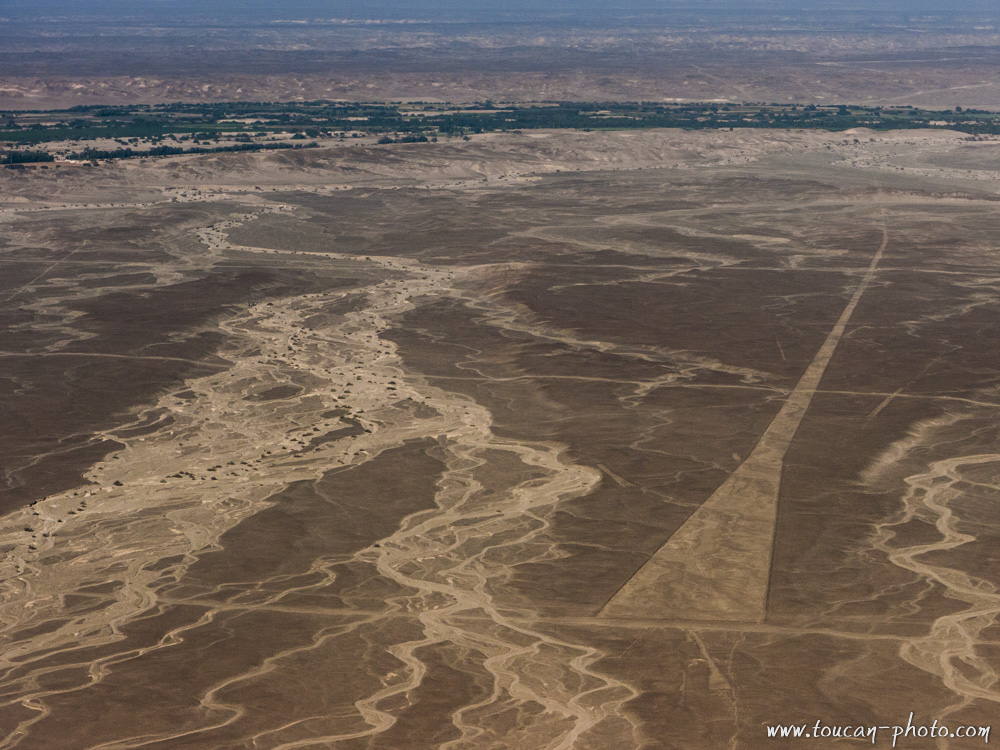
This kilometer-long strip required moving massive quantities of stone
Theories and Mysteries
For over 70 years, researchers have sought to explain the Nazca Lines. Paul Kosok, who rediscovered them from the air in 1939, called the plateau “the world’s largest astronomy book.” His colleague Maria Reich devoted her life to proving that the lines served as an agricultural calendar based on star positions. Other theories range from extraterrestrial runways to more recent evidence suggesting the lines follow underground water sources. Some researchers from the University of Massachusetts found that lines often point toward water reservoirs or ancient wells. Regardless of their original function, the geoglyphs likely served as sites for ritualistic processions and offerings to the gods.
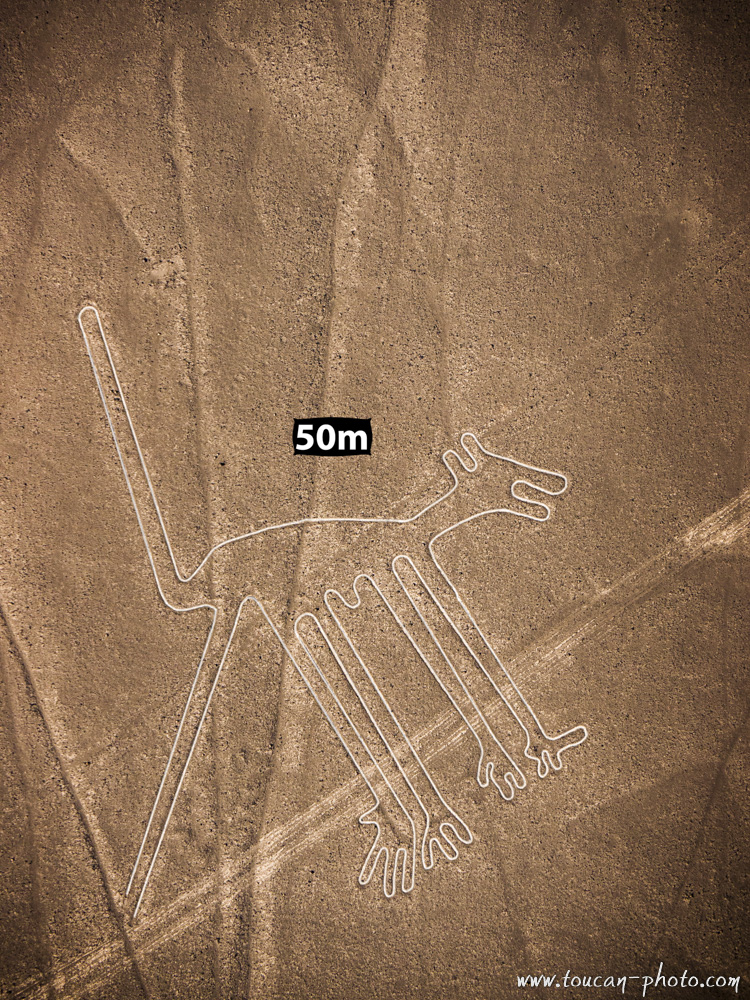
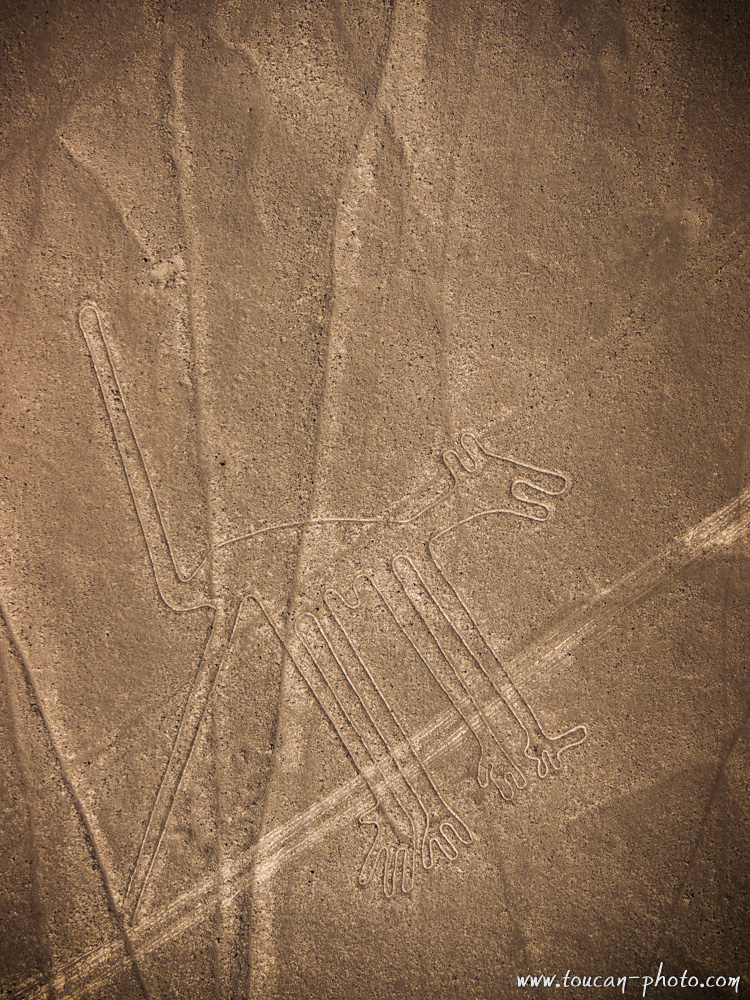
“The Dog,” a figure often linked to fertility
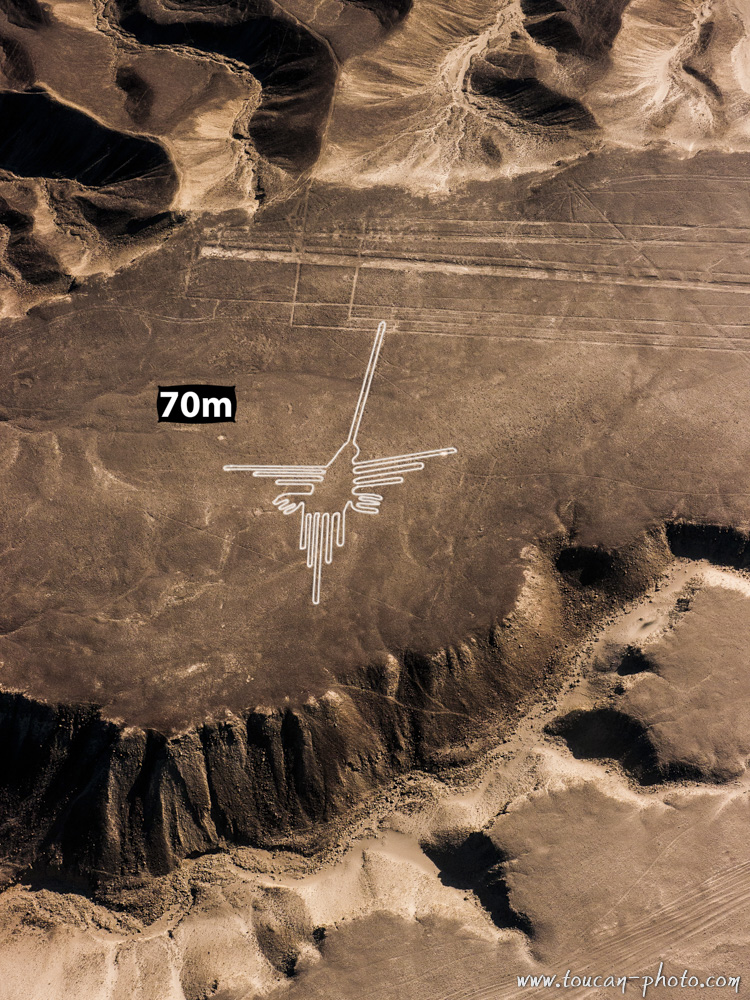
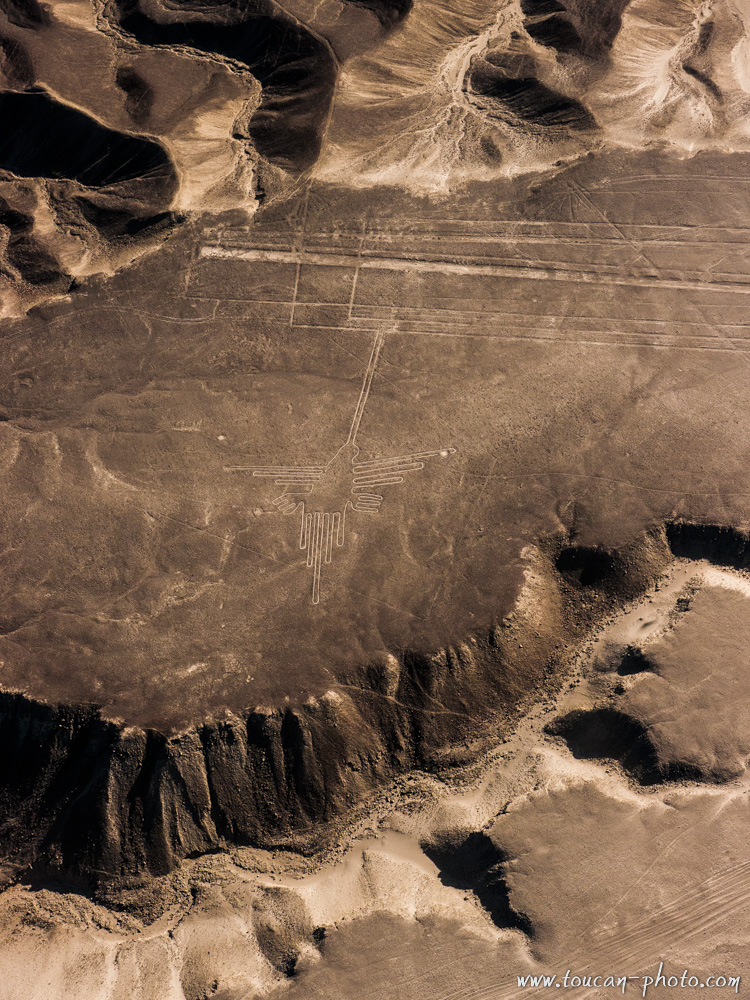
“The Hummingbird”: its beak points toward the sunrise on the Winter Solstice (Dec 21st)
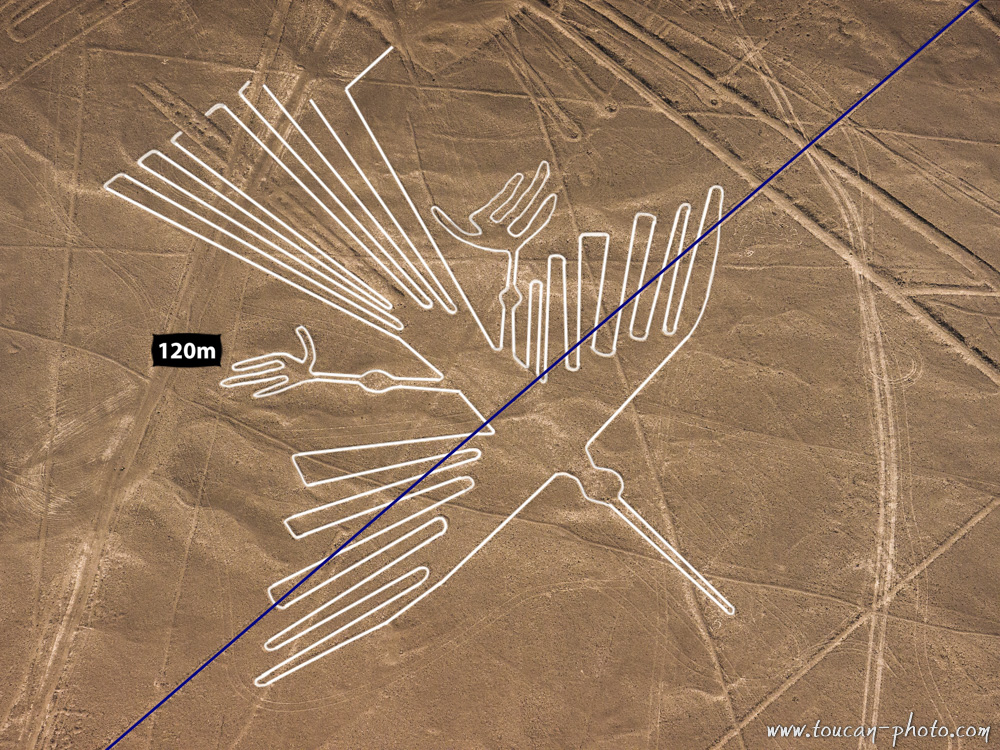
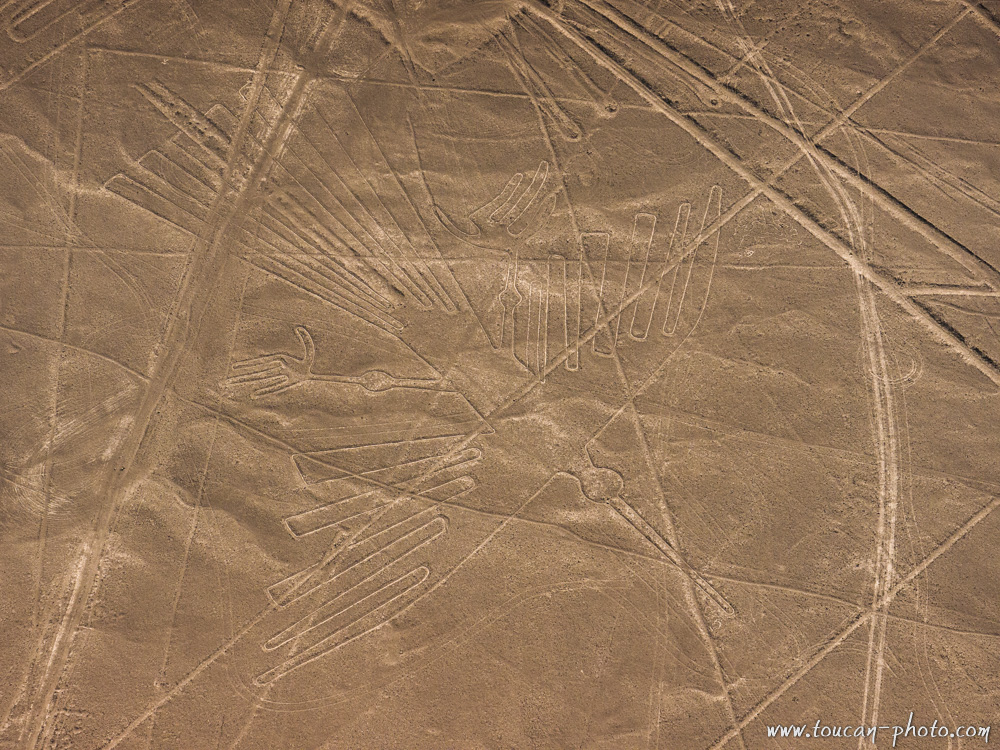
The “Condor” (likely a Heron): a line through the figure aligns with the Summer Solstice sunrise.
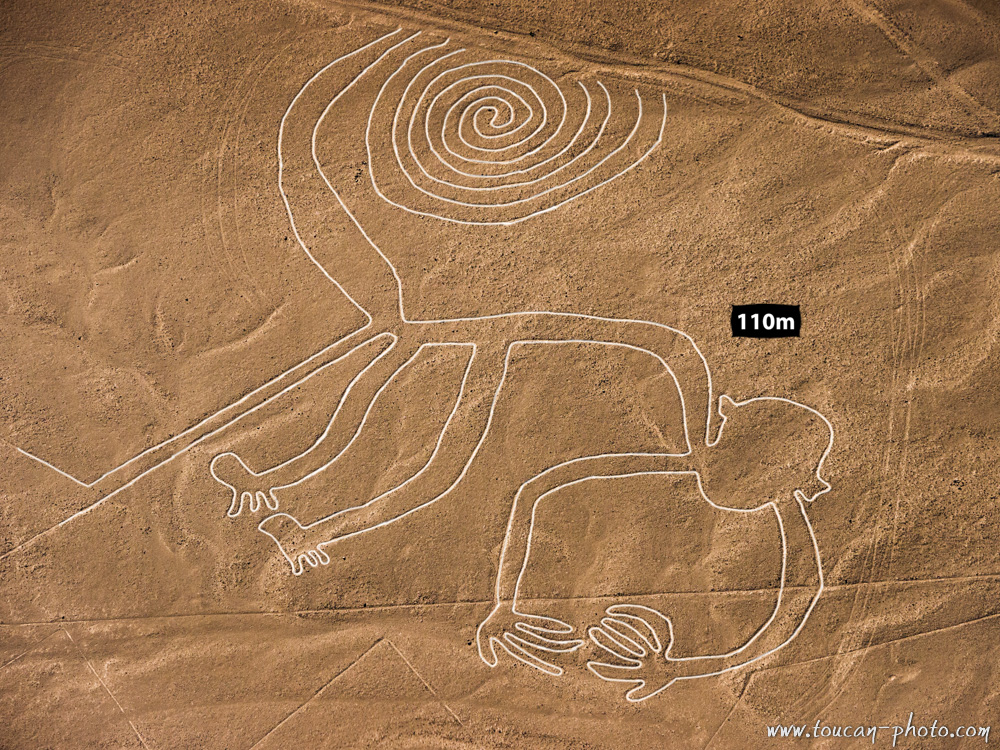
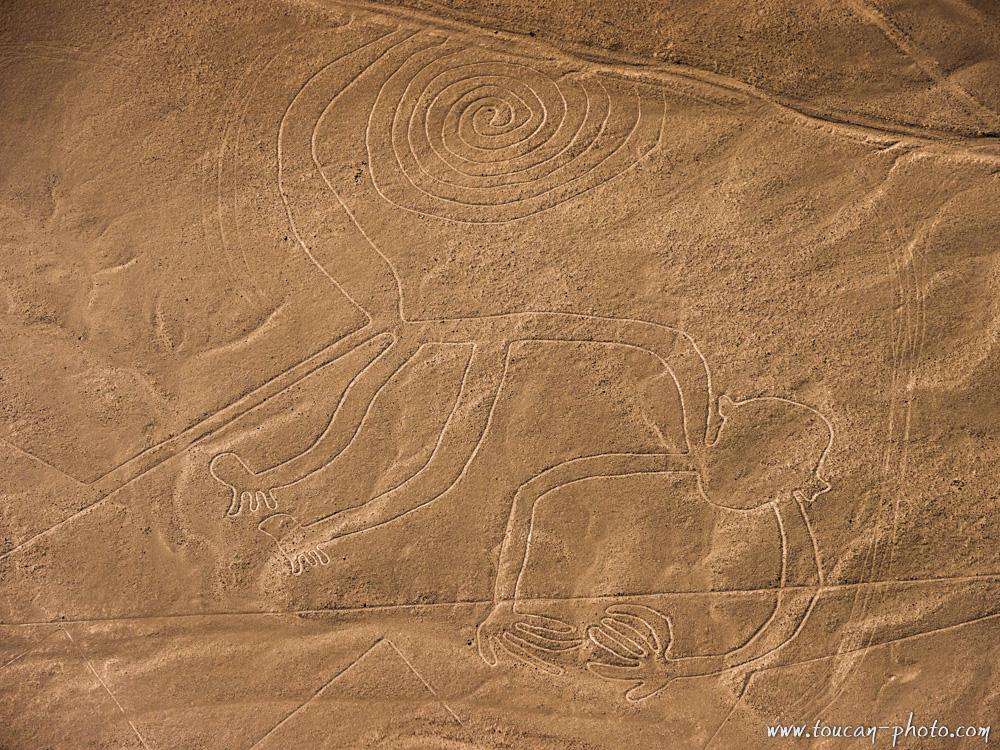
“The Monkey”: curiously designed with a different number of fingers on each hand.
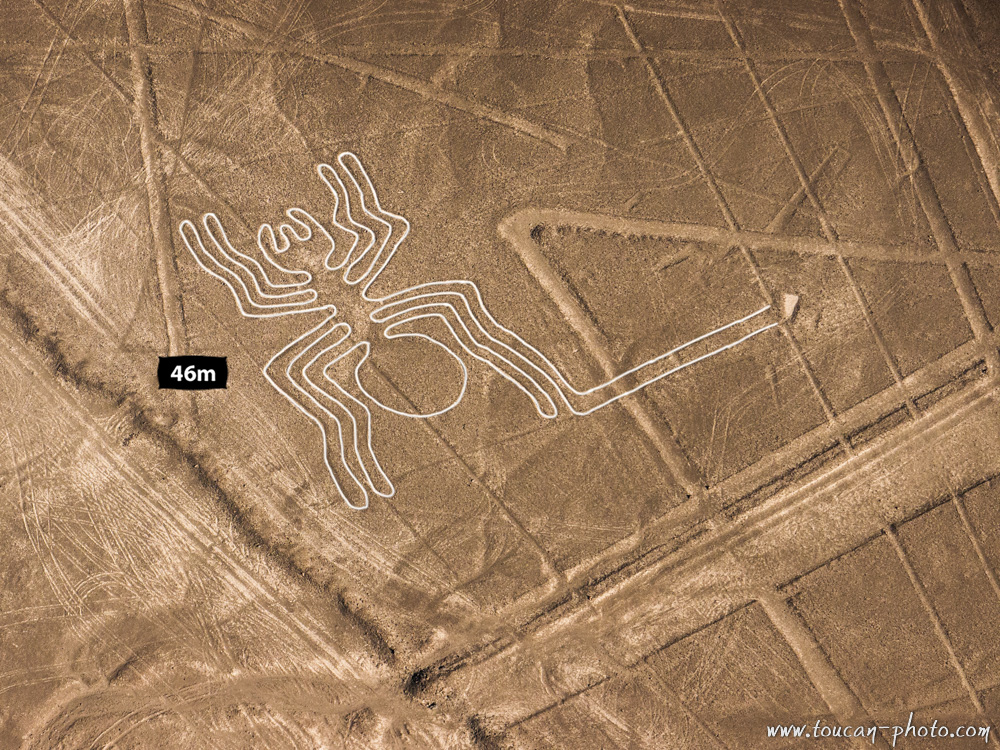
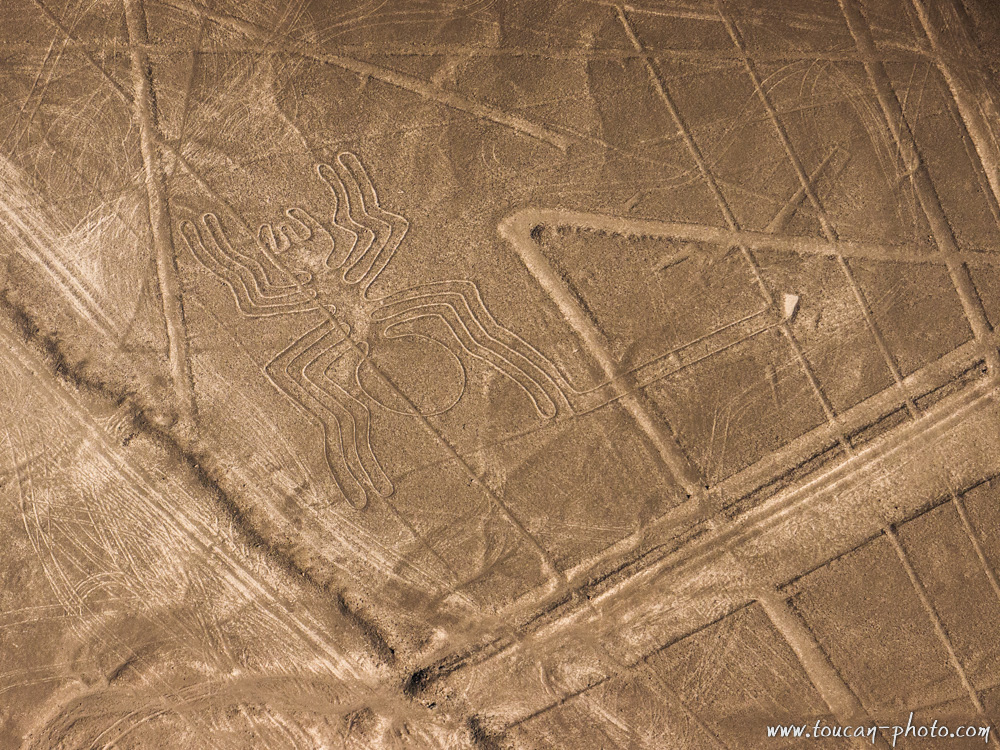
“The Spider”: a lunar-oriented figure and symbol of fertility and wealth.