 Ethiopia
Ethiopia
Ethiopia is one of the most fascinating countries on the African continent. Often regarded as the cradle of humanity, it combines a history stretching back thousands of years with an extraordinary cultural heritage and some of the most diverse landscapes in Africa. Unlike most African nations, Ethiopia was never permanently colonised, allowing it to preserve a remarkably strong national identity.
Covering more than one million square kilometres and home to over 130 million inhabitants, Ethiopia is the second most populous country in Africa. Its people belong to more than 80 ethnic groups, speaking over 80 languages and several hundred dialects. Amharic is the federal working language, while Oromo, Tigrinya, Somali, Afar and many other languages reflect the country’s remarkable cultural diversity.
This diversity is equally visible in Ethiopia’s religious heritage. Christianity has been present since the 4th century through the Ethiopian Orthodox Tewahedo Church, one of the oldest Christian churches in the world. Islam also has deep historical roots dating back to the earliest days of the religion, while traditional beliefs continue to be practised in several regions. Together, these traditions have shaped Ethiopia’s architecture, customs and cultural identity.
Ethiopia is also a land of spectacular geological contrasts. The Great Rift Valley, one of the world’s largest tectonic structures, crosses the country from northeast to southwest and has created an astonishing variety of landscapes. It is responsible for the active volcanoes of Erta Ale, the colourful geothermal fields of Dallol, the chain of Rift Valley lakes, and the vast volcanic highlands that rise above 4,500 metres.
These isolated mountains have become sanctuaries for an exceptional endemic wildlife. The Simien Mountains and the Bale Mountains are home to iconic species found nowhere else on Earth, including the Ethiopian wolf, the gelada, the Walia ibex and the giant mole-rat. Only a few hundred kilometres away, the scenery changes dramatically, giving way to the scorching Danakil Depression, one of the hottest and most inhospitable places on the planet.
Ethiopia is also inseparable from the history of coffee. According to tradition, the wild coffee plant originated in the forests of the Kaffa region. Today, coffee remains deeply embedded in Ethiopian culture, and the traditional coffee ceremony, during which beans are roasted and brewed in front of guests, remains one of the country’s strongest symbols of hospitality.
Since the independence of Eritrea in 1993, Ethiopia has become a landlocked country, yet it has experienced rapid demographic and economic growth over recent decades while continuing to face significant political, environmental and social challenges.
From the rock-hewn churches of Lalibela to the peaks of the Simien Mountains, from the salt caravans of Lake Karum to the lava lake of Erta Ale, from the Afar villages of the Danakil Depression to the forests where wild coffee still grows, Ethiopia offers one of the richest combinations of landscapes, cultures and wildlife on the African continent.
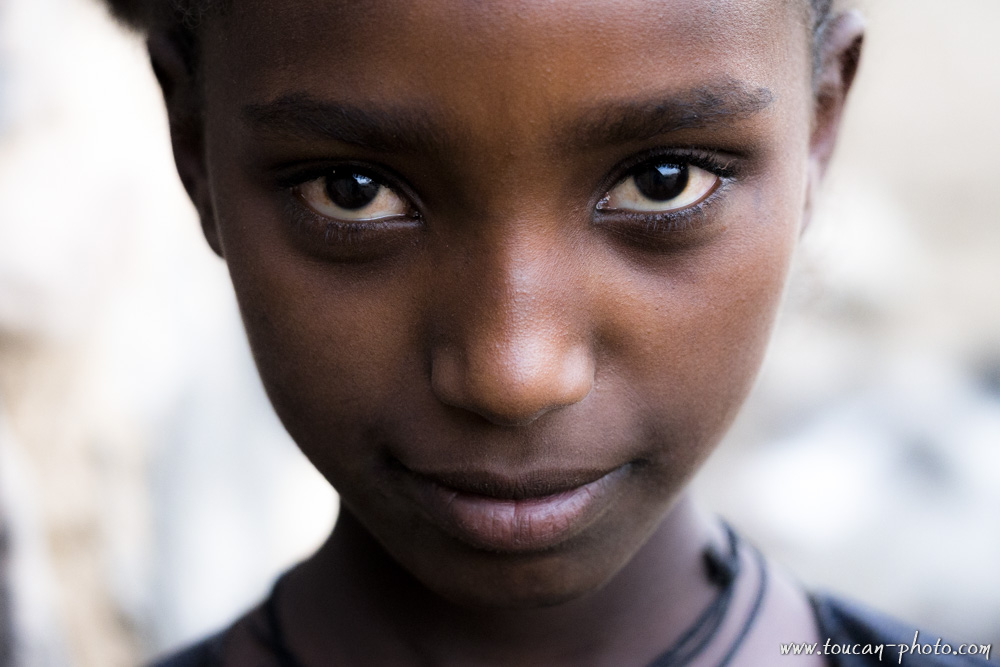
The photographs gathered in this category invite you to discover this extraordinary country through its people, landscapes, wildlife and traditions. Together, they reveal the remarkable diversity that makes Ethiopia one of Africa’s most captivating destinations.