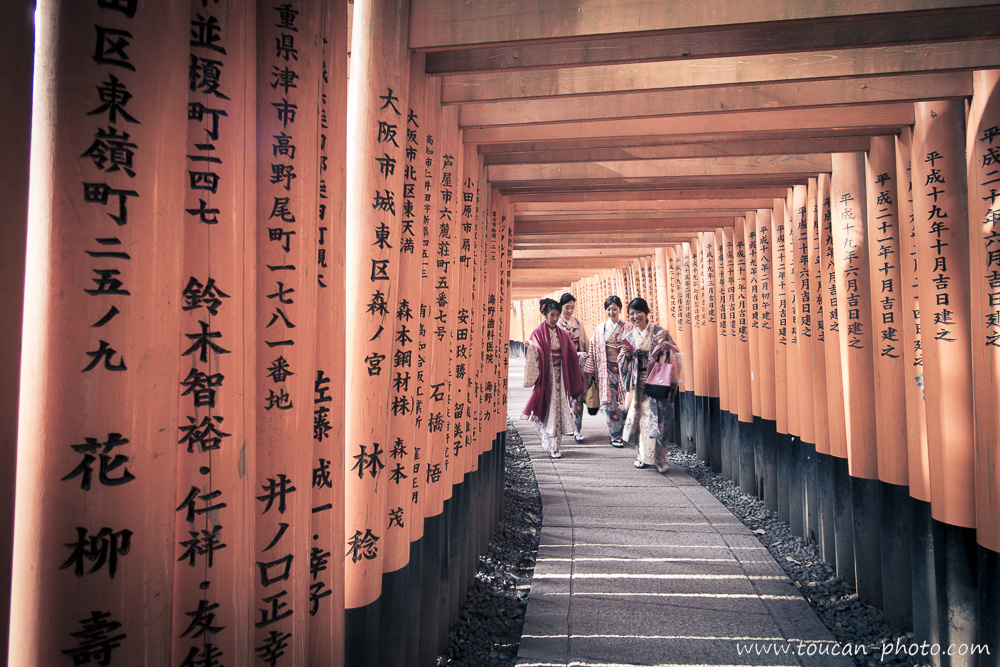
Torii tunnels at Fushimi Inari-taisha, (伏見稲荷大社), Kyoto, Japan

Torii tunnels at Fushimi Inari-taisha, (伏見稲荷大社), Kyoto, Japan

The Path of a Thousand Torii, (伏見稲荷大社), Kyoto, Japan

In the heart of Kyoto, the Fushimi Inari-taisha shrine unfolds a sacred labyrinth of vermillion columns, creating an infinite perspective where time seems to stand still.

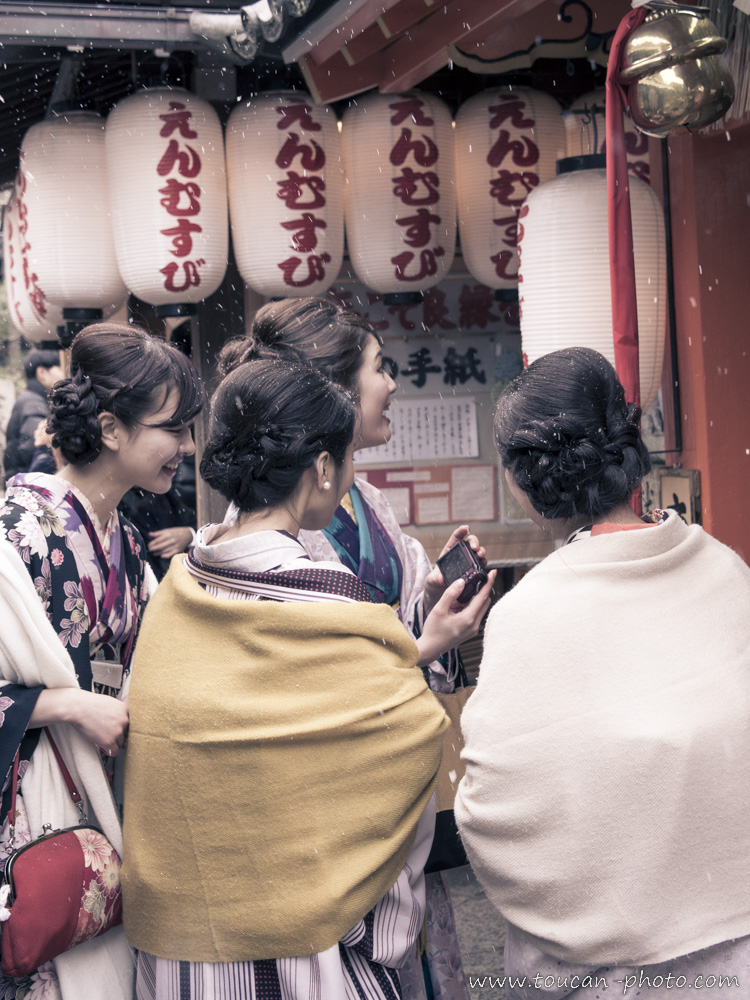
This photograph captures the essence of the Senbon Torii (the thousand gates). Each pillar is an offering made by a company or an individual to seek the favor of Inari, the deity of harvests and commerce. The black inscriptions seen in the foreground detail the donor’s name and the date of the offering. There is a striking contrast here between the geometric rigor of the wooden structures and the graceful silhouettes of visitors in traditional kimonos. This passage, both physical and spiritual, perfectly illustrates the persistence of Japanese traditions within a modern world, offering a meditative walk between shadow and light.

Diving into the Mayan Underworld: The Cenotes of Yucatán

Scuba diver exploring light beams in a Mexican cenote, Yucatan

Beneath the Yucatán jungle, cenotes offer a unique spectacle where light carves through the darkness.

Considered gateways to the underworld by the ancient Maya, cenotes are natural sinkholes formed by the collapse of limestone bedrock.

These unique geological formations house vast networks of underground rivers, the longest in the world. In the crystal-clear water, the meeting of fresh surface water and deeper salt water often creates a halocline—a striking optical phenomenon that gives the illusion of flying over an underwater river. For a diver, every descent is a journey through time among stalactites and stalagmites formed millennia ago, when these caves were still dry.

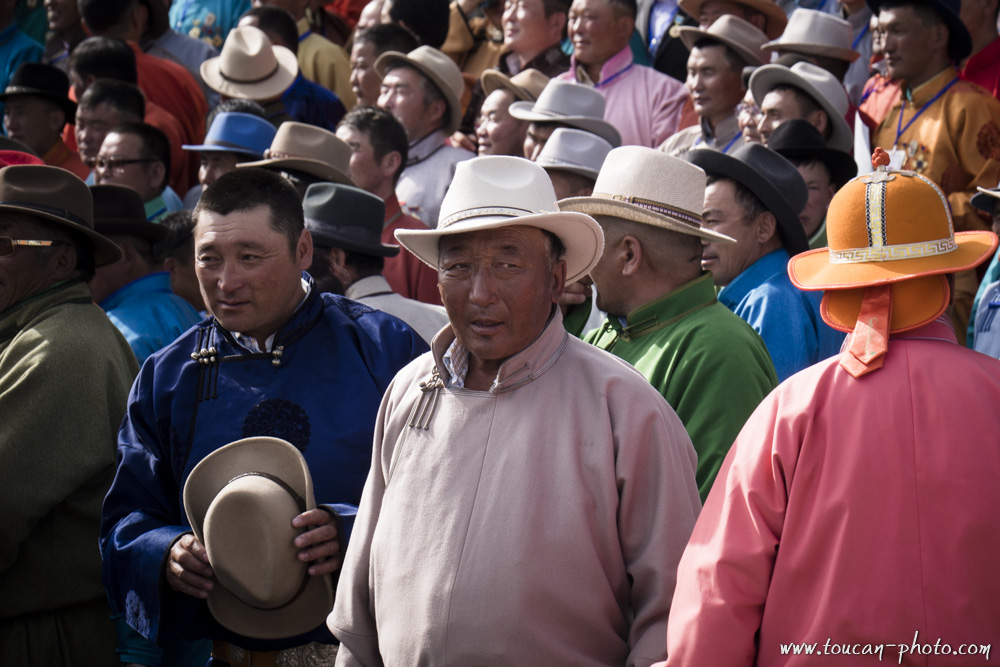
Reunion among the Mongolian farmers

A colorful meeting for a sensitive debate - Mongolia

A colorful meeting for a sensitive debate.

This photo was taken in 2015 in Ulaanbaatar, the capital of Mongolia.

Large livestock owners from all over the country met once again to discuss the consequences of the latest “white dzud” that had just hit Mongolia. A “dzud” is a climatic phenomenon (sometimes a summer drought, sometimes a freezing winter, or sometimes a combination of both) that leads to the death of many head of livestock. In recent years, “dzuds” have been occurring one after another. Annual losses are counted in the millions of animals.

Japan: A Monkey with a Surprising Habit

Snow monkeys (in Japanese, nihonzaru 日本猿), also known as Japanese macaques (Macaca fuscata), are the only species of primate living in the wild in Japan. This species is also endemic to the Japanese archipelago. These monkeys are mainly found in mountainous regions, at altitudes ranging from 500 to 2,500 meters. In winter, when temperatures become harsh, these monkeys have developed a surprising habit: soaking in natural hot springs to keep warm!

Continue reading“Japan: A Monkey with a Surprising Habit”

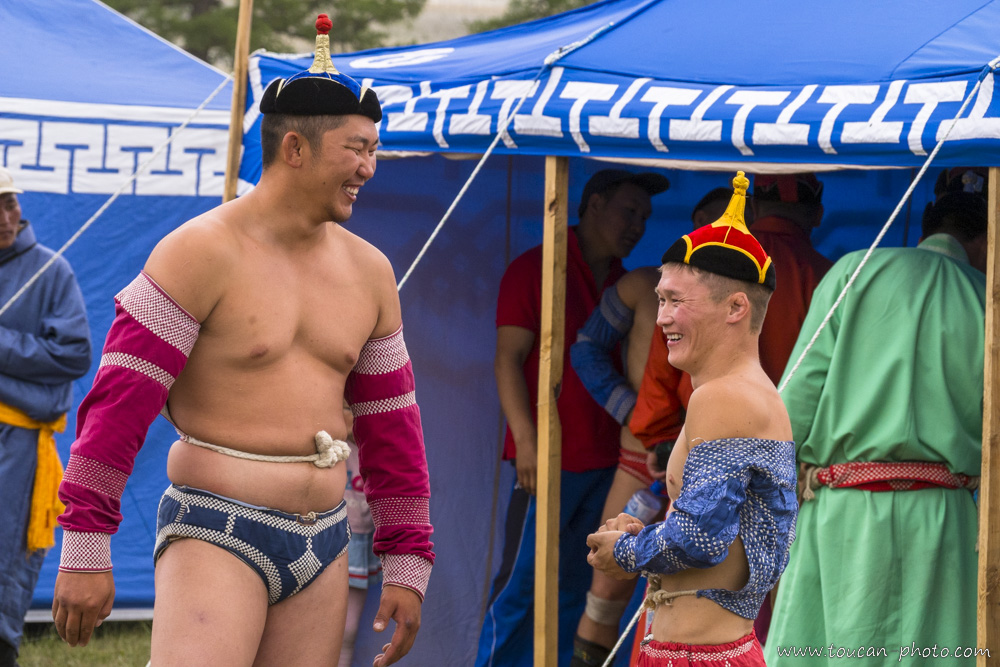
Wreslters relaxing during Naadam festival, Mongolia

Wreslters

Wreslters relaxing during Naadam festival, Mongolia
 

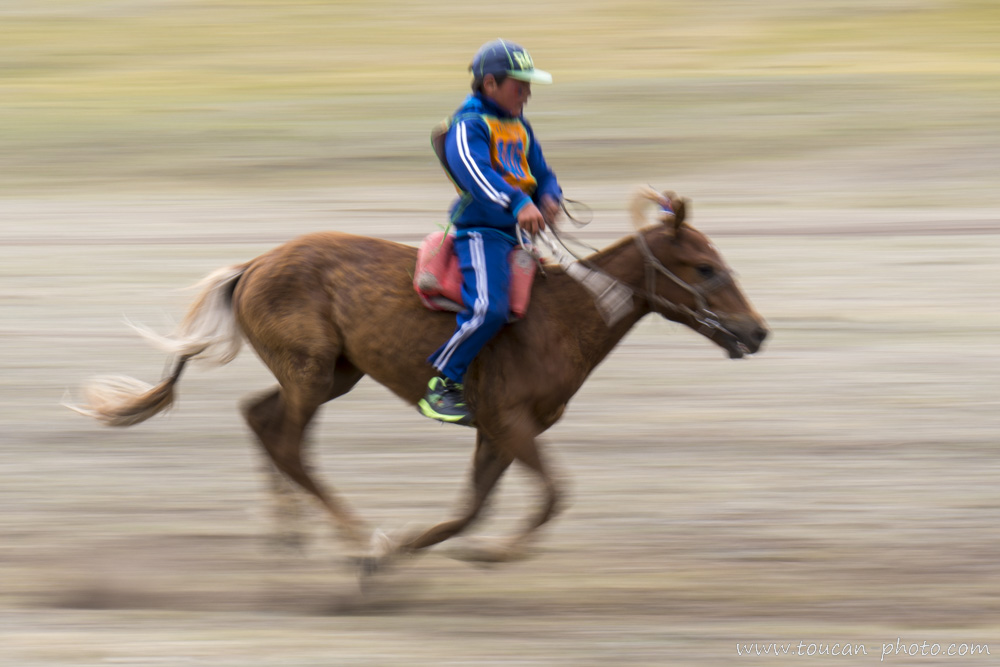
The festival of Naadam (In Mongolian: Наадам, and in classical Mongolian: ᠨᠠᠭᠠᠳᠤᠮ) is a traditional festival celebrated in Mongolia, Inner Mongolia and in Tuva. During the Naadam festival, three different competitions are organized: Mongolian wrestling, archery and horse racing. The three games are held throughout the country during midsummer, but the most mongolian famous competitors participates at Ulaanbaatar events, the capital city. Women have started participating in the archery and girls in the horse-racing games, but not in Mongolian wrestling.

?>
Next page