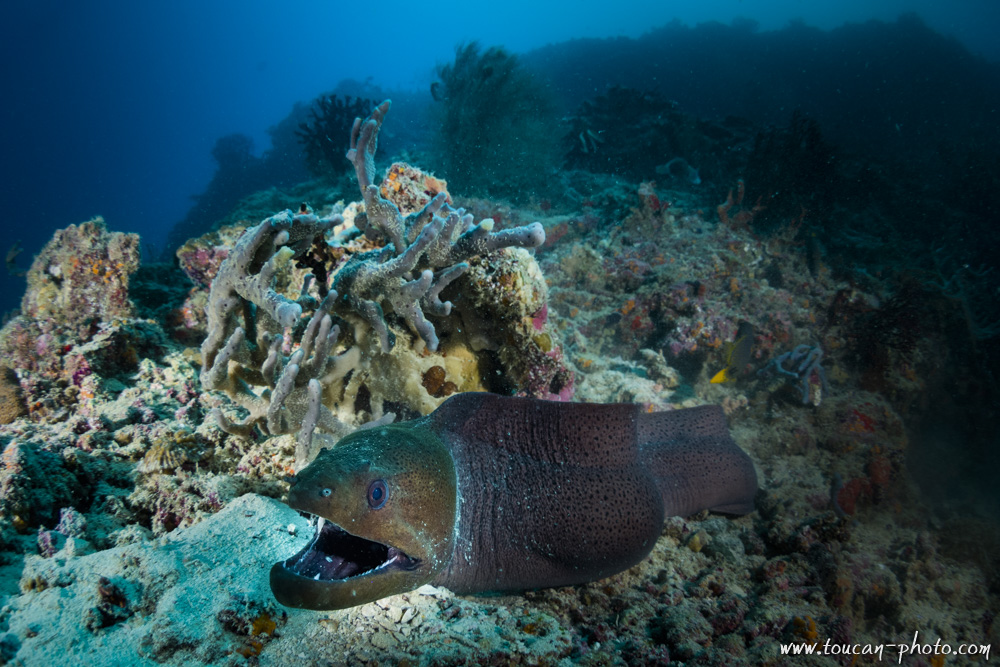
Giant Moray (Gymnothorax javanicus)
The Maldives are an archipelago of more than a thousand islands spread across around twenty atolls in the heart of the Indian Ocean. Beyond their white-sand beaches and turquoise lagoons lies a fascinating geological history that has shaped one of the world’s largest coral reef systems.
The Maldivian atolls were formed around ancient volcanic islands that have long since disappeared beneath the ocean. Over millions of years, corals built vast reefs around these volcanoes. As the volcanic islands gradually subsided under their own weight, the reefs continued to grow upward toward the sunlight, eventually forming the ring-shaped coral structures surrounding shallow lagoons that characterize the Maldives today.
This remarkable natural architecture provides ideal conditions for an exceptionally rich marine ecosystem. The reefs are home to an extraordinary diversity of corals, tropical fish, sea turtles, manta rays, reef sharks and countless other species that thrive in the warm, crystal-clear waters.
The Maldives also hold another remarkable distinction: they are the lowest-lying country on Earth. The archipelago rises on average just 1.5 metres above sea level, while its highest natural point reaches only 5.1 metres. This unique geography makes the Maldives one of the regions most vulnerable to rising sea levels, highlighting both the beauty and the fragility of these extraordinary islands.
Through these underwater photographs, I invite you to discover these unique marine ecosystems, where every dive reveals a delicate balance between light, coral and marine life.
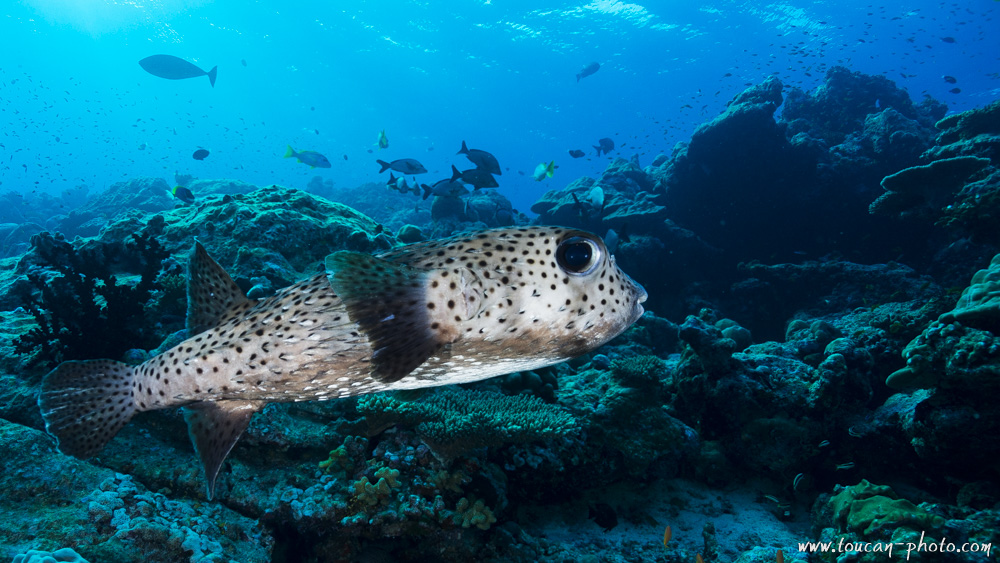 Spot-fin porcupinefish (Diodon hystrix), Maldives
The porcupinefish, in case of danger can inflate itself by swallowing water to deter the potential predator with its larger volume and it can raise its spines. In addition, it concentrates a mortal poison in certain parts of its body.
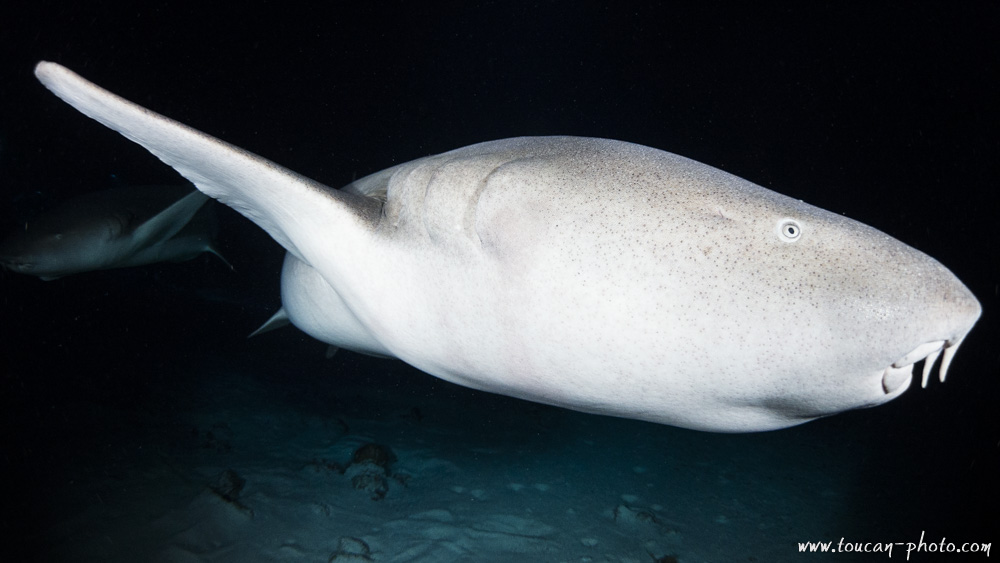 Tawny nurse shark (Nebrius ferrugineus), Maldives
Nocturnal in habits, the tawny nurse shark tends to spend the day resting in piles of two dozen or more individuals inside caves or under ledges. At night, it is an active-swimming predator that uses a powerful suction force to extract prey from inside holes and crevices. The diet of this species consists mainly of octopus, crustaceans such crabs, small fishes.
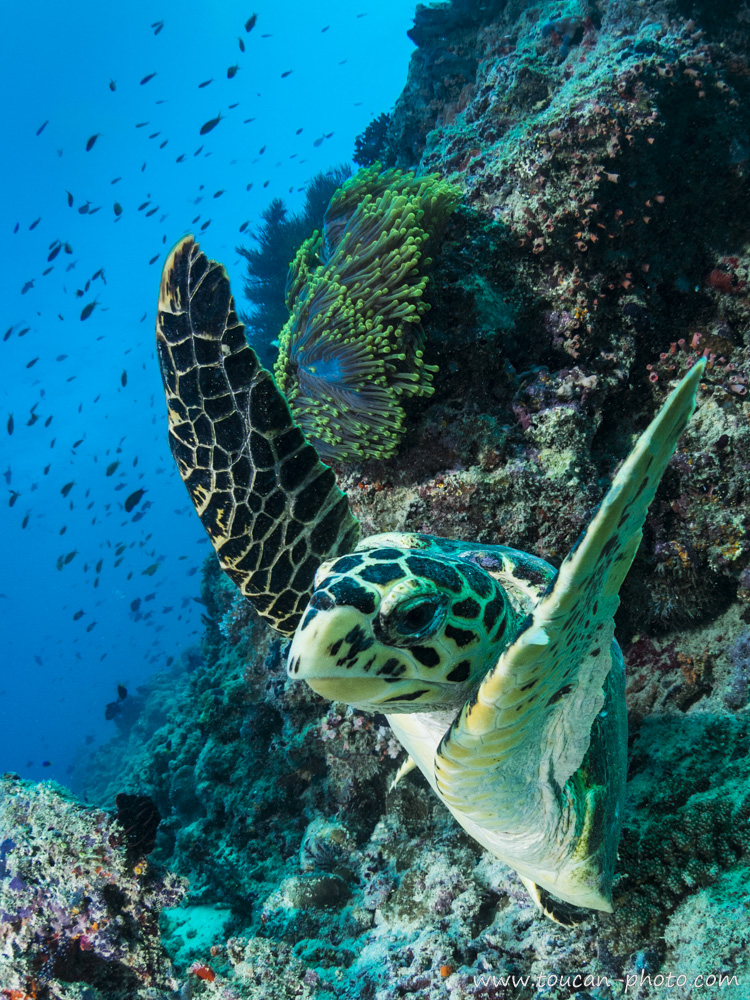
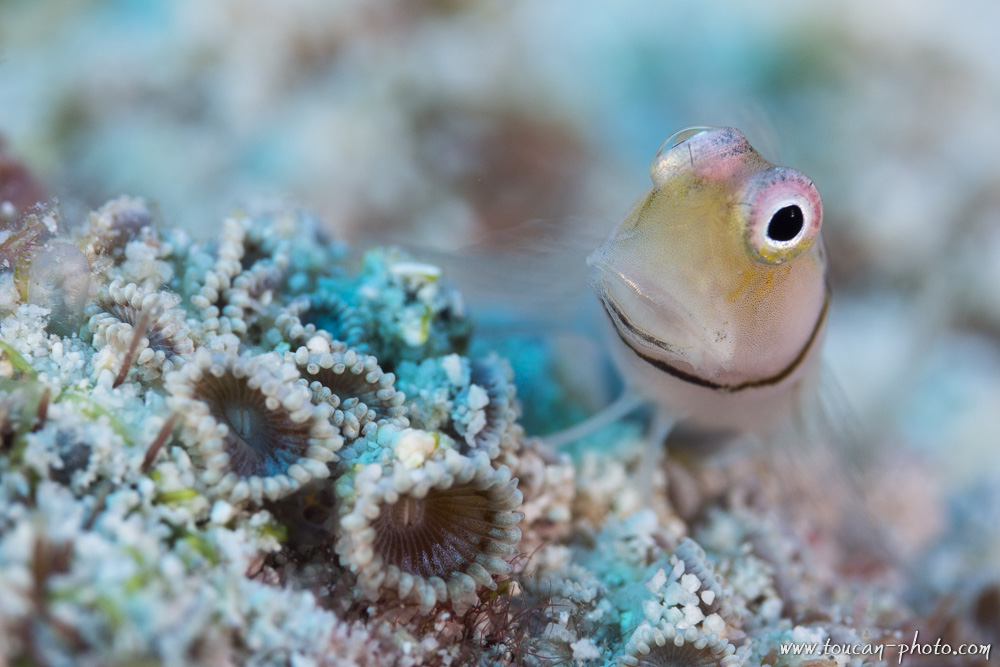 Maldives Blenny (Ecsenius minutus)
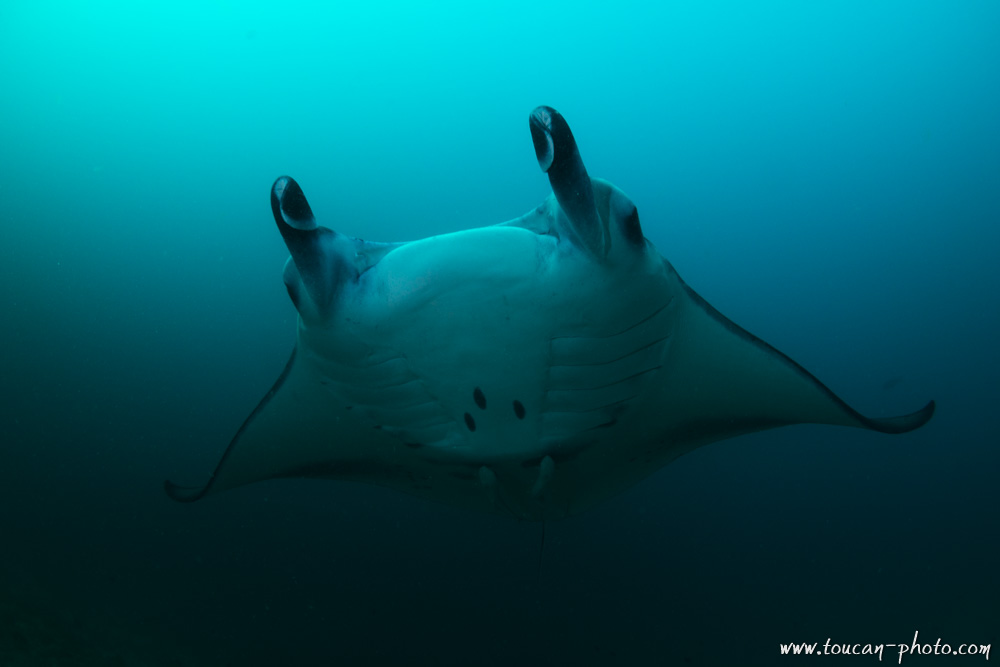 Manta Ray
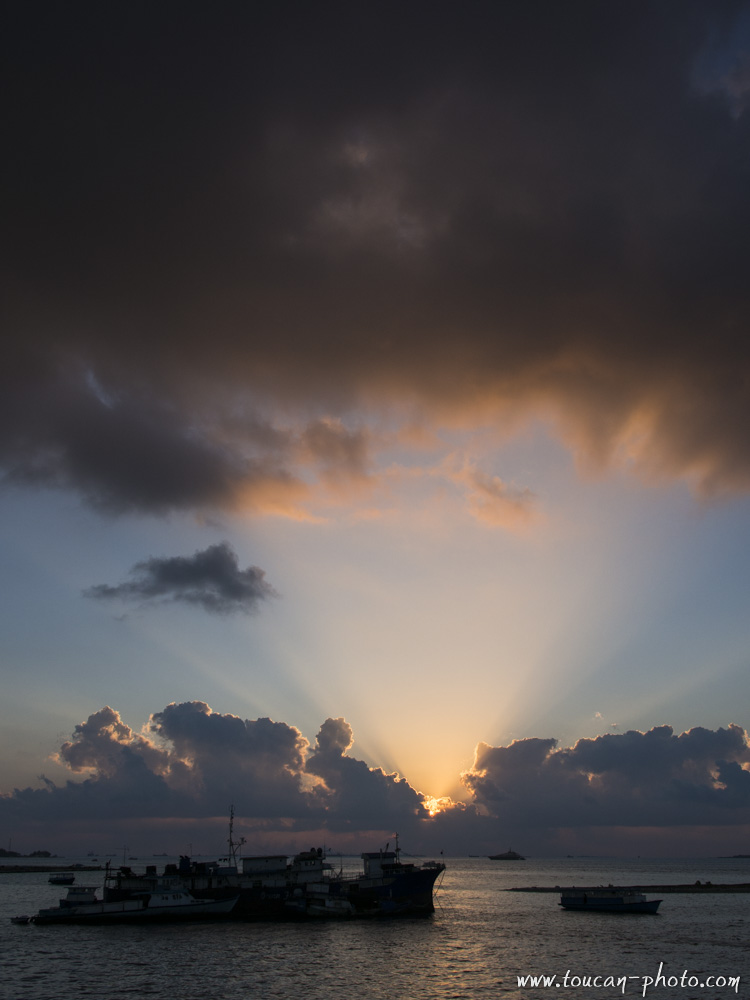 Sunset and Ship
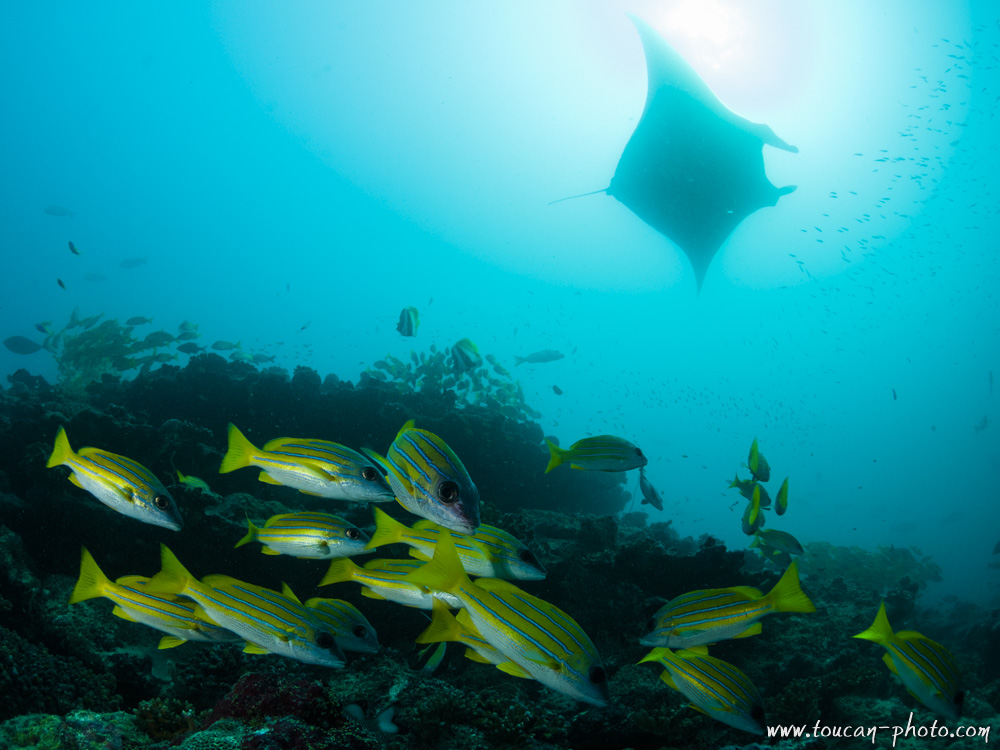 School of bluestripe snapper (Lutjanus kasmira) and Manta Ray, Maldives
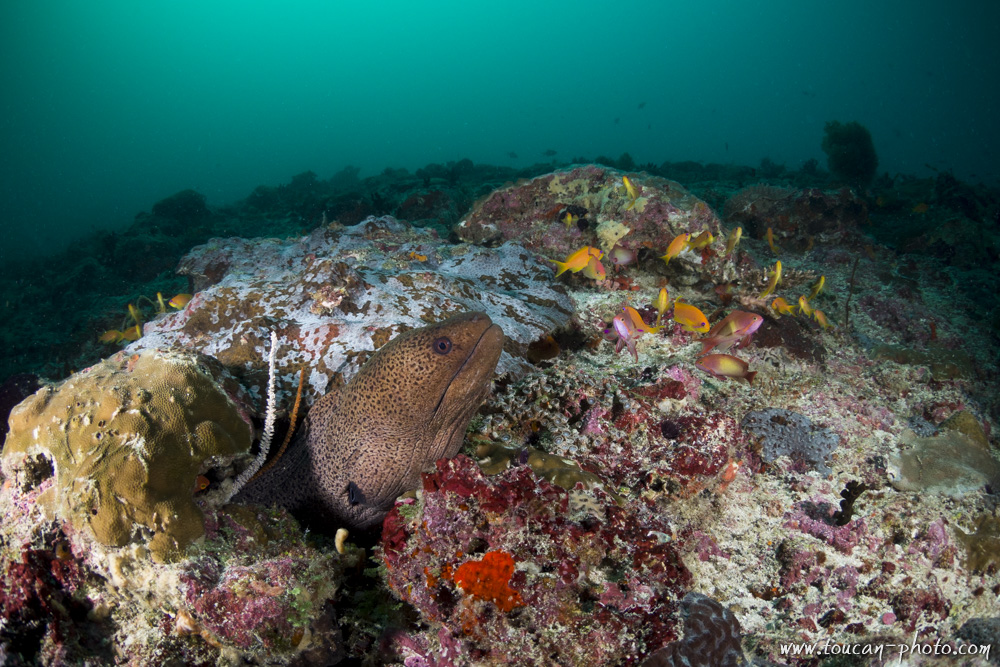 Muray
Muray