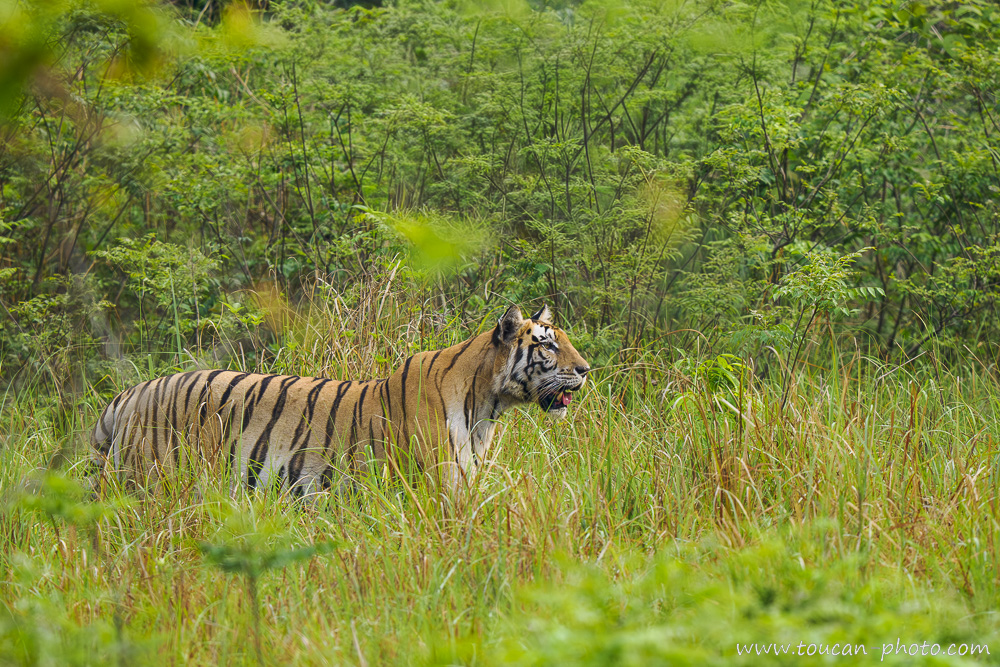
The Bengal Tiger: The Lord of the Terai Plains
Emerging from the dense vegetation, the Bengal Tiger (Panthera tigris tigris) embodies on its own the raw power and mystery of Asian wildlife.
While India is home to the majority of this sub-species’ population, it is in the heart of the Terai plains, within Nepal’s Bardia National Park, that this great feline was captured. This lord of jungles and plains is the largest wild cat in the world, instantly recognizable by its iconic coat whose black stripes, unique to each individual, act as fingerprints.
Yet, the majesty of this apex predator very nearly caused its downfall. Falling victim to intensive and relentless hunting during the 19th and 20th centuries—whether for colonial trophies or poaching—the tiger saw its numbers plummet dramatically, verging on extinction across South Asia. Compounding this hunting was the massive destruction of its natural habitat, fragmenting its historical territory.
Classified as “Endangered” (EN) on the IUCN Red List, the Bengal Tiger is now at the heart of major conservation programs. Nepal has distinguished itself on the global stage through its spectacular protection efforts, managing to nearly triple its tiger population within fifteen years. Bardia National Park stands as one of the finest symbols of this wild rebirth, even though the coexistence between humans and the great feline along the edges of protected areas remains a daily challenge.