On the Way to School – A Slice of Life in Nepal

On the Way to School – A Slice of Life in Nepal

On the Way to School – A Slice of Life in Nepal

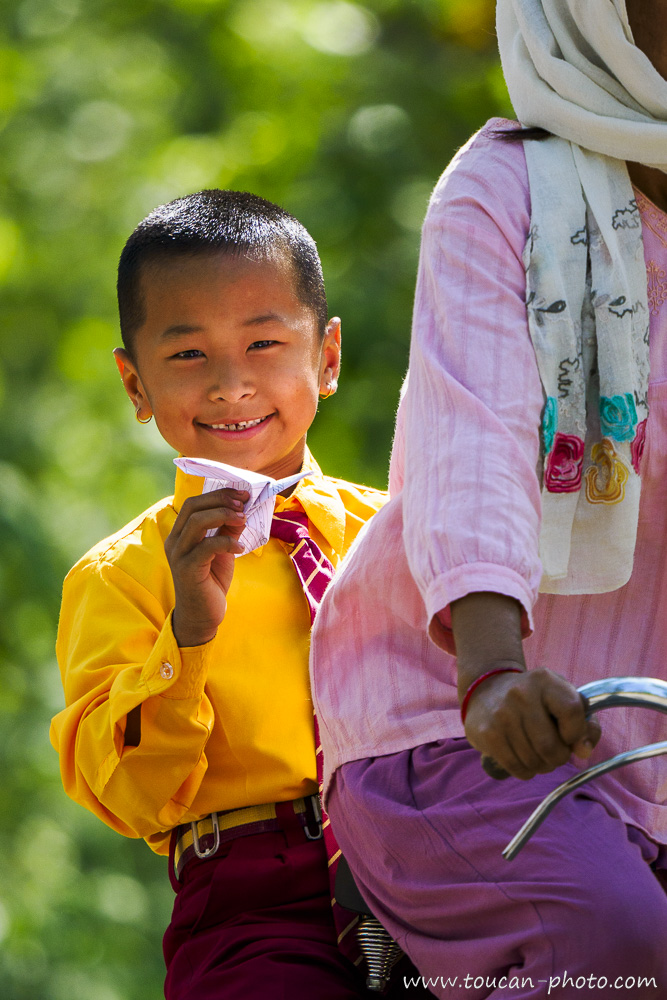
Every morning, thousands of children make their way to school, whether on foot or by bicycle. In Nepal, this young schoolboy wears a bright smile as he proudly shows a small paper crane. A simple yet universal everyday scene, reminding us that curiosity and the joy of childhood know no borders.

Like every morning, this young schoolboy is on his way to school, riding on the back of a relative’s bicycle. As he notices me, he flashes a broad smile and proudly holds up the small paper crane in his hand. A spontaneous gesture, a few seconds of shared connection, and then we each continue on our way.

It is often these everyday moments that give travel its greatest meaning. They appear in no guidebook and are not tied to any famous landmark, yet they reveal far more about a country’s character than pages of description ever could. A glance, a smile, or a simple gesture is sometimes all it takes to create a lasting memory.

In Nepal, education represents a real opportunity for many children. Depending on where they live, some travel several kilometres each day to reach school, on foot, by bicycle, or using whatever transport is available. Despite these challenges, the journey to school often remains a time of sharing, carefree laughter, and hope for the future.

The Bengal Tiger: The Lord of the Terai Plains

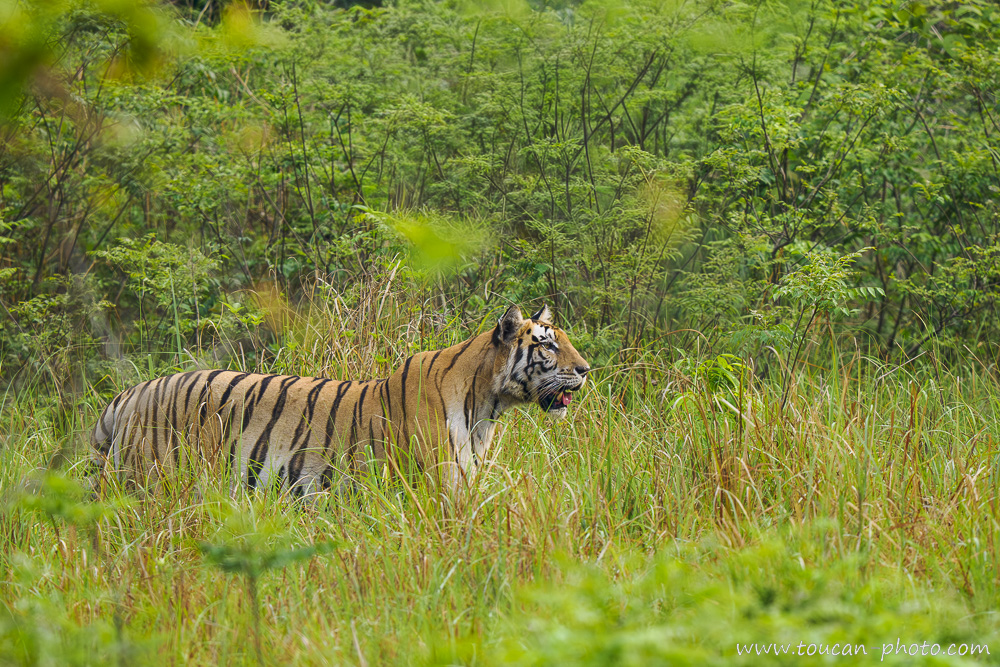
Bengal tiger on the lookout in the tall grass and dense vegetation of Bardia National Park in Nepal

The Bengal Tiger: The Lord of the Terai Plains

Emerging from the dense vegetation, the Bengal Tiger (Panthera tigris tigris) embodies on its own the raw power and mystery of Asian wildlife.

While India is home to the majority of this sub-species’ population, it is in the heart of the Terai plains, within Nepal’s Bardia National Park, that this great feline was captured. This lord of jungles and plains is the largest wild cat in the world, instantly recognizable by its iconic coat whose black stripes, unique to each individual, act as fingerprints.

Yet, the majesty of this apex predator very nearly caused its downfall. Falling victim to intensive and relentless hunting during the 19th and 20th centuries—whether for colonial trophies or poaching—the tiger saw its numbers plummet dramatically, verging on extinction across South Asia. Compounding this hunting was the massive destruction of its natural habitat, fragmenting its historical territory.

Classified as “Endangered” (EN) on the IUCN Red List, the Bengal Tiger is now at the heart of major conservation programs. Nepal has distinguished itself on the global stage through its spectacular protection efforts, managing to nearly triple its tiger population within fifteen years. Bardia National Park stands as one of the finest symbols of this wild rebirth, even though the coexistence between humans and the great feline along the edges of protected areas remains a daily challenge.

?>