In 2015, I had the opportunity to cross the Simien Mountains on foot. Traversing this massif, among the highest in Africa, was an incredible experience in its own right (read the article on the Simien). But an unexpected encounter made this adventure even more unforgettable.
One morning, at the dawn of a new day of hiking, I was just stepping out of my tent when I spotted a shape moving in the distance. It seemed to glide over the frozen ground, its movement so smooth and light. For a few seconds, the scene felt unreal, almost like an apparition. This morning ghost that honored me with its presence was none other than an Ethiopian wolf.
I had already heard of this enigmatic animal, a specialist of the Ethiopian highlands, perfectly adapted to this harsh environment and yet so close to extinction. Seeing it there, in front of me, in the early morning, in this frozen setting, was totally unexpected.
By chance, even though I was hiking light, I had a small camera in my bag. This allowed me to immortalize this brief but absolutely magical encounter.
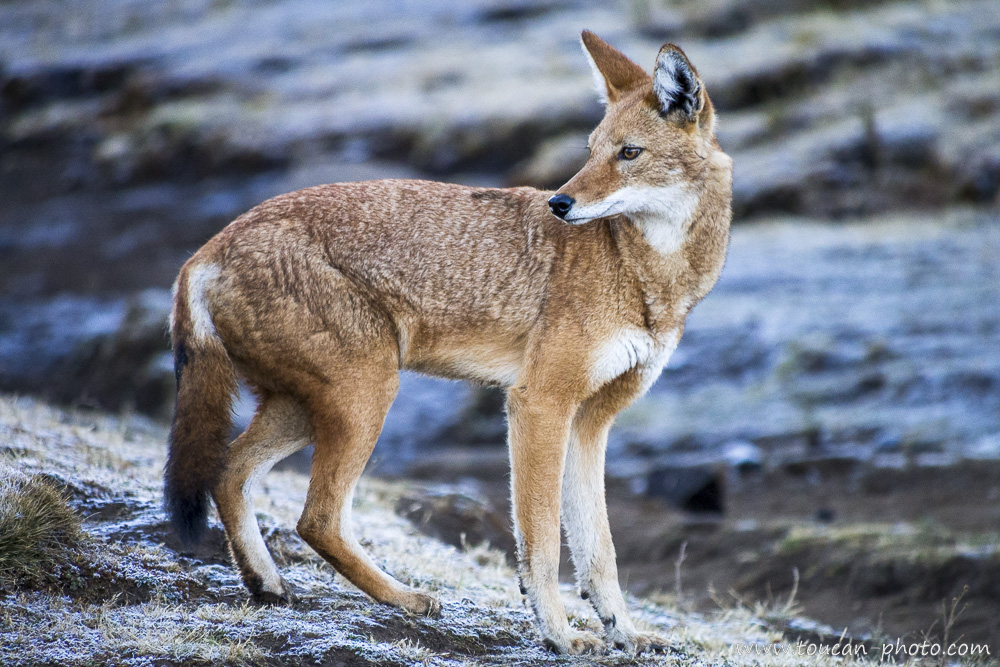
2015, first sighting of the Ethiopian wolf (formerly called the Abyssinian wolf), moving gracefully on the frozen ground of the Simien Mountains.
That moment, though it lasted only an instant, remained forever etched in my memory. I often wondered if I would ever have the chance to cross paths with this emblematic animal again.
A few years later, a photographer friend of mine, Benjamin, started talking to me about the Ethiopian wolf. He too dreamed of an encounter with this rare canid. Through many discussions, this idea became a project, and that project finally came to fruition in 2024.
However, the situation in the Simien region had moved in a difficult direction. Traveling there safely had become more complicated than ten years prior. We therefore decided to head to the second major area where the Ethiopian wolf is present: the Bale Mountains National Park.
The wolf is still well present there, and the conservation efforts led in this region have maintained a population of about 300 to 350 individuals. This number may seem very low, but it must be compared to the total population of Ethiopian wolves in the world, which does not exceed 500 individuals. For comparison, fewer than 100 wolves still live in the Simien Mountains, while others survive in small isolated populations scattered across different Ethiopian massifs.
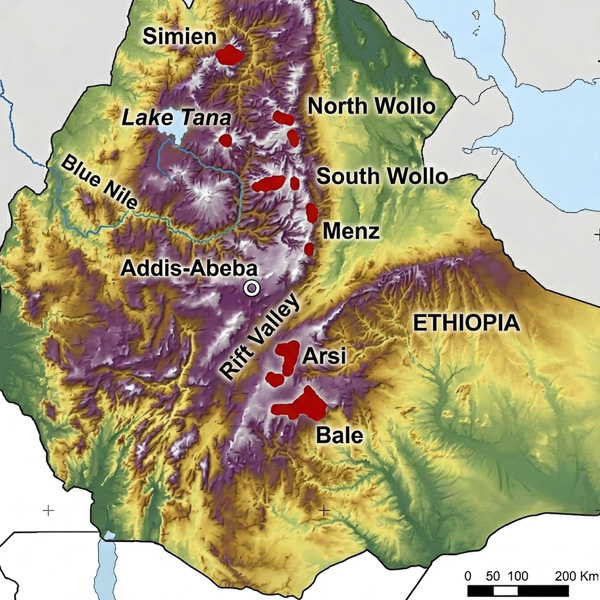
In red, the habitat pockets of the Ethiopian wolf (Canis simensis).
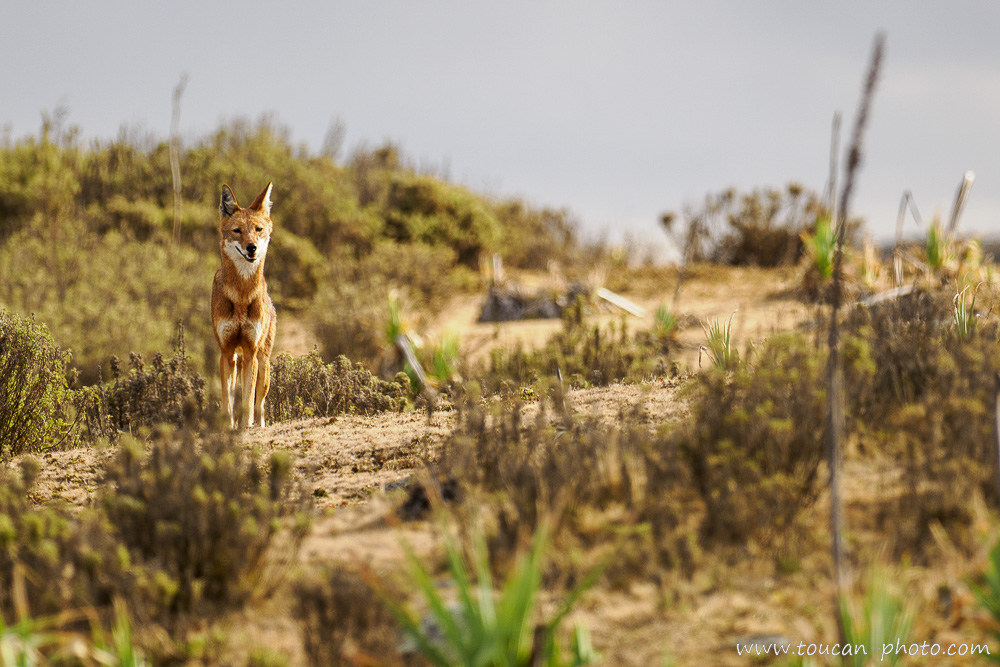
Reunion with the Ethiopian wolf, this time in the Web Valley, located in the Bale Mountains.
The Ethiopian wolf has a unique evolutionary history, closely linked to the climatic upheavals of the past. Its ancestors are thought to have descended from canids that arrived from Eurasia about 100,000 to 300,000 years ago, likely during ice ages when colder climates allowed cold-adapted species to expand toward unusual latitudes. By reaching the highlands of East Africa, these canids found an environment that suited them perfectly: high altitudes, cool temperatures, and vast meadows rich in prey. When the climate warmed, these populations found themselves isolated on these “islands of altitude,” cut off from the rest of the world by plains that had become too hot for their survival. Over time, this isolation shaped a unique species, perfectly adapted to life on the African highlands. Unable to descend to the lowlands or recolonize other regions, the Ethiopian wolf has remained confined to these summits, where it still evolves today, a living witness to a bygone climatic past.
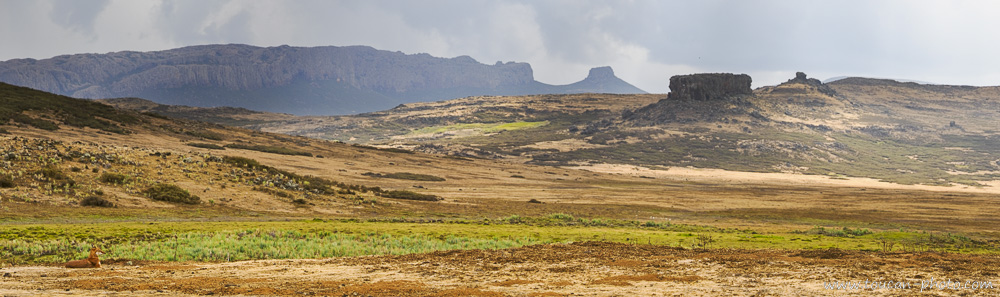
An Ethiopian wolf photographed on a plateau in the Bale Mountains National Park, at approximately 3500 meters above sea level.
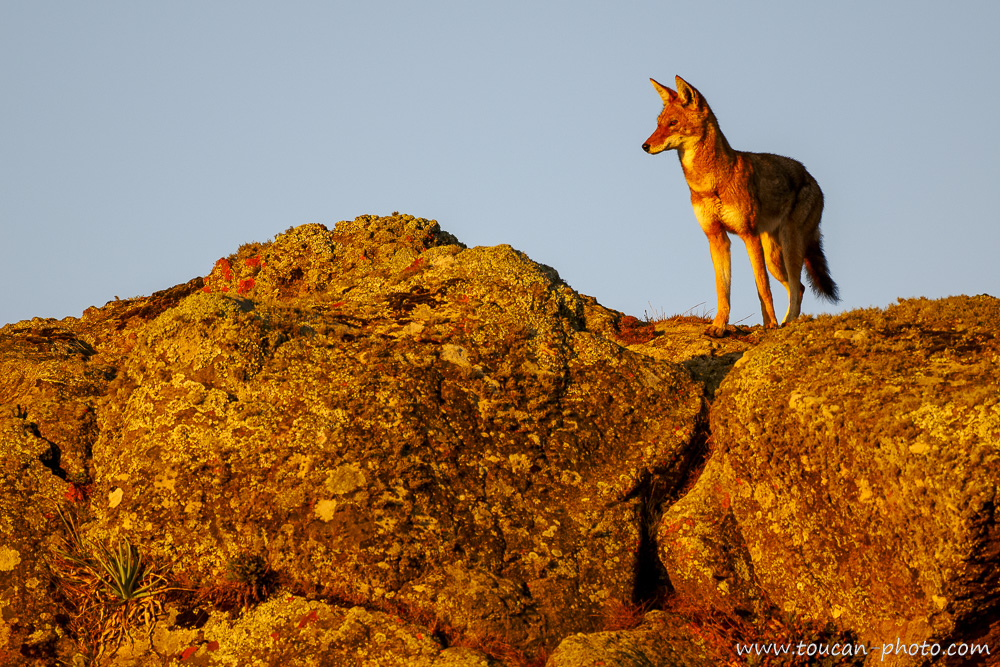
The Ethiopian wolf (Canis simensis) has a slender build compared to other wolves, and is also very light (16 kg for a male and 13 kg for a female)
As a result of this isolation and slow evolution, the Ethiopian wolf has a morphology very different from that of other wolves. Thinner, lighter, with long legs, large ears, and a narrow muzzle, it is built for hunting small mammals rather than chasing large prey. This slender silhouette allows it to move easily through high-altitude meadows and pounce with precision on the rodents that constitute the bulk of its diet. Its large ears allow it to locate prey underground or in the grass, while its fine muzzle is perfectly adapted for catching small animals at the entrance of their burrows. Unlike other wolves, it hunts alone. Since rodents are small and dispersed, pack hunting would offer little advantage.
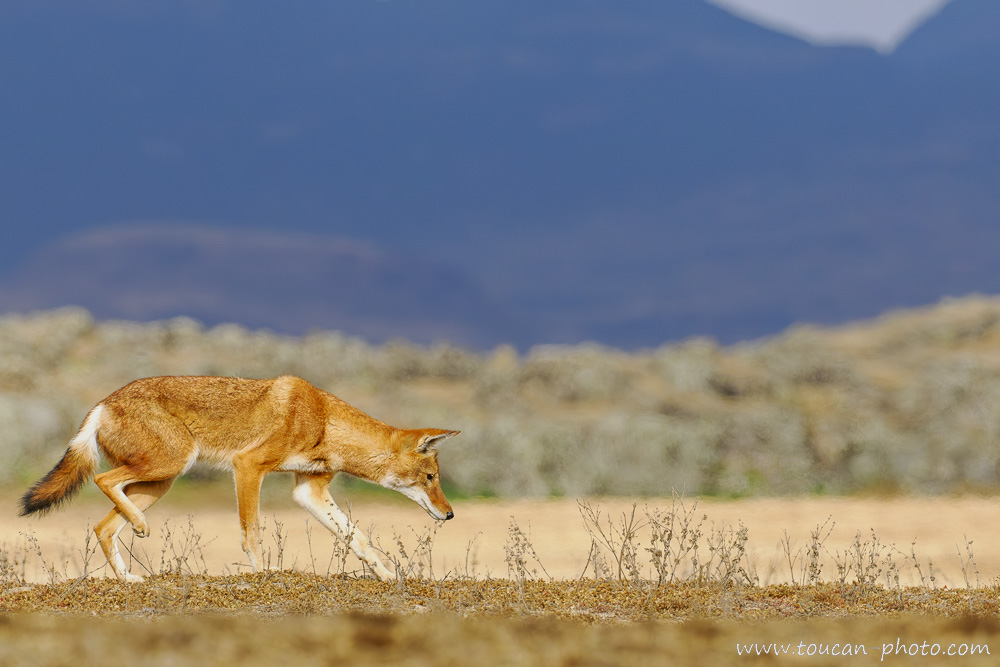
A wolf with a slender silhouette approaches a rodent’s burrow with light steps.
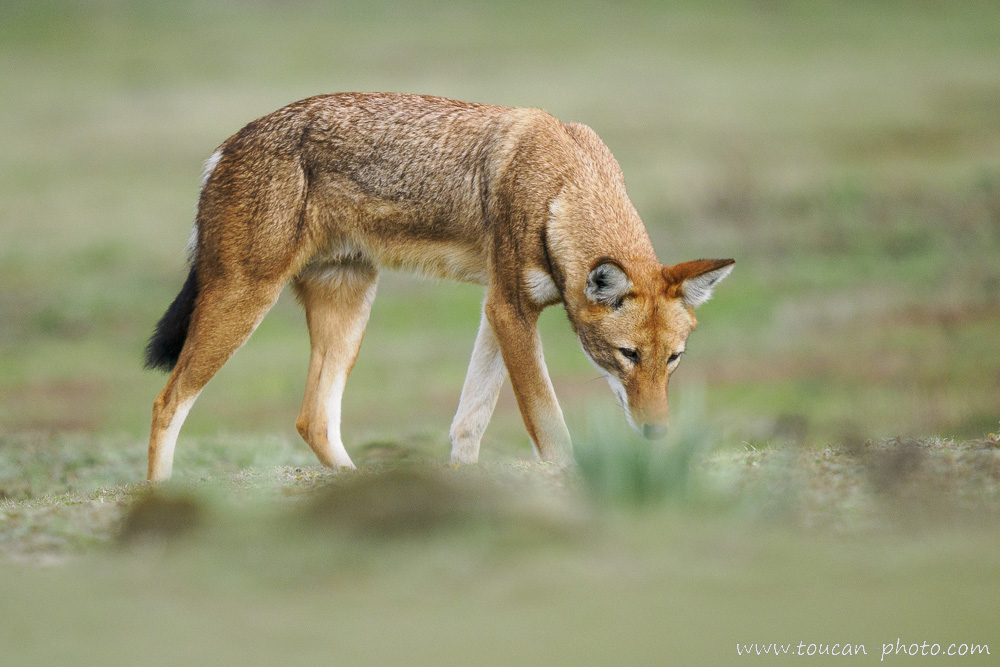
Wolf listening. The sharp hearing of this wolf allows it to hear rodents even when hidden underground.
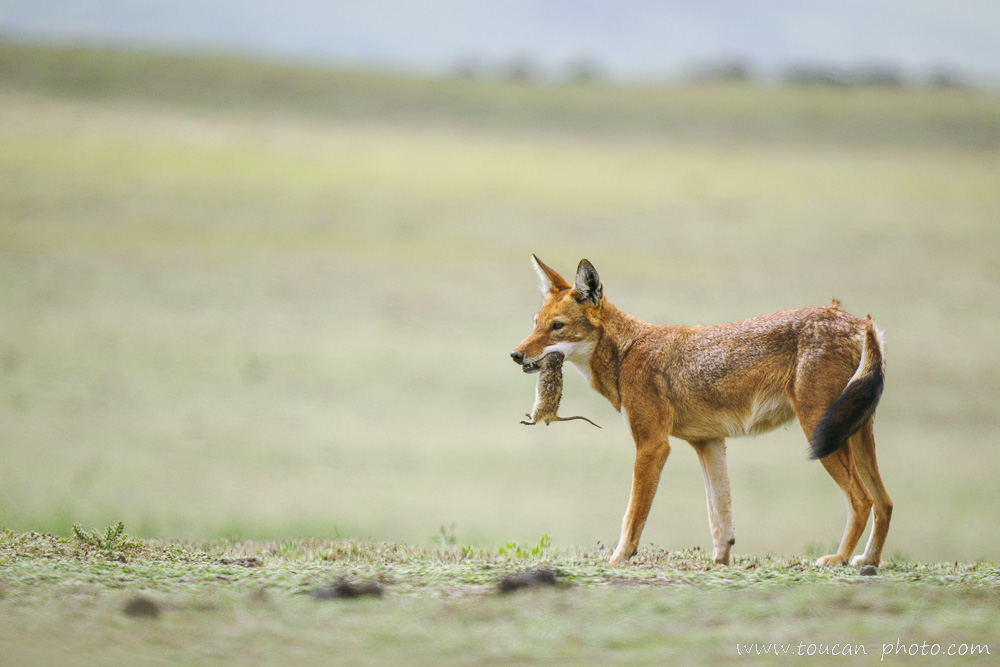
This wolf has caught a mole rat and is about to make a meal of it. There are approximately 6,000 rodents per km² in the Bale Mountains, which favored the specialization of the Ethiopian wolf as a rodent hunter.

A Blick’s grass rat (Arvicanthis blicki) sounds the alert. This species is strictly endemic to the Ethiopian highlands.
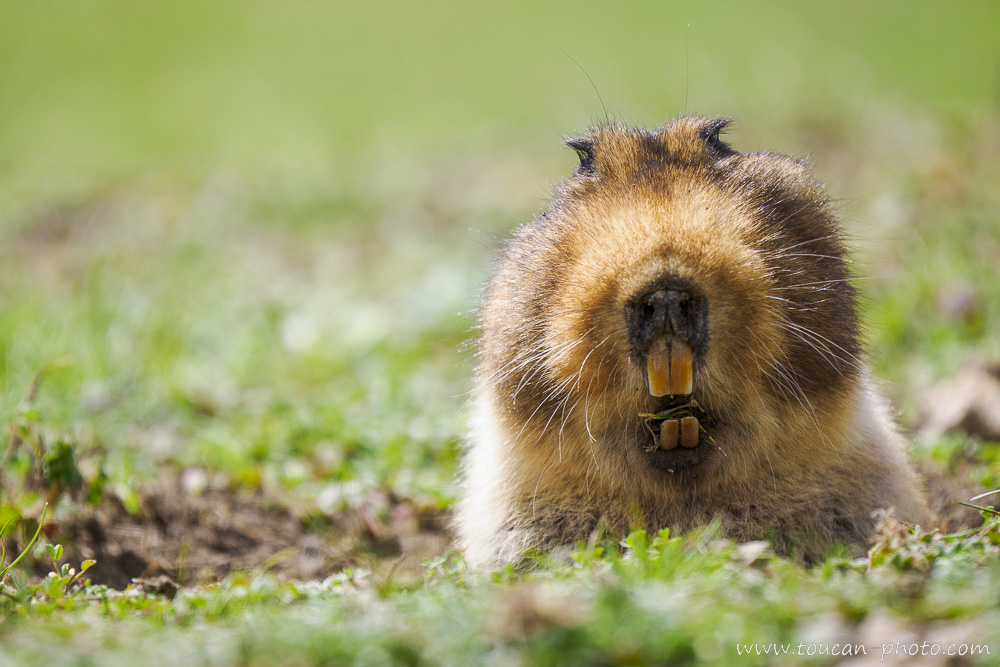
Portrait of the Ethiopian wolf’s favorite meal, the giant mole-rat (Tachyoryctes macrocephalus). This species is not only endemic to Ethiopia but is exclusively limited to the Bale Mountains.
Wolves live in packs typically composed of several adults and young from previous years. As with many canids, the pack is organized around a dominant pair, often called the breeding pair. In most cases, only the dominant female breeds, while other group members participate in territory protection and raising the young. After birth, the pups are raised collectively: several adults from the pack guard the den, bring food, and participate in their protection. This cooperative system increases the chances of pup survival in a difficult environment like the Ethiopian highlands. Thus, even though the Ethiopian wolf generally hunts alone, it remains a deeply social animal, whose survival depends largely on the cohesion and organization of the pack.
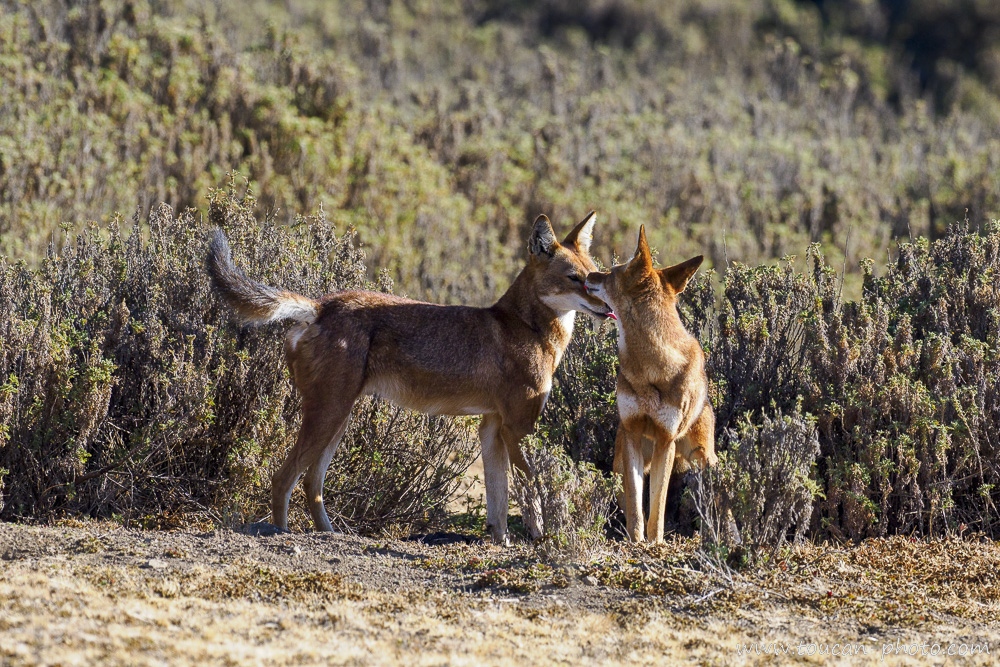
Social interaction among Ethiopian wolves.
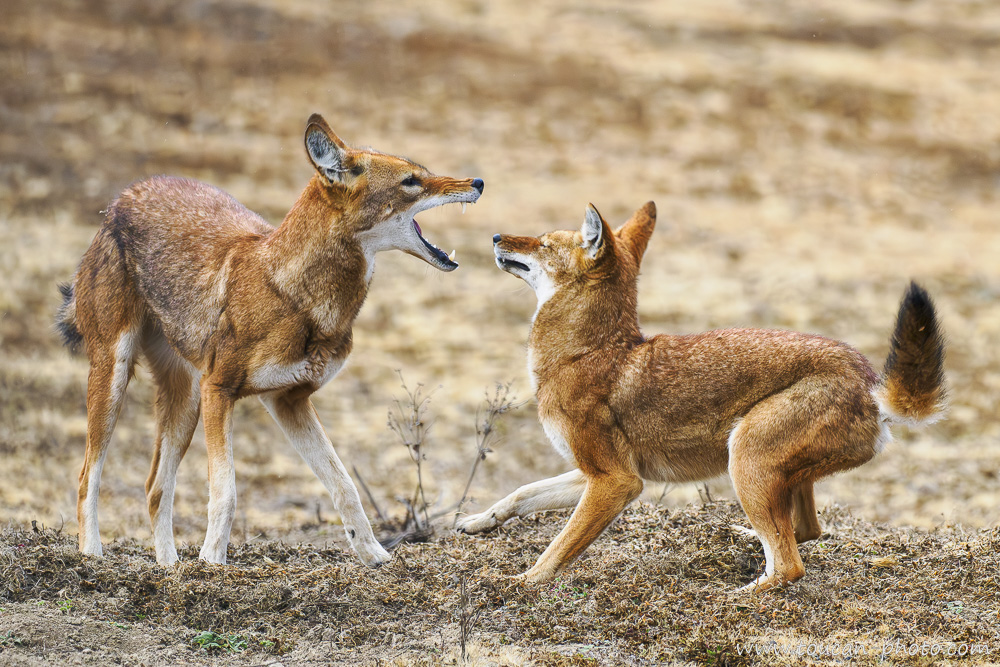
A reminder of “Rank.”
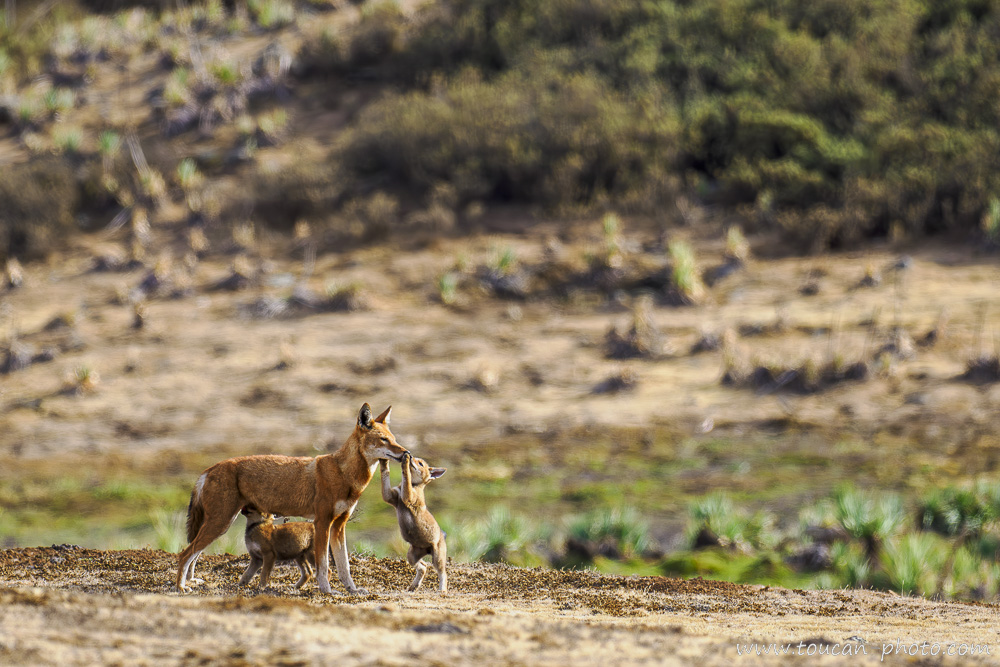
A female wolf, the alpha of her pack, cares for her two pups.
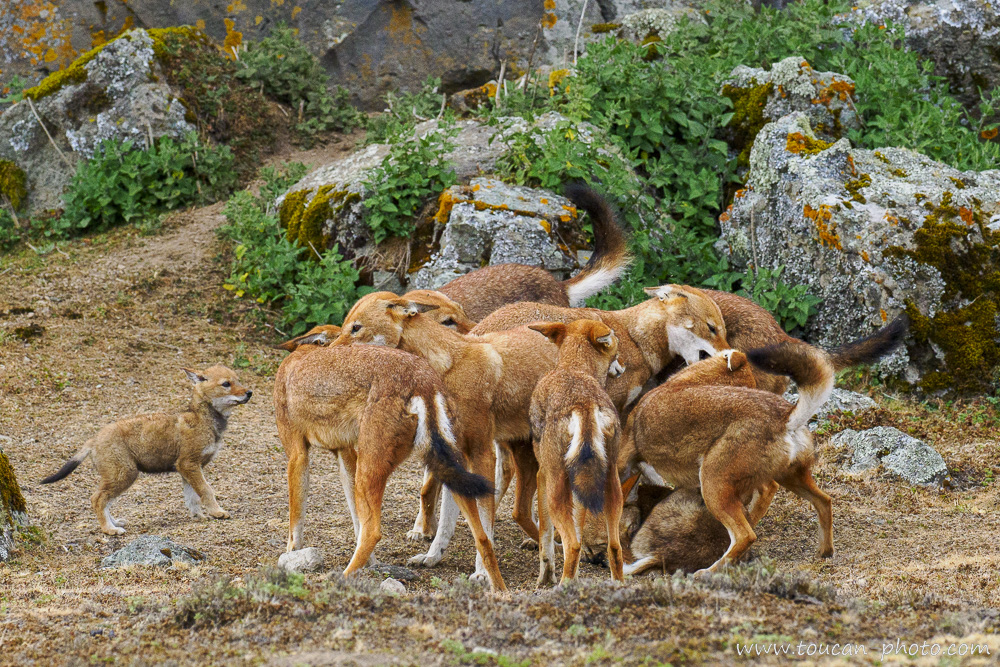
Since Ethiopian wolves spend much of the day alone tracking rodents, they gather in the evening and spend the night close to each other. Whenever they reunite or before separating the next day, they mark the event with a “greeting ceremony.” This ritual is their way of confirming their belonging to the group and strengthening social bonds.
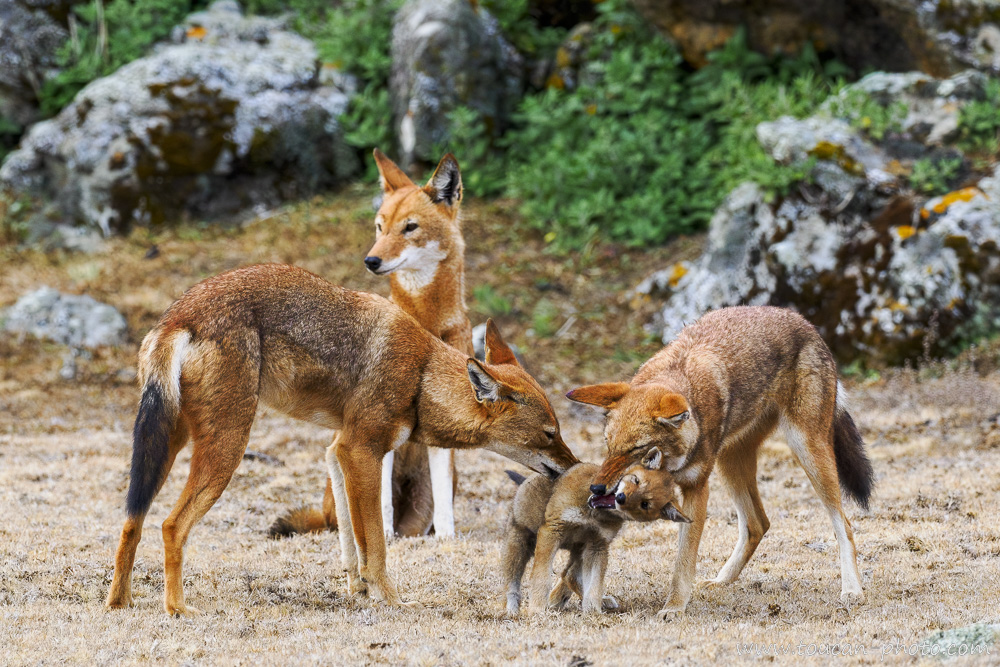
In this photo, a youngster receives signs of affection from the adults of the pack.
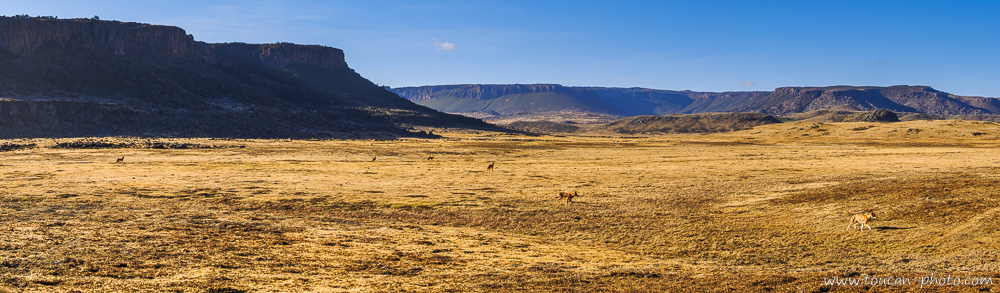
After morning greetings, the wolves set out in small groups to patrol in order to reinforce the pack’s territory. They then scatter to go hunting individually.
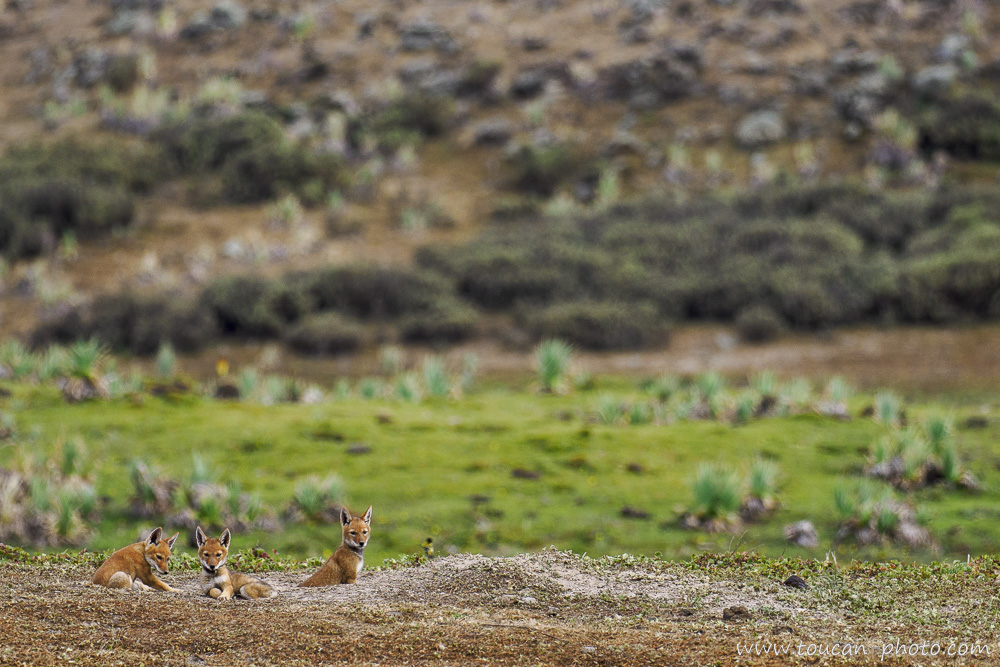
These three young wolves await the return of the adults who have gone hunting for the day. Contrary to appearances, young wolves are never left alone. An adult hidden a little further away has taken the role of “guardian” for the day, to monitor and protect the new generation. Every day, a different adult takes on the role of guardian.
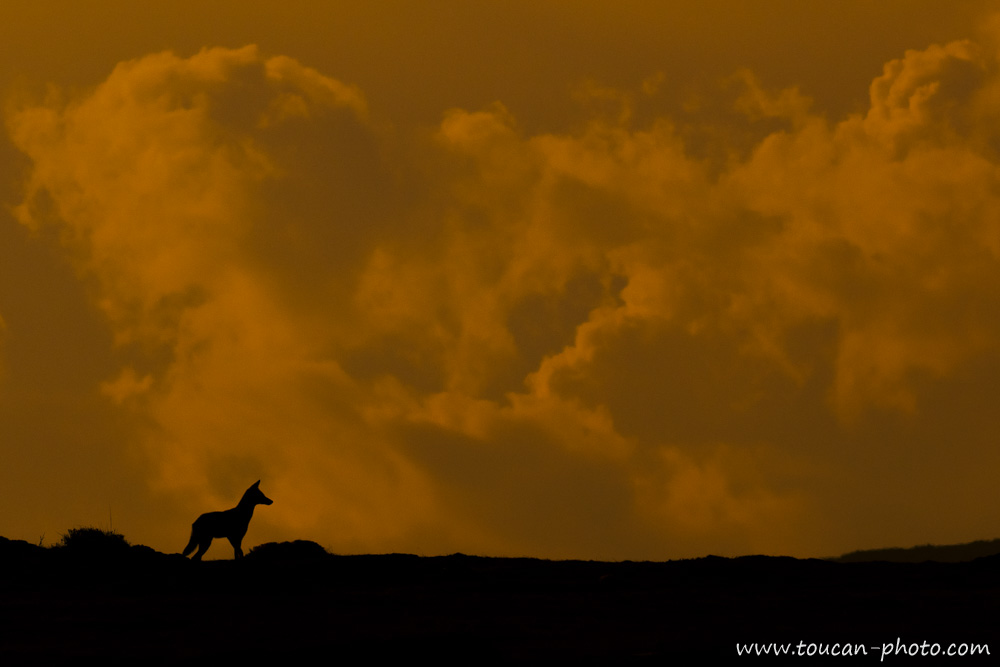
Ethiopian wolf at twilight.
The Ethiopian wolf today faces many threats, largely related to human presence. By sharing its territory with local populations and their herds, it is exposed to a major health risk: contact with domestic dogs. The latter can transmit diseases such as rabies or canine distemper, two infections that are particularly devastating for the species. In a few weeks, an epidemic can decimate a large part of a pack, or even an entire population. Added to this are habitat fragmentation due to the expansion of human activities and grazing, as well as the isolation of different populations, which limits genetic exchange. Already extremely rare, the Ethiopian wolf remains very vulnerable, its survival depending closely on conservation efforts and cohabitation with local communities.
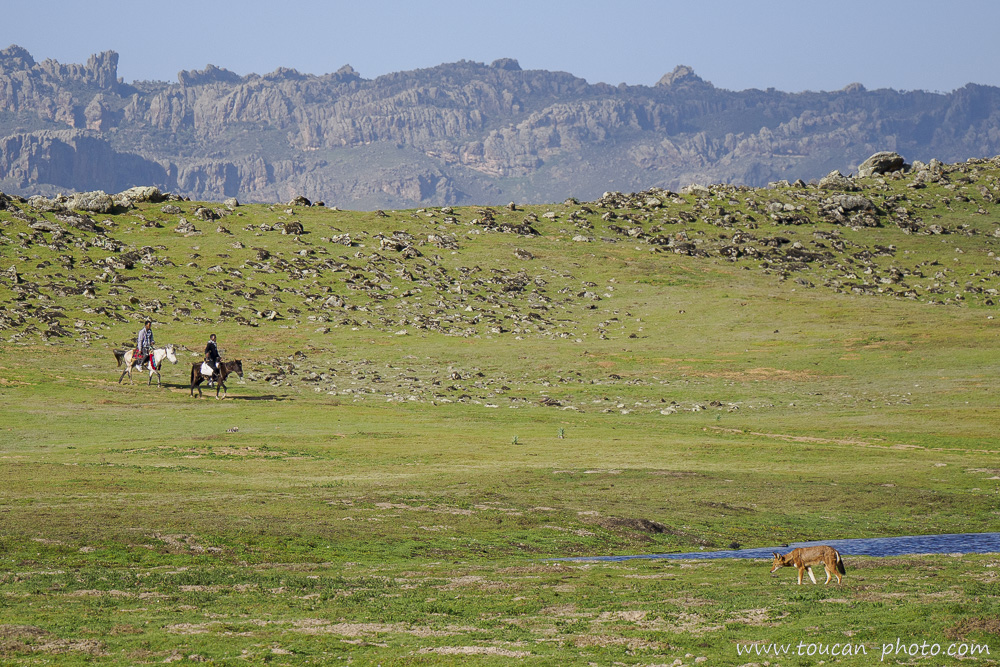
Ethiopian wolf near two riders returning to their village.
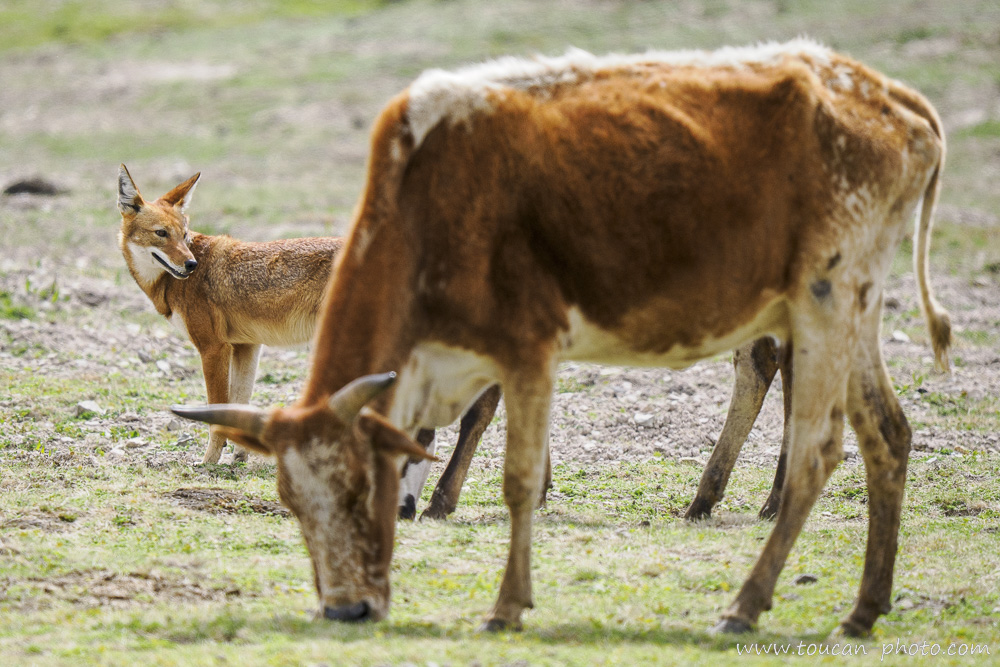
The Ethiopian wolf represents a threat neither to humans nor to livestock. Its specialization is such that it focuses almost exclusively on rodents. Fascinating fact: some wolves even benefit from the presence of herds in the meadows. They use cows as a “sound and visual shield,” with the dull trampling of the livestock masking their own footsteps. This ruse allows them to approach burrows with absolute discretion, surprising the rats before they have time to sound the alert.
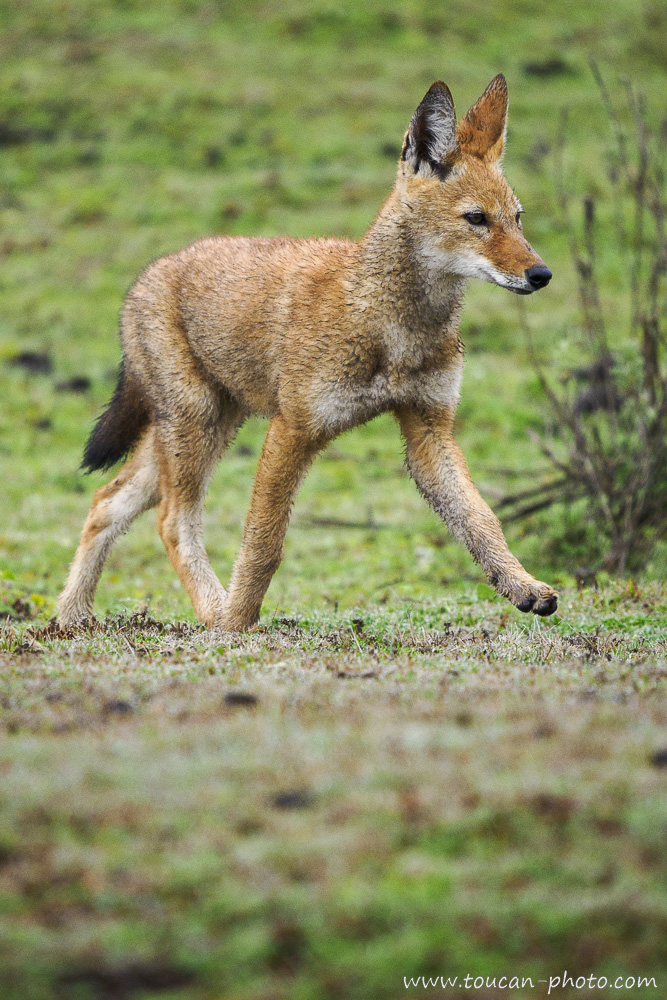
Portrait of a young Ethiopian wolf.
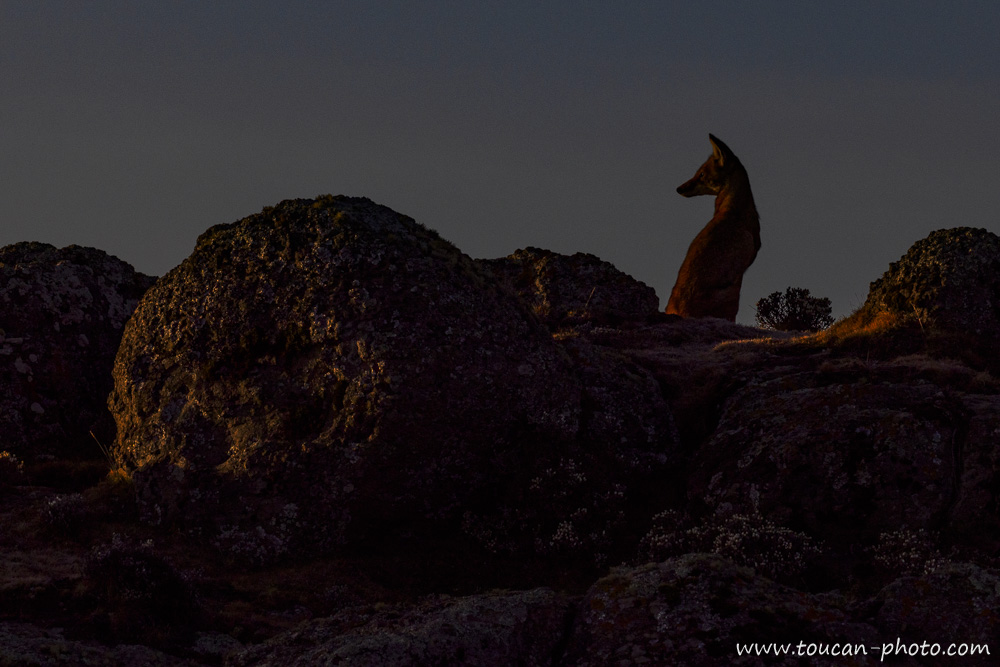
Grazing light from the last rays of the sun on an Ethiopian wolf.
In the fading light of the highlands, the Ethiopian wolf appears as a silhouette outside of time. Discreet, solitary, fragile, it alone embodies the precarious balance of these mountains. To see it is to touch with one’s gaze an ancient world… that could, one day, disappear.
— The Ethiopian Wolf —
View more images of the Ethiopian wolf on the site
— Continue the journey in Ethiopia —
Read the article on the Erta Ale Ethiopian volcano
Read the article on the Simien Ethiopian massif
Read the article on the salt of Lake Karum
— Additional Resources —
The EWCP (Ethiopian Wolf Conservation Programme) website