Reunion among the Mongolian farmers

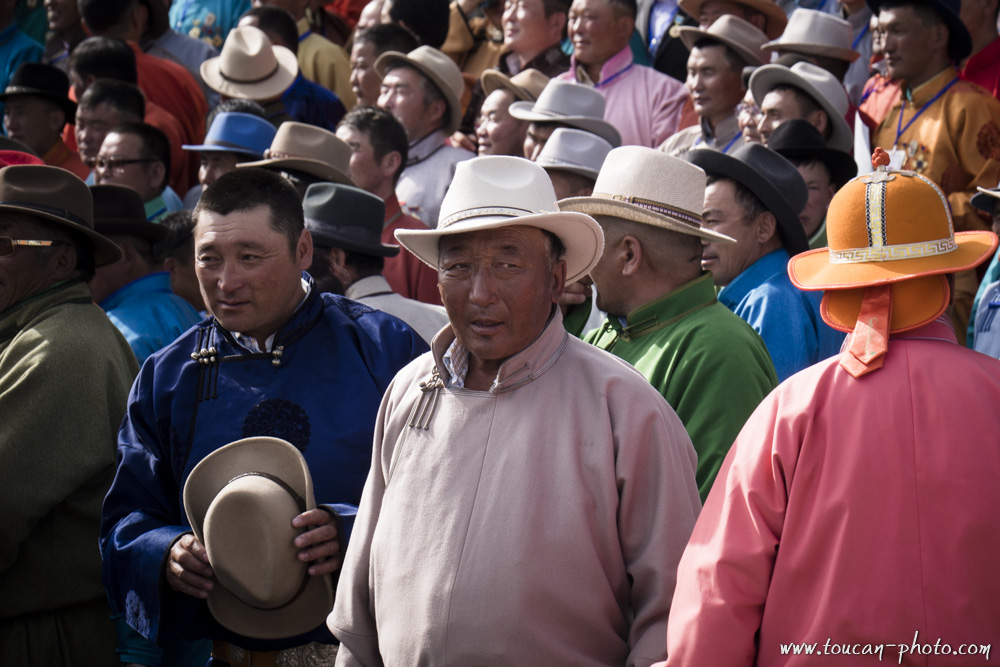
A colorful meeting for a sensitive debate - Mongolia

A colorful meeting for a sensitive debate.

This photo was taken in 2015 in Ulaanbaatar, the capital of Mongolia.

Large livestock owners from all over the country met once again to discuss the consequences of the latest “white dzud” that had just hit Mongolia. A “dzud” is a climatic phenomenon (sometimes a summer drought, sometimes a freezing winter, or sometimes a combination of both) that leads to the death of many head of livestock. In recent years, “dzuds” have been occurring one after another. Annual losses are counted in the millions of animals.

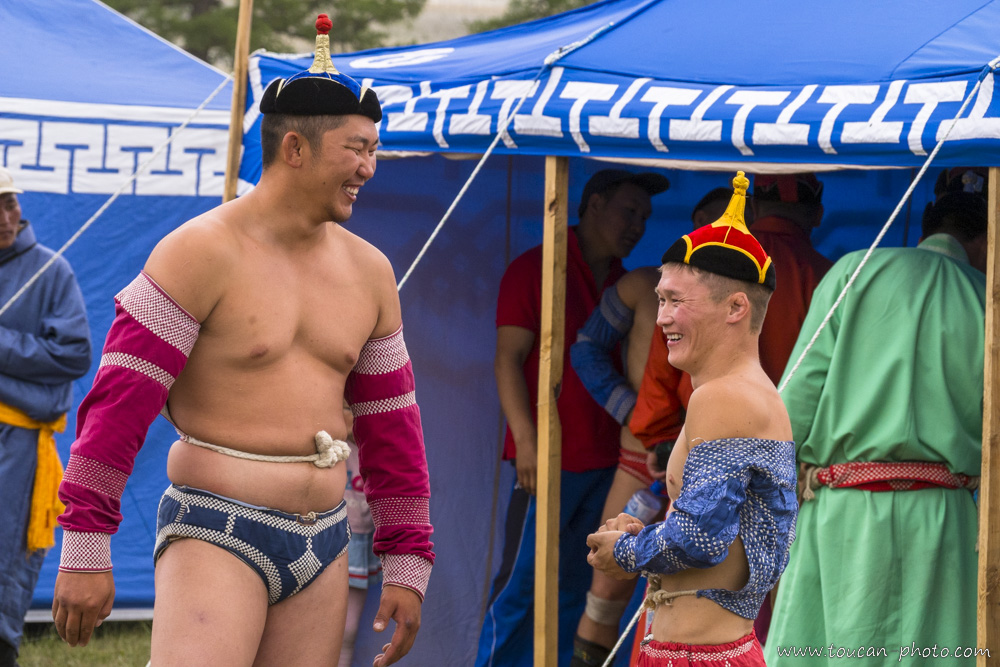
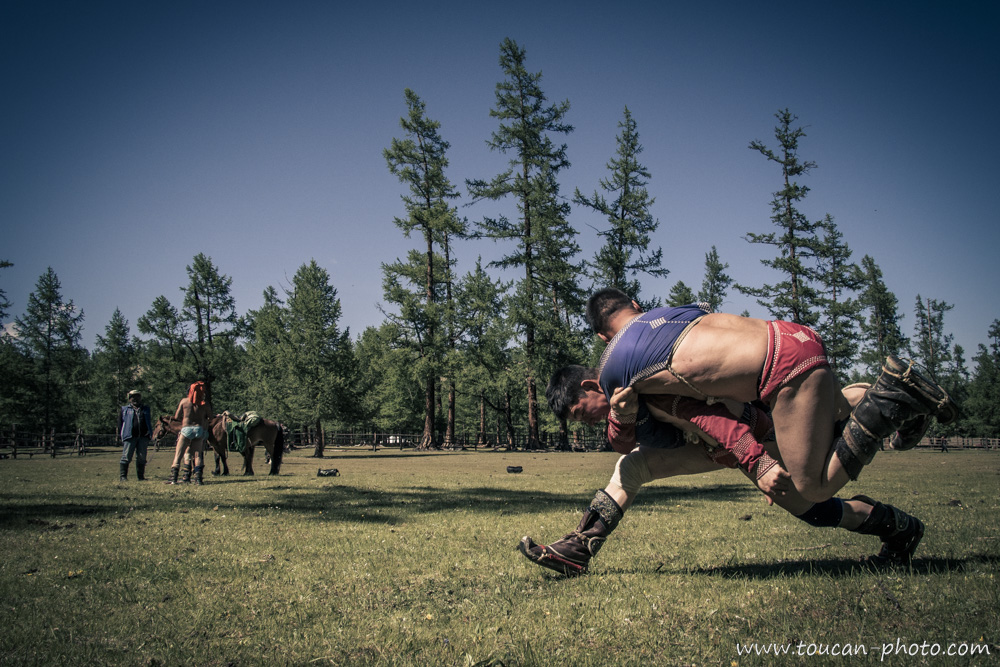
Wreslters relaxing during Naadam festival, Mongolia

Wreslters

Wreslters relaxing during Naadam festival, Mongolia
 

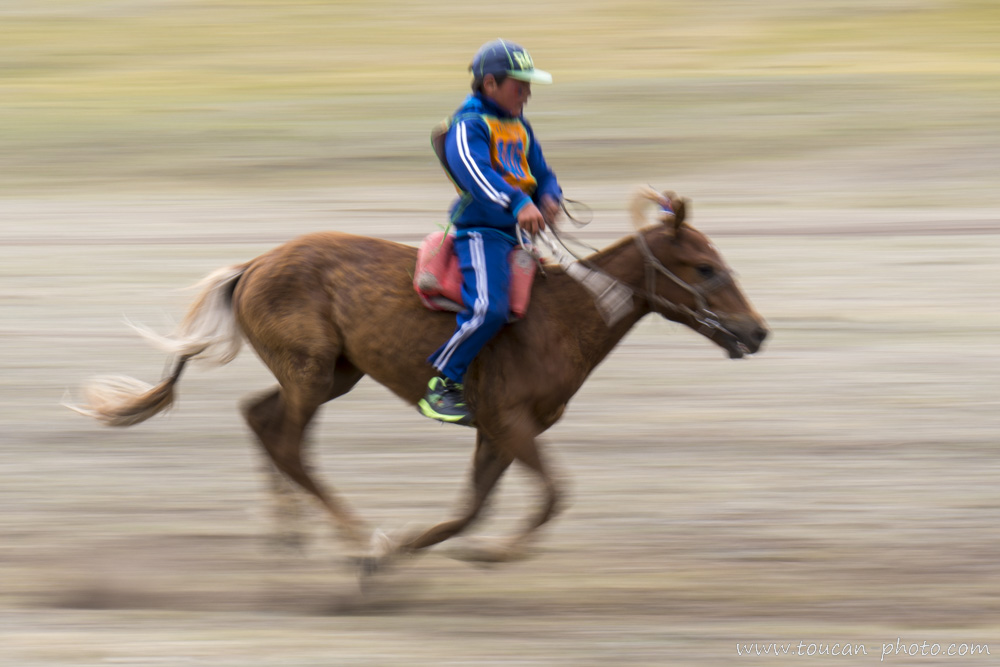
The festival of Naadam (In Mongolian: Наадам, and in classical Mongolian: ᠨᠠᠭᠠᠳᠤᠮ) is a traditional festival celebrated in Mongolia, Inner Mongolia and in Tuva. During the Naadam festival, three different competitions are organized: Mongolian wrestling, archery and horse racing. The three games are held throughout the country during midsummer, but the most mongolian famous competitors participates at Ulaanbaatar events, the capital city. Women have started participating in the archery and girls in the horse-racing games, but not in Mongolian wrestling.

Mongolia: The Khövsgöl lake

Called the « Blue Pearl » because of its water purity, the Khövsgöl lake (in mongolian : ᠺᠥᠪᠰᠦᠭᠦᠯ) is a sacred place for the local people, which they call « Mother ». The below pictures were taken at summer time, during a several weeks horse ride on the lakeside. More than a view on the lake, these photos show also the local inhabitants met during this trip.

Location of the Khövsgöl lake

The Khövsgöl lake is located in the north of the country, near the Russian border, in the eponymous province : The « aïmag de Khövsgöl » (in cyrillic mongolian : Хөвсгөл аймаг). The population density in this province is only 1,2 inhab./km2 (the average in Mongolia is about 1,7 inhab./km2)

View on the Khövsgöl lake

The Khövsgöl lake has a lenght of 136km, a width of 36km and its deepest point is at 262meters. Which makes it the second-most widest and the deepest lake in Mongolia. This lake holds almost 70% of Mongolia’s fresh water and its volum of 480 km² makes it the 19th biggest lake in the world.

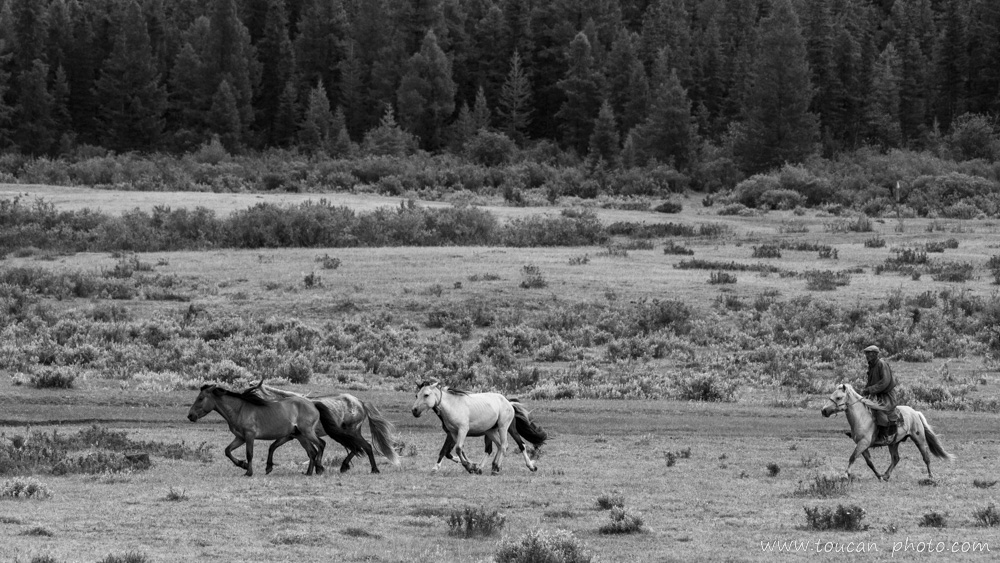
Pursuit in the steppe

A Darkhad rider (a mongolian ethnic group living in the area) bringing together a herd of horses. As him, today, more and more horse riders prefer to use motorbikes for some tasks as to follow the herd.

Mongolia Khövsgöl

Sunset Delgerkhaan

A sunset view on Delgerkhaan, the mountain range located on the west side of the Khövsgöl nuur

Sheperdess milking

At evening, a sheperdess does the second milking of the day. Each family breed cows, sheeps, goats and sometimes yaks. The agriculture is not widespread in Mongolia, only 0,6% of lands are used for agriculture (To compare, it is more than 33% in France (2015).

Horse riders lake side

Horse riders on lake side

Traditional Ger

The “Ger”, means “Familly” in Mongolian, it is the traditional mongolian housing. The foreigners wrongly call it a “Yourte”, which is in fact the Russian translation. A Ger provide a ground surface of 15 to 30 meters square to its inhabitants. Two Mongolians can set up this house in around 45 minutes and disassemble it in 30 minutes. The structure is made of wood and is covered by felt. Its isolating properties, allow the house to stay fresh in summer and keep a familly warm during winter with the help of a wood, despite the extremely low temperatures.

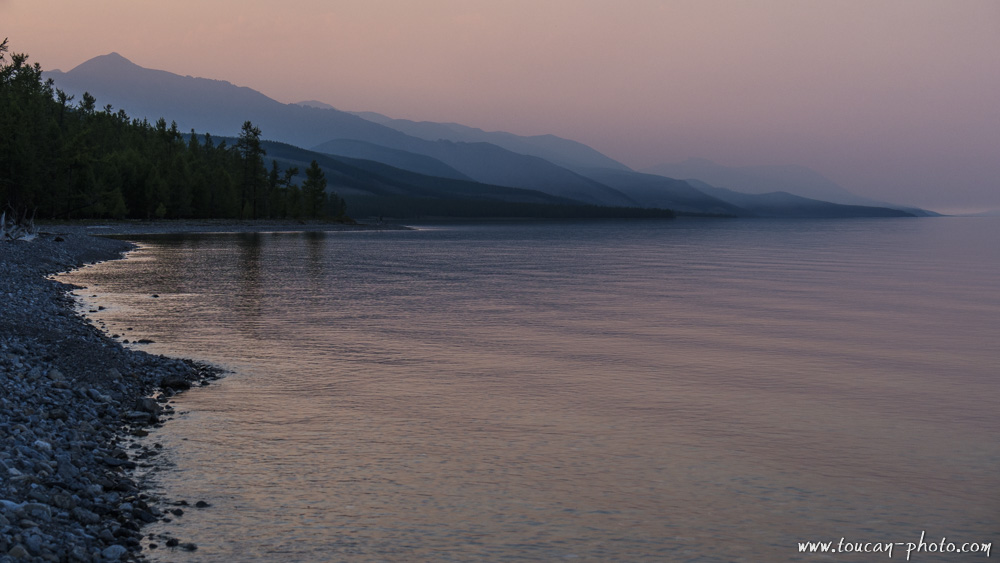
Khövsgöl bank sunset

The Khövsgöl bank at sunset. The Khövsgöl lake is a cousin of the Baïkal lake, which is world-famous and located in Siberia, 195 km to the north. Both lakes were made by the same tectonic shift. The Khövsgöl lake would be from 2 to 5 millions years old.

Bicycling in the steppe

Bicycling in the steppe

Sacred Khövsgöl

This region is sometimes victime of drought, so the lake Hovsol that provide fresh water to the three main ethnic groups of the region (thee Darkhads, the Bouriates and the Tsaatanes) is considered are sacred by local inhabitants.

Taïga and streams

This small stream emerging from the Taïga will merge with one of the 96 riviers which will flow into the Khövsgöl lake. Thus, even if a hundred of rivers flow into the Khövsgöl lake only one goes out, it is the Eg river. It will travel 1000km before it flows into the Baikal lake, in Russia. The Taïga, that you can see in the background, is the biggest forest in the world (10% of the emerged lands of the world). This forest is mostly located out of Mongolia, but its edge is at the extrem north of the country near the Khövsgöl lake.

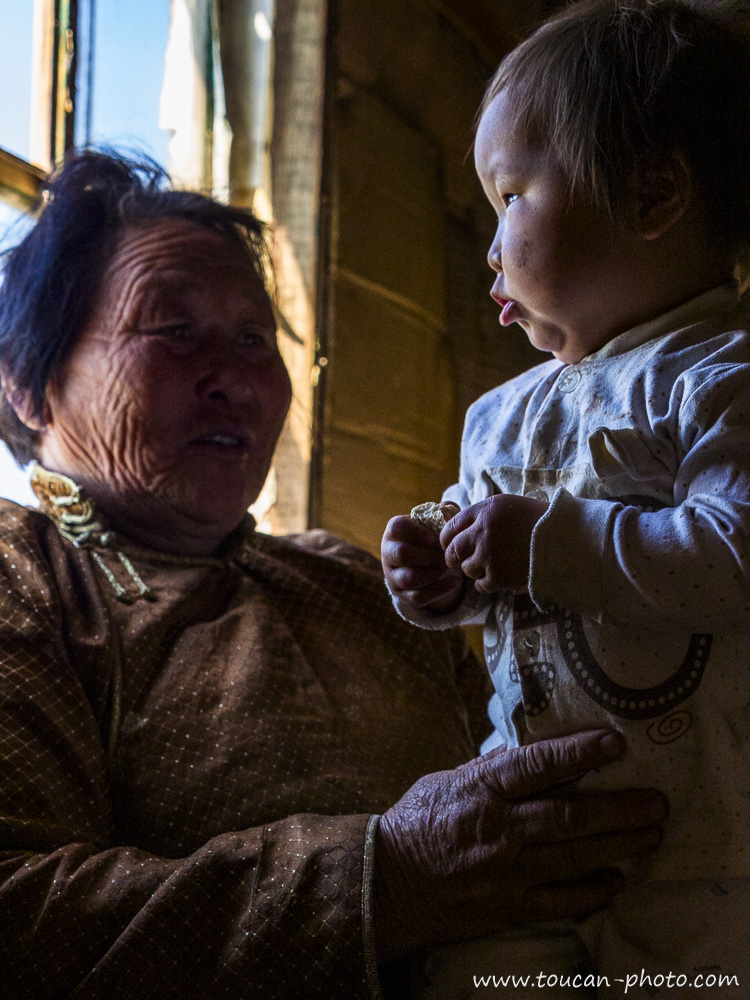
Kushi and her grandma

Kushi and her grandma

Deadwood Khövsgöl

Deadwood on Khövsgöl lake side

Darkhad valley

The Darkhad valley (Mongolian: Дархадын хотгор). This mountain range along the west coast of Khövsgöl lake is itself surrounded by the Darkhad valley. It is covered by steppes, which will feed the herds.

Flower lake side

Flower on the lake side. On the second plan, we can see the east lake side. Contrary to the west side that is mountainous, the eastside has a flat landform.

Horses and rider

This horse is watching the horse rider, which is watching another horse, the Toucan’s mount.

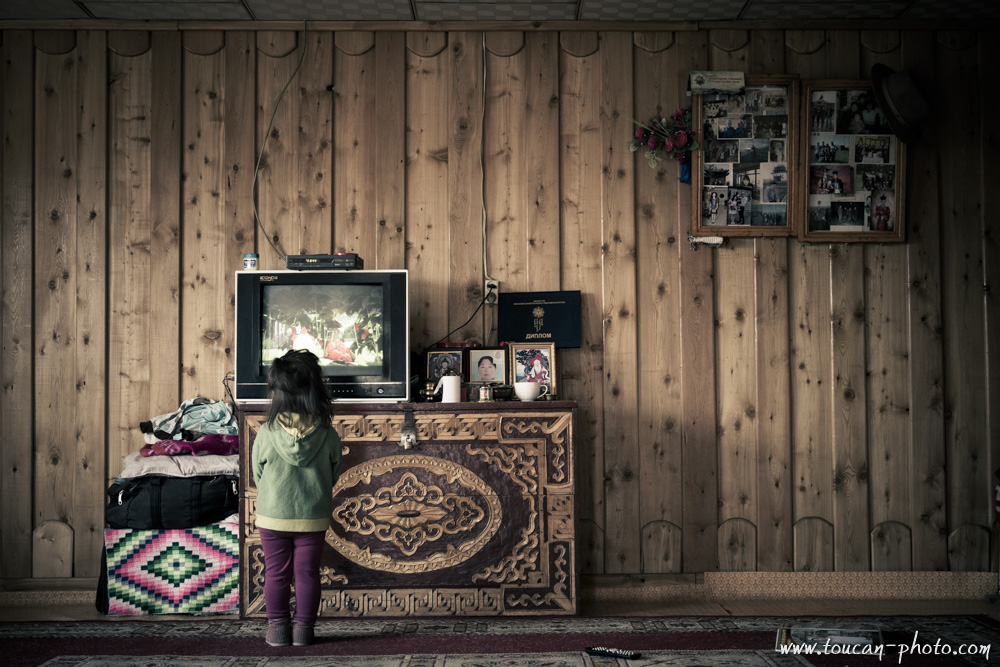
Chuluun and Kushi

Chuluun (means “Stone”, “Rock”) and his little sister Kushi (means “happy life”). In Mongolia, the male surnames are meant to be the expected characteristics by the parents for their child, for example : Bat (Strong), Bold (Steel), Chuluun (Stone) are frequent names for men. About women, they often have flower names or a quality as a name, as Oyuun (Wisdom), Udval (Chrysanthemum, Narantsetseg (Sunflower), …

Yak in Darkhad valley

Due to the climate disruption of these last years, it is more and more difficult for the breeders to ensure the survival of their herds. The “dzud“ are becoming more and more frequent. A “dzud“ is a climate phenomenon defined by an extremely rough winter. The temperatures can drop to -40°C or -50°C for months. Furthermore, if the raining falls are too heavy, the snowpack will be too thick to let the herds be able to reach the food. If this rough winter is followed by a scorching summer, the animals that cannot recover their stock of fat, die by thousands. During winter 2009/2010, a severe “Dzuz” stricked the mongolian steppes, more than 8,5 millions head of cattles died, which is around 20% of mongolian herds. The winter 2015/2016 was again very rough for animals. 858,100 cattles had already perished, on the 7th April 2016.


?>