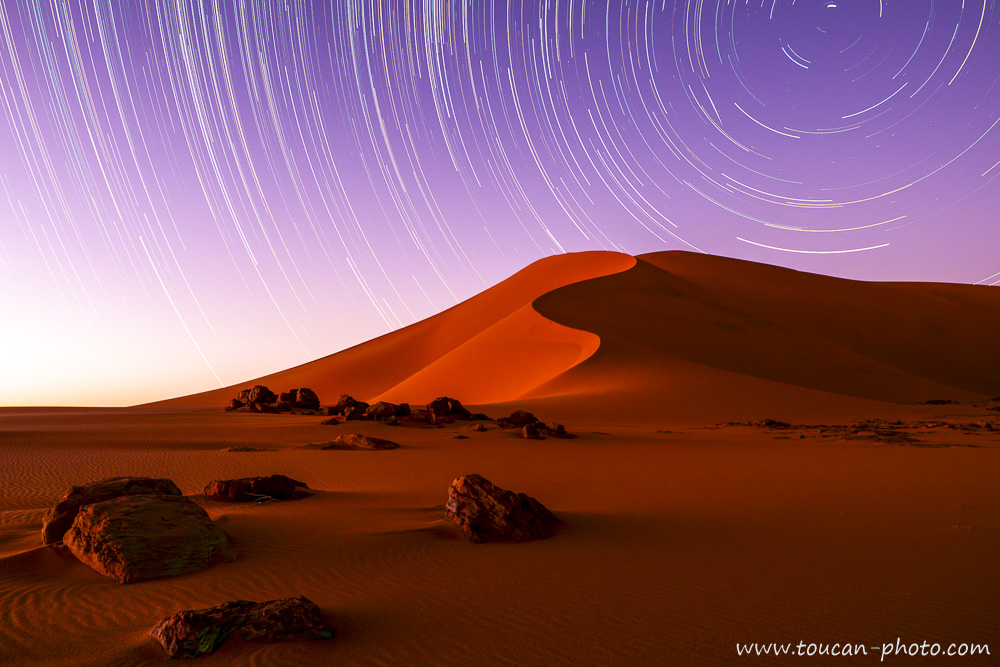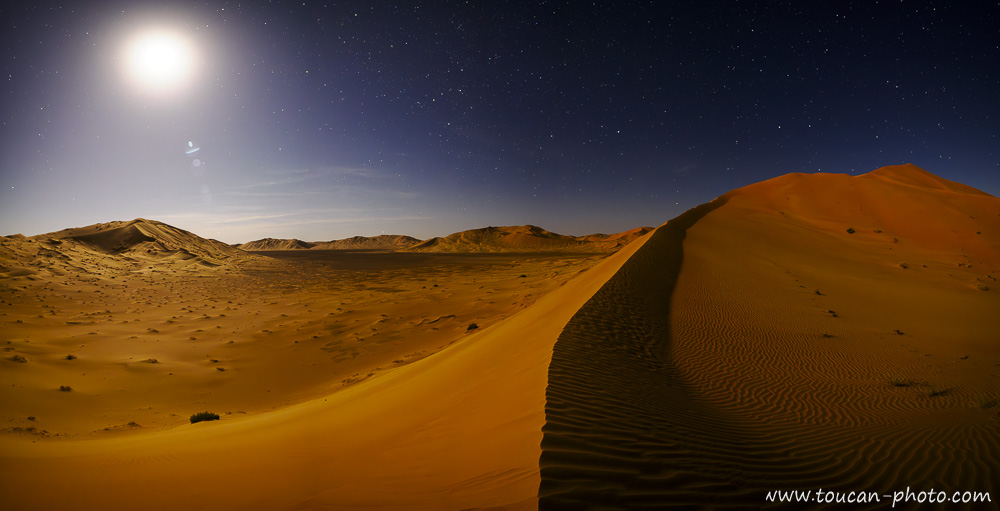
Moonlight over the Rub al Khali – Oman

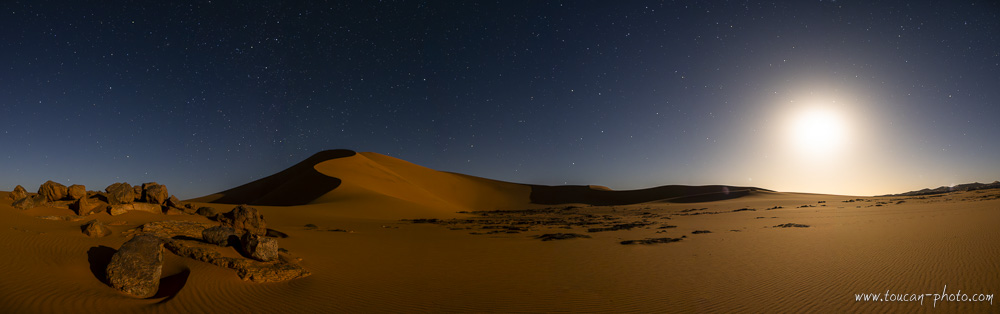
Moonlight over the sand dunes of the Rub al Khali desert, Oman

Under the soft moonlight, the Rub al Khali reveals itself in all its nocturnal majesty.

Under the soft light of the moon, the Rub al Khali, the vast sand desert of the southeastern Arabian Peninsula, reveals itself in all its nocturnal majesty.

The silvery dunes draw silent undulations, while the starry sky stretches to infinity above this landscape of raw and timeless beauty. An atmosphere of absolute calm and solitude envelops this legendary desert, inviting contemplation and reverie in the heart of one of the largest sand deserts in the world.

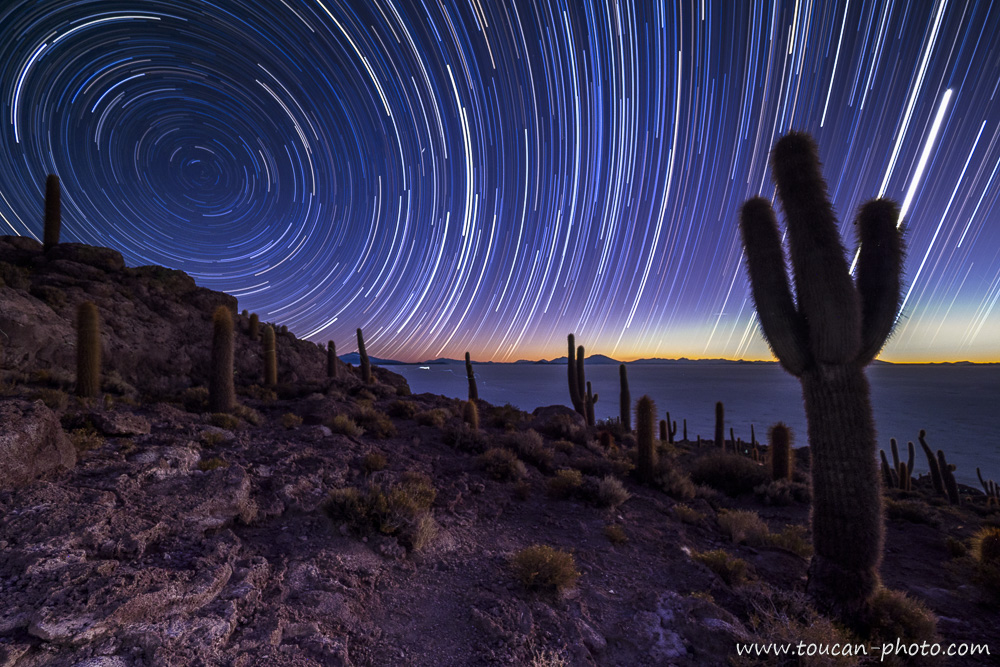
Giant Cacti under the Stars of Salar de Uyuni (Bolivia)

Giant Trichocereus pasacana cacti under the starry sky of Salar de Uyuni, Bolivia

On Isla Incahuasi, these motionless giants seem to be in dialogue with the stars.

Standing like sentinels in the heart of the salt desert, the Trichocereus pasacana cacti watch over the white immensity of the Salar de Uyuni.

These botanical colossi grow with infinite slowness—barely one centimeter per year—with some reaching over ten meters in height after several centuries of life. Their time-sculpted silhouettes stand out beneath the night sky, silent witnesses to the freezing nights and scorching suns of the Altiplano. On Isla Incahuasi, these motionless giants seem to be in dialogue with the stars, anchored in volcanic rock for generations.

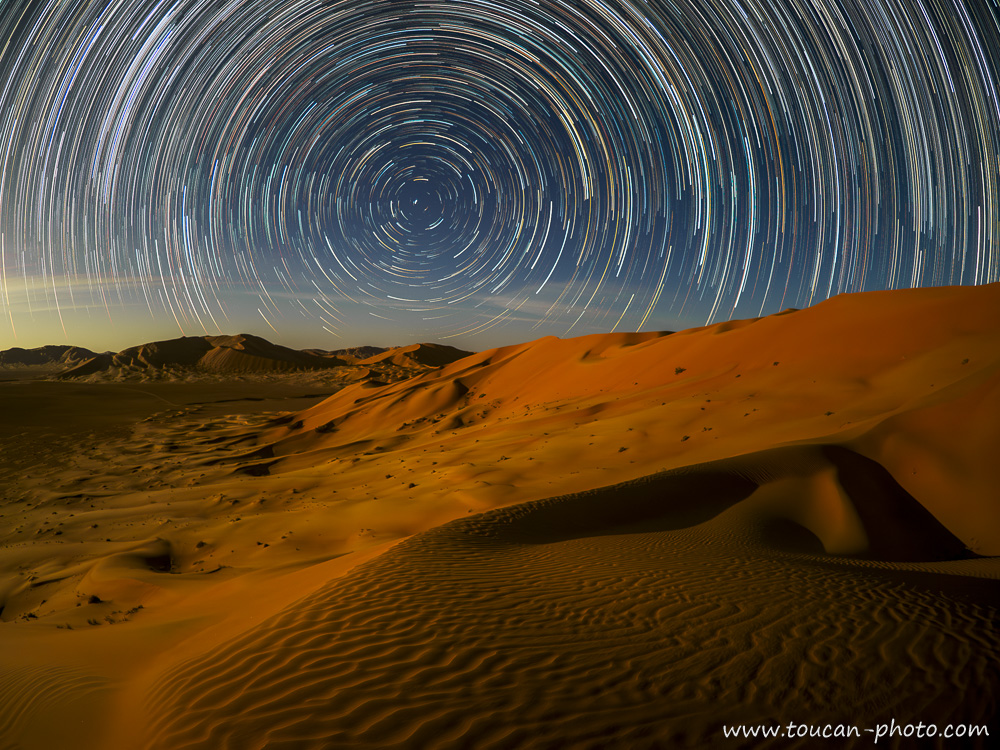
The Waltz of Stars Over the Dunes of the Rub al Khali (الربع الخالي)

The

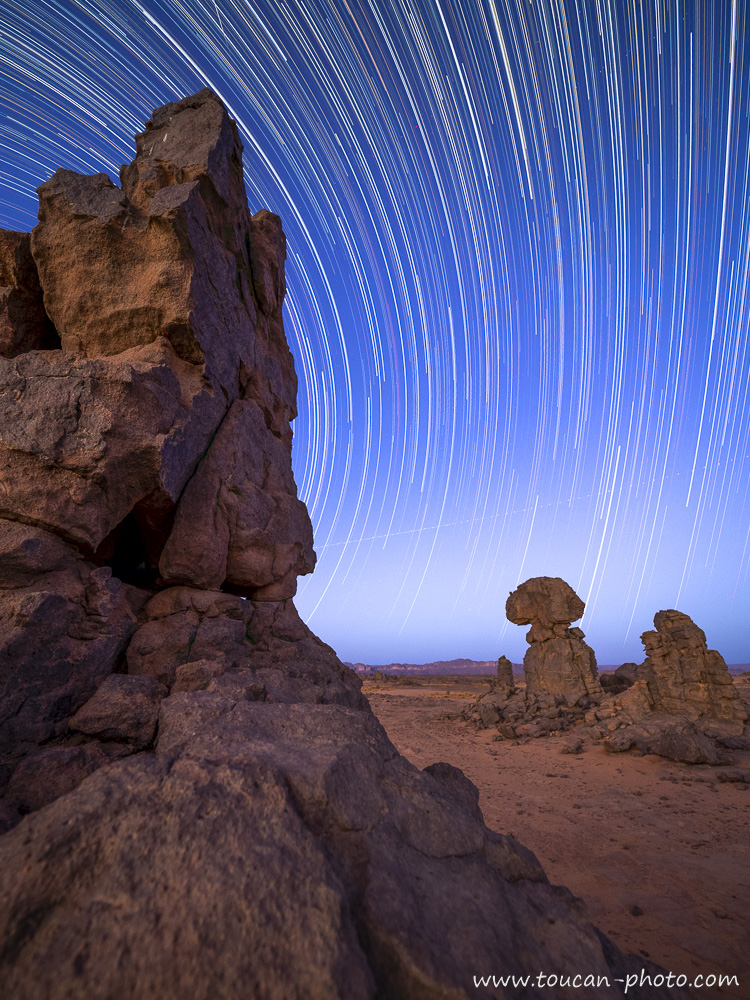
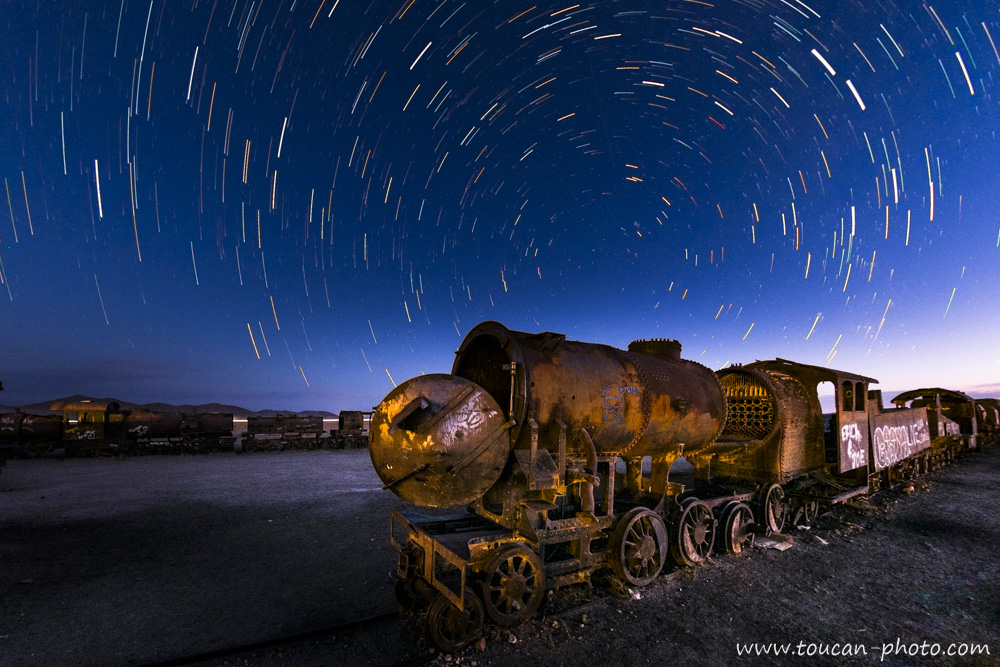
The Waltz of Stars Over the Dunes of the Rub al Khali (الربع الخالي)


In the vast, silent expanse of the Rub al Khali (الربع الخالي), literally “the Empty Quarter,” the largest sand desert of the Arabian Peninsula, the night sky turns into a celestial clock.
Captured with a long exposure, this image reveals the slow rotation of the Earth on its axis, as stars draw perfect arcs around the North Celestial Pole.
In the foreground, moonlit dunes glow with warm ochre tones. Shaped by prevailing winds, their flowing forms shift over time. The fine sand is the product of ancient sedimentary rock, weathered and eroded by wind over thousands of years.
Though seemingly still, this landscape speaks of constant motion: of wind, of stars… and of time itself.

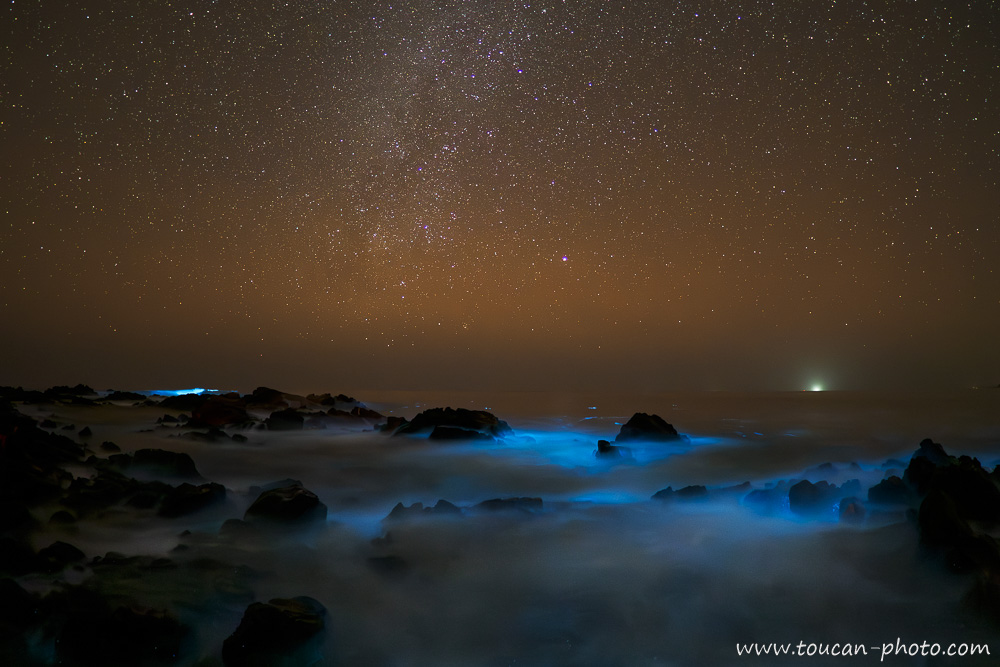
Bioluminescence of Krill Rising to the Surface at Nightfall (likely Euphausia sibogae) – Arabian Sea, Oman

Bioluminescence

Bioluminescence of Krill Rising to the Surface at Nightfall (likely Euphausia sibogae) – Arabian Sea, Oman


At nightfall, krill rise from the depths to the surface, driven by the planet’s largest daily animal migration. There, tossed by the waves, they emit a cold, bluish light. Their bioluminescence, produced by tiny organs called photophores, creates brief flashes across the surface of the sea. This shimmering glow — both camouflage and communication — sometimes turns the night ocean into a living sea of stars, drifting and silent.

Tea time for the Tuaregs of the algerian sahara desert

Tea

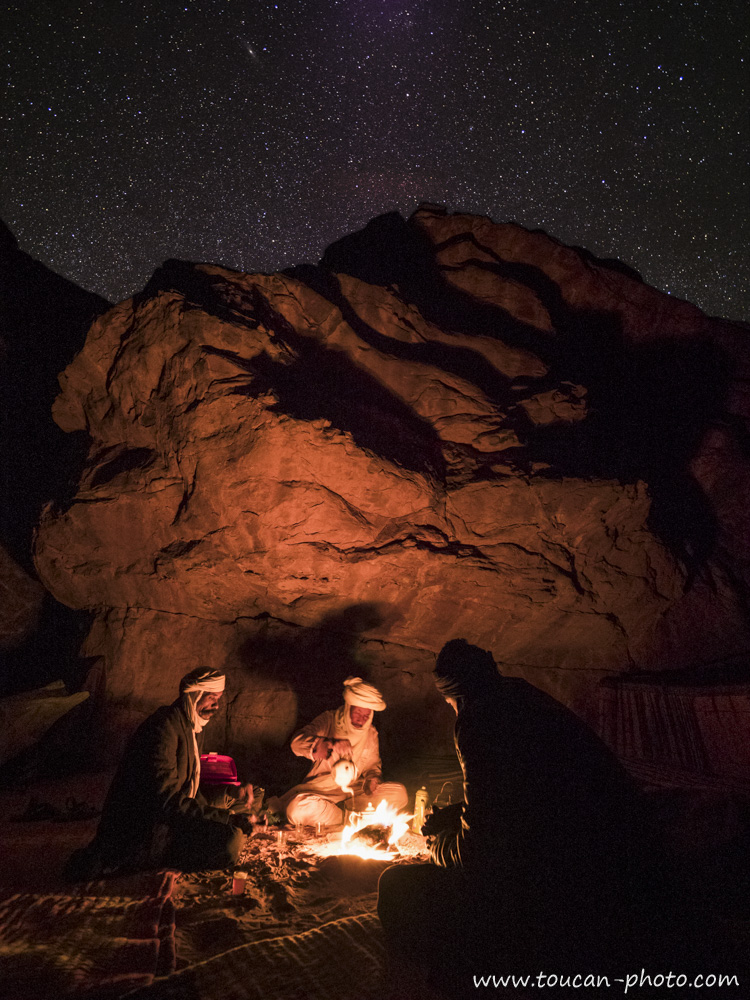
Tea time for the Touaregs of the algerian sahara desert

The preparation of tea is a ritual of extreme refinement among the Tuaregs. Using the same leaves, three consecutive tea are prepared. The flavors of each tea evolve infusion after infusion.
A Tuareg saying says: “The first is bitter like life; the second is sweet like love; and the third is gentle like the breath of death.”.

Read the paper about the Tadrart Rouge, a window to the Sahara and its history