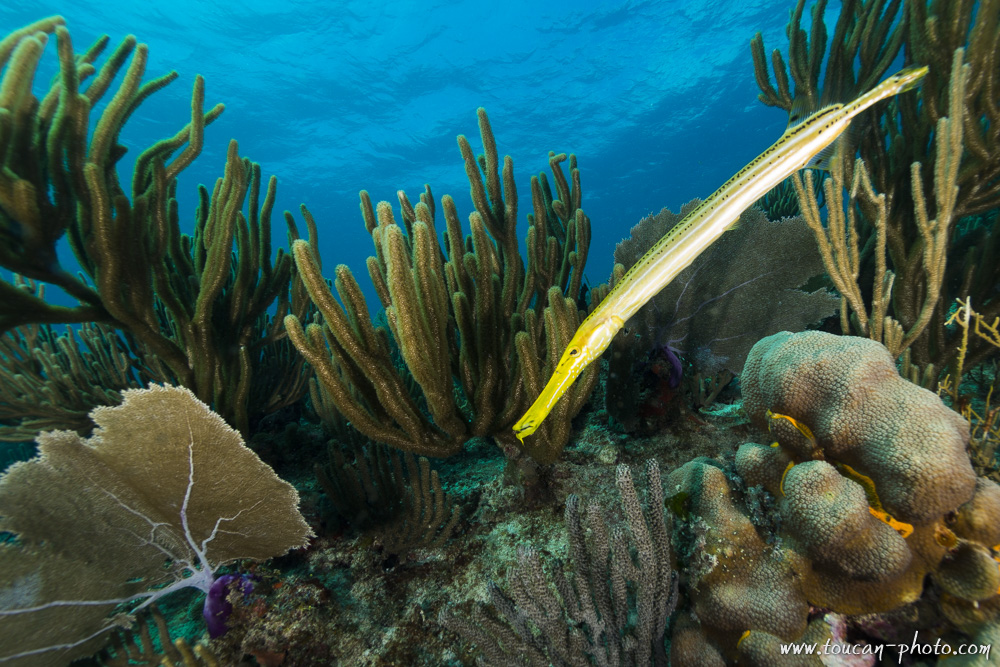
Trumpetfish (Aulostomus maculatus)
Seen from space, oceans cover more than 71% of our surface, a liquid expanse that gives Earth its nickname: the Blue Planet. As the cradle of life, this world is home to an incredibly rich biodiversity, from bustling coral reefs to unique creatures such as nudibranchs and marine mollusks.
With nearly 250,000 recorded marine species — and millions of others likely unknown — the ocean is the true lung of our planet. However, this sanctuary is now threatened by ocean acidification and pollution. To photograph this ‘world of silence’ is to reveal the splendor of a timeless universe, while bearing witness to the vital urgency of protecting the beating heart of our global ecosystem.
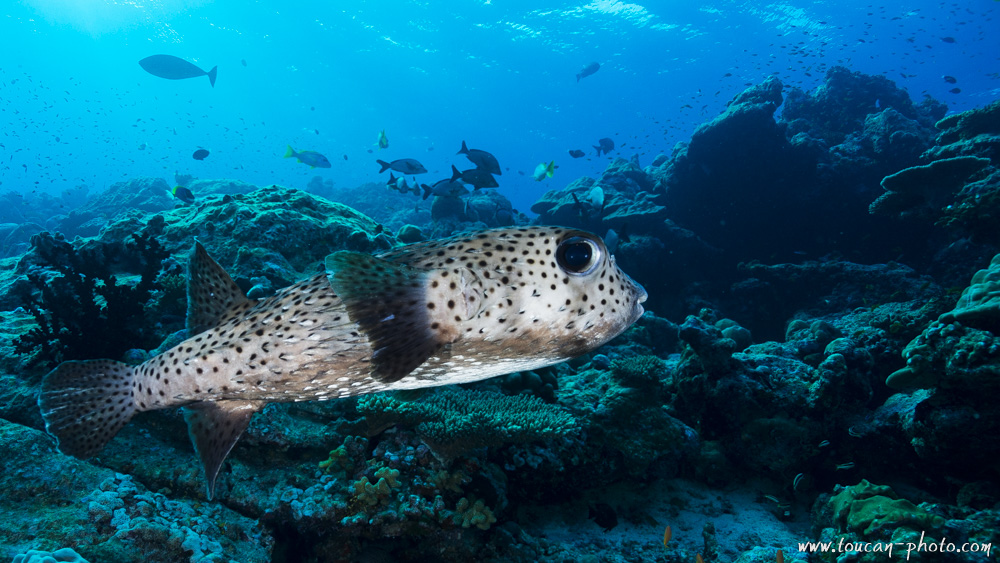 Spot-fin porcupinefish (Diodon hystrix), Maldives
The porcupinefish, in case of danger can inflate itself by swallowing water to deter the potential predator with its larger volume and it can raise its spines. In addition, it concentrates a mortal poison in certain parts of its body.
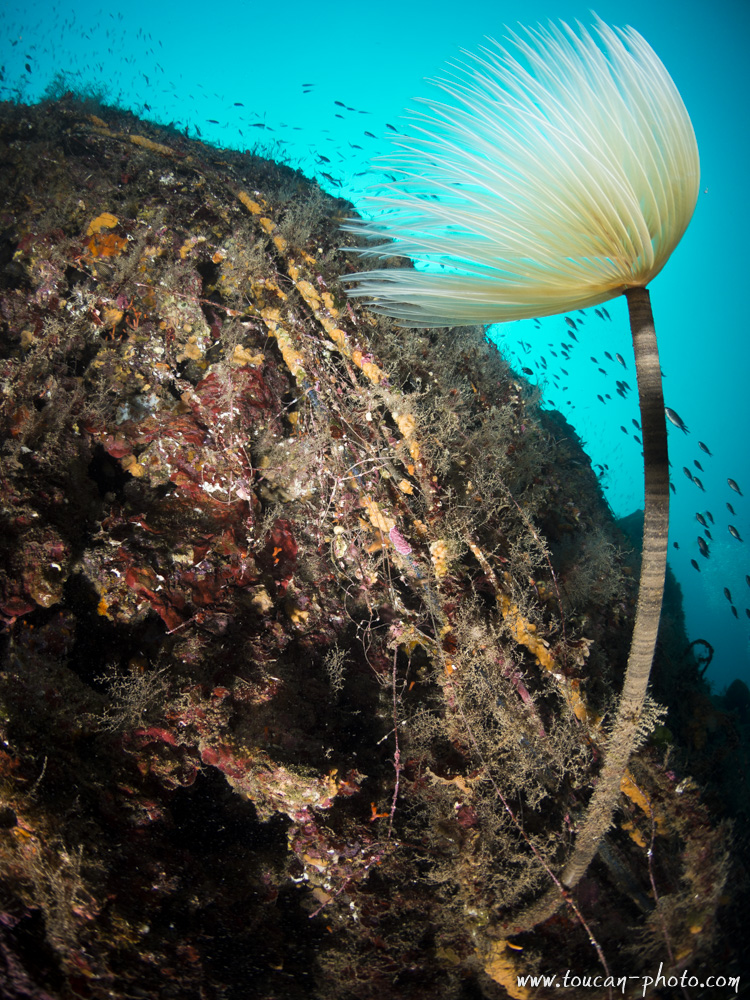 Spirographe (Spirographis spallanzani), Mediterranean sea
The Spirograph is a sea worm living in the Mediterranean Sea, in the Atlantic Ocean and in the North Sea.
This animal, living and fixed on a rock wall, can be seen up to 40 meters deep in the water. Being able to measure up to 35 centimeters long, this animal deploys from its mouth a feather duster of filaments enabling to catch its food and some air. The stem of this sea flower is in reality a tube made out of mucus and sand by the worm.
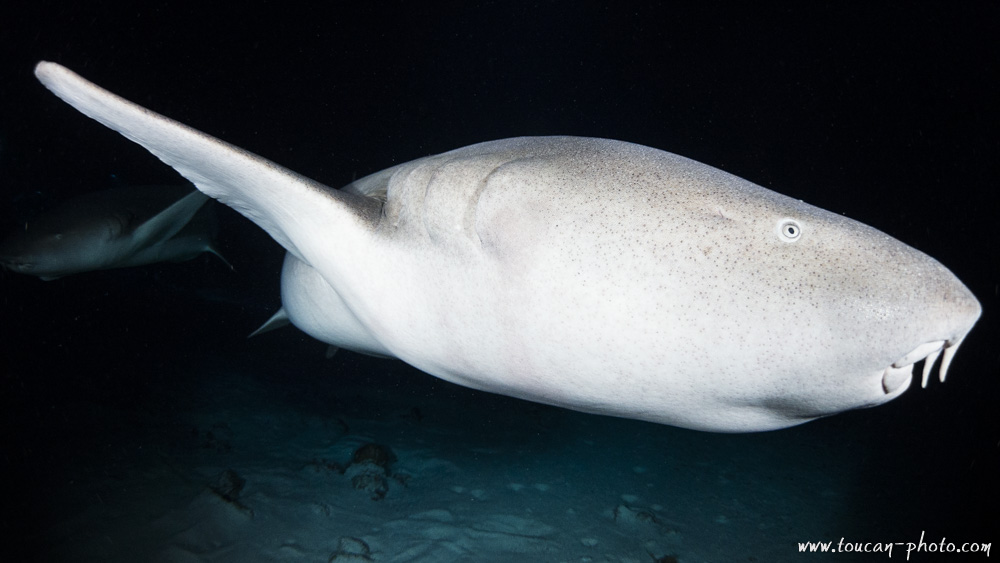 Tawny nurse shark (Nebrius ferrugineus), Maldives
Nocturnal in habits, the tawny nurse shark tends to spend the day resting in piles of two dozen or more individuals inside caves or under ledges. At night, it is an active-swimming predator that uses a powerful suction force to extract prey from inside holes and crevices. The diet of this species consists mainly of octopus, crustaceans such crabs, small fishes.
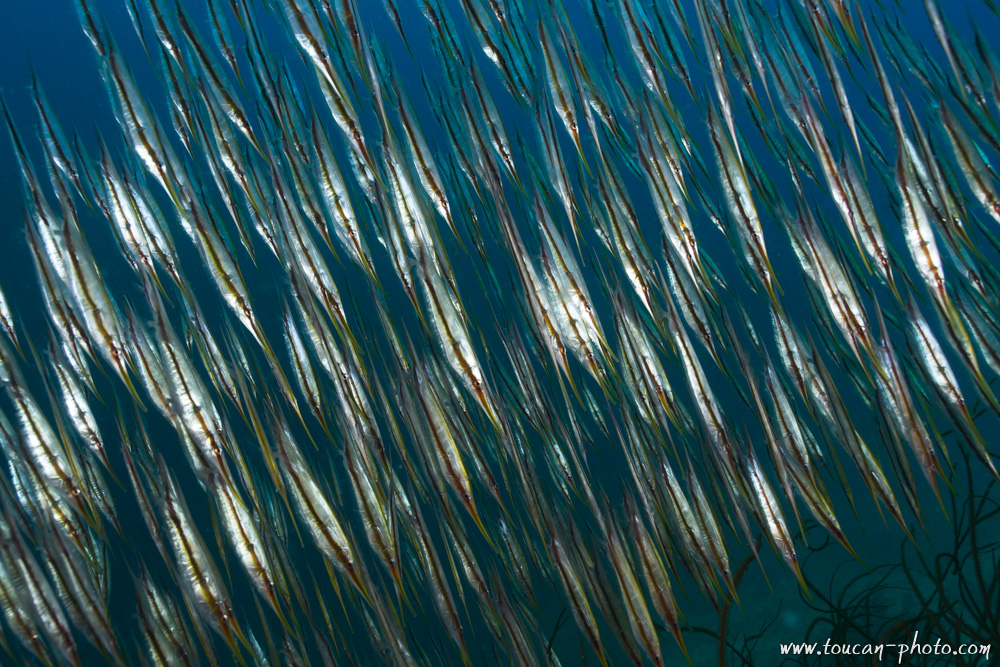 School of Rigid shrimpfish (Centriscus scutatus), Celebes sea
The Rigid shrimpfish, also called razorfish is about 15cm long. This fish moves in groups, and stands verticaly, facing the ground. The shrimpfish travels sandy bottoms, looking for small crustaceans it aspires with its tubular mouth
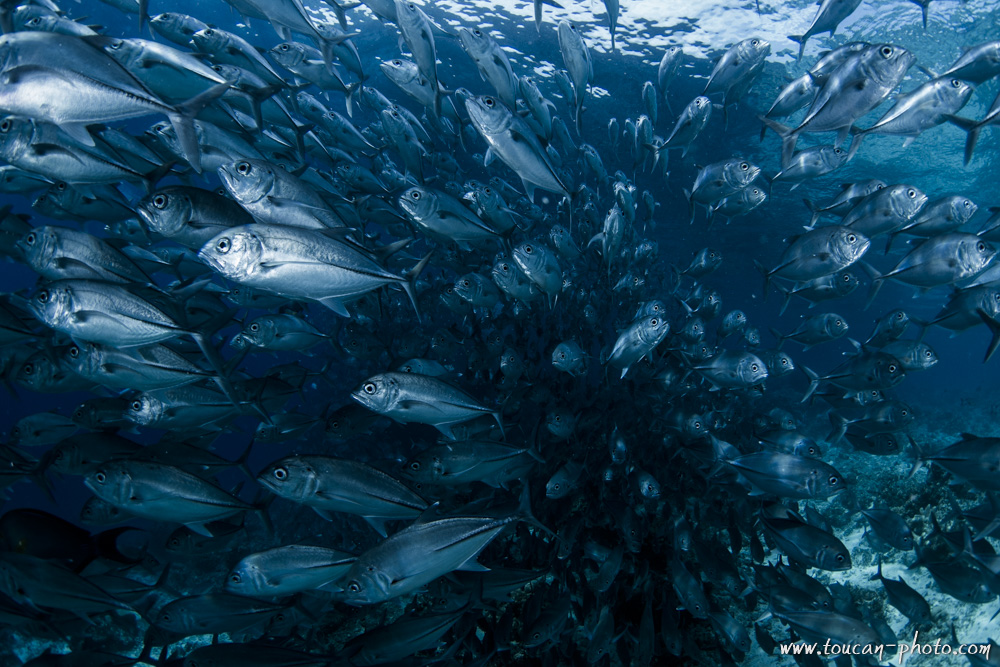 School of bigeye trevally (Caranx sexfasciatus), Celebes Sea
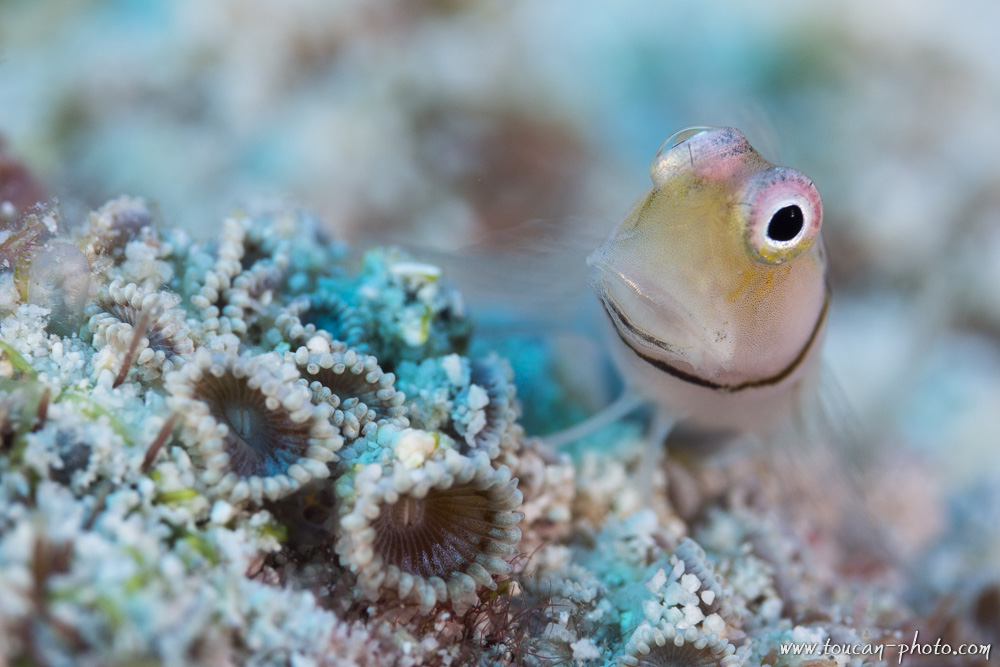 Maldives Blenny (Ecsenius minutus)
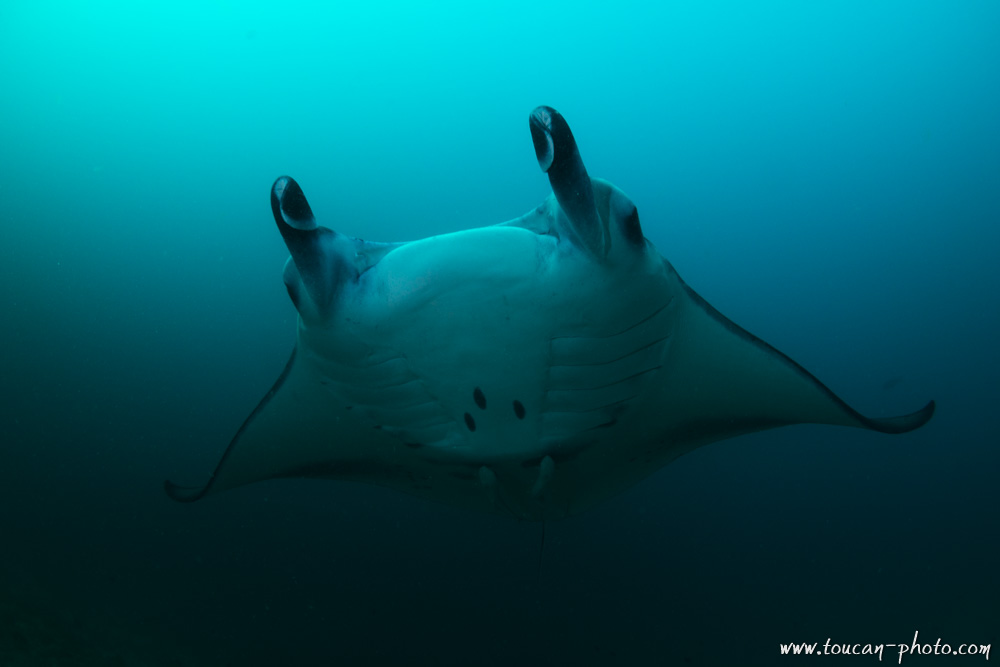 Manta Ray
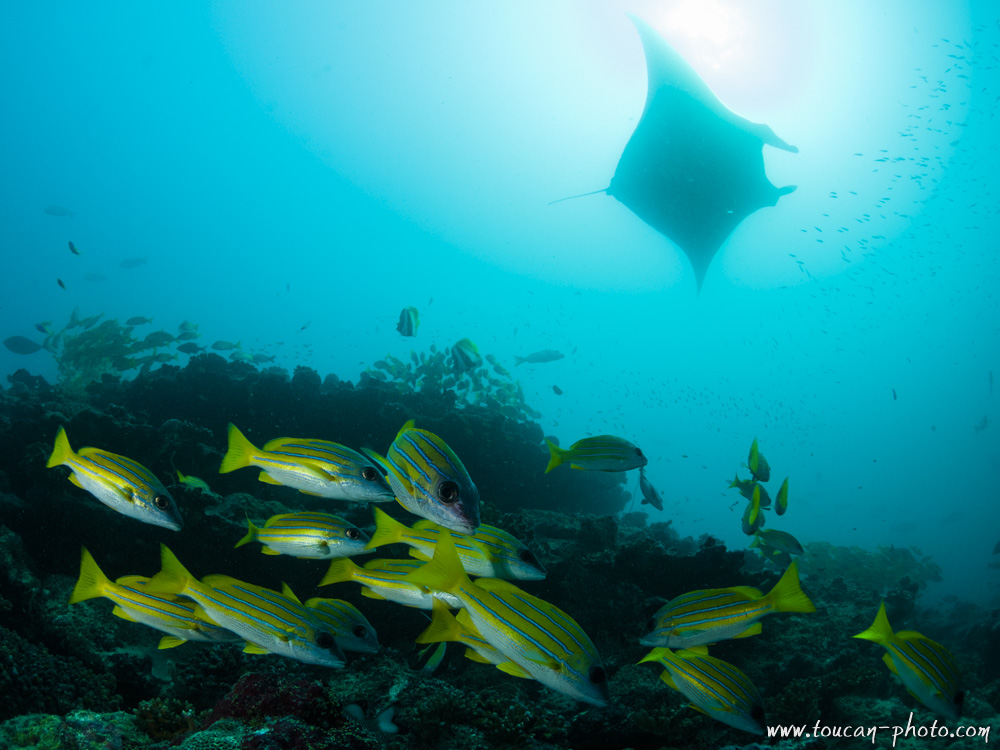 School of bluestripe snapper (Lutjanus kasmira) and Manta Ray, Maldives
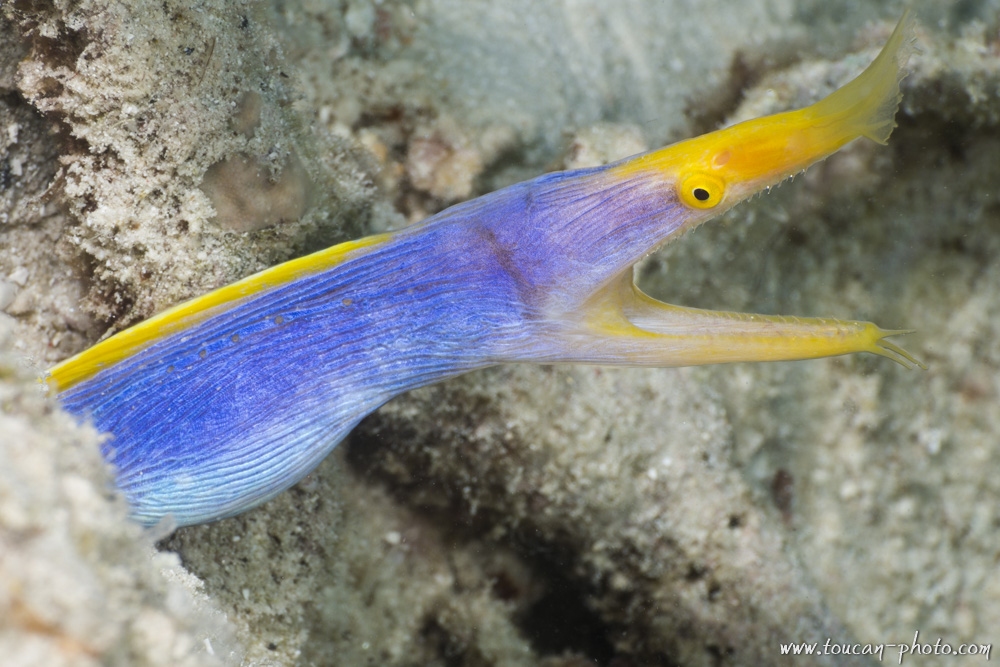 Ribbon eel (Rhinomuraena quaesita), Celebes Sea, Borneo
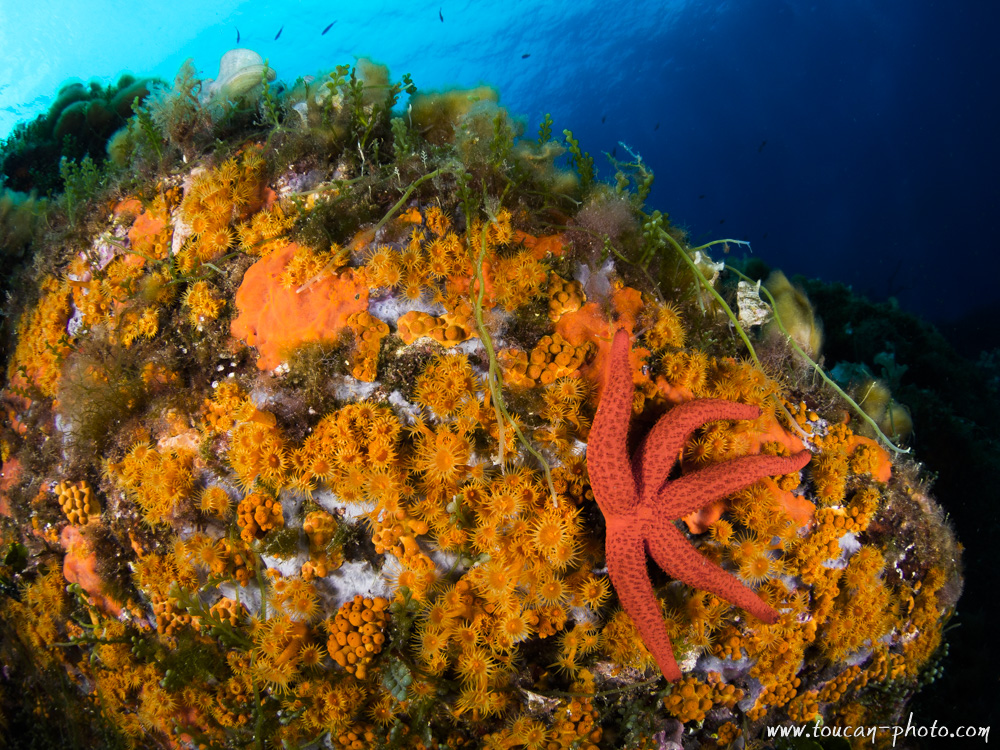 Mediterranean red sea star (Echinaster sepositus), France, Mediterranean Sea
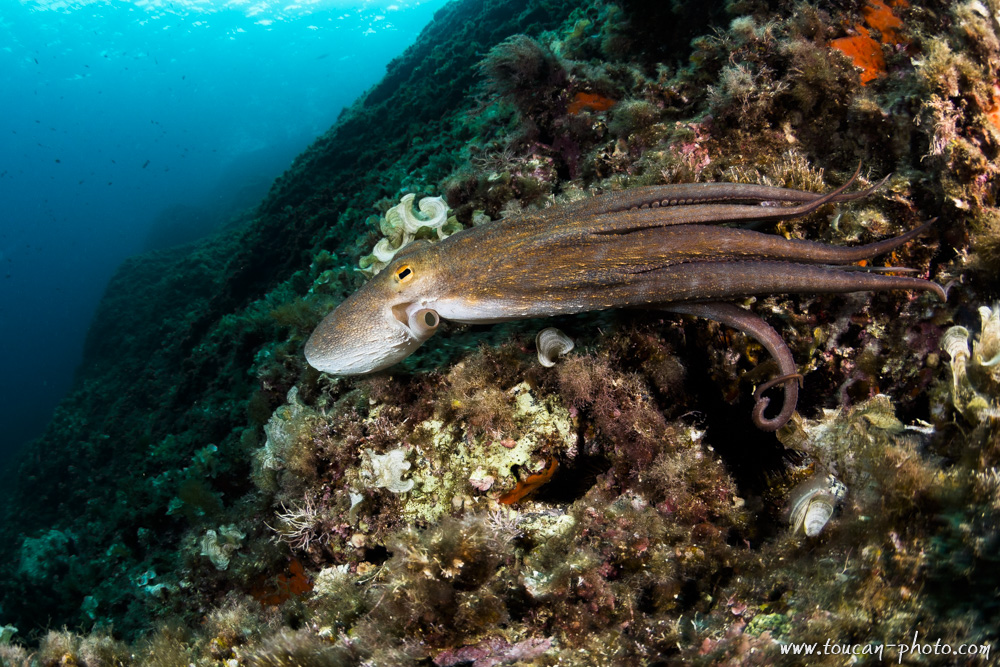 The common octopus (Octopus vulgaris) arms can length up to 1 meter long
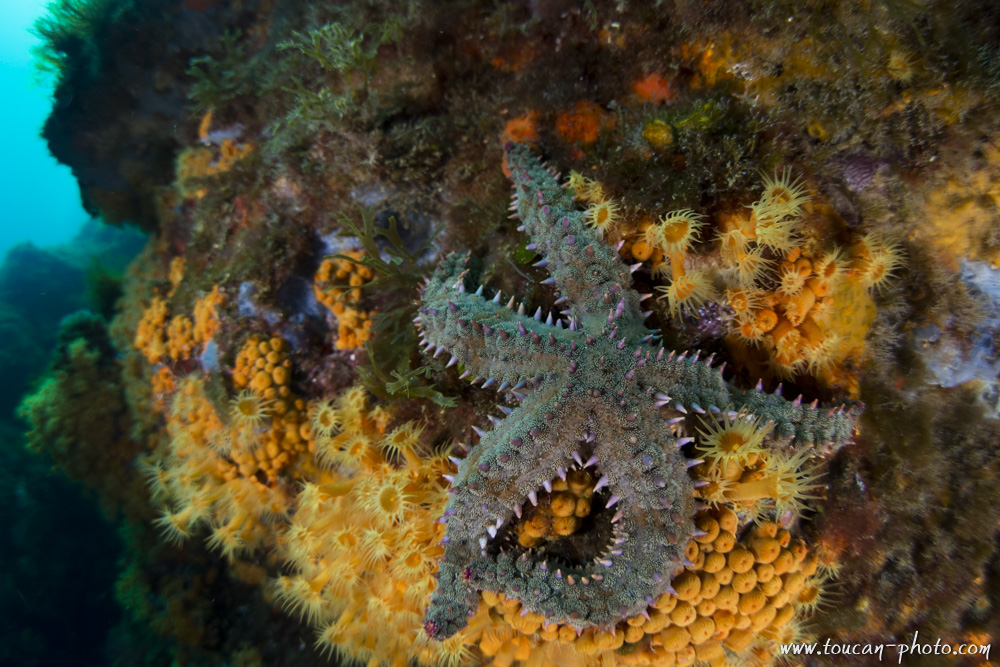 Spiny starfish (Marthasterias glacialis)
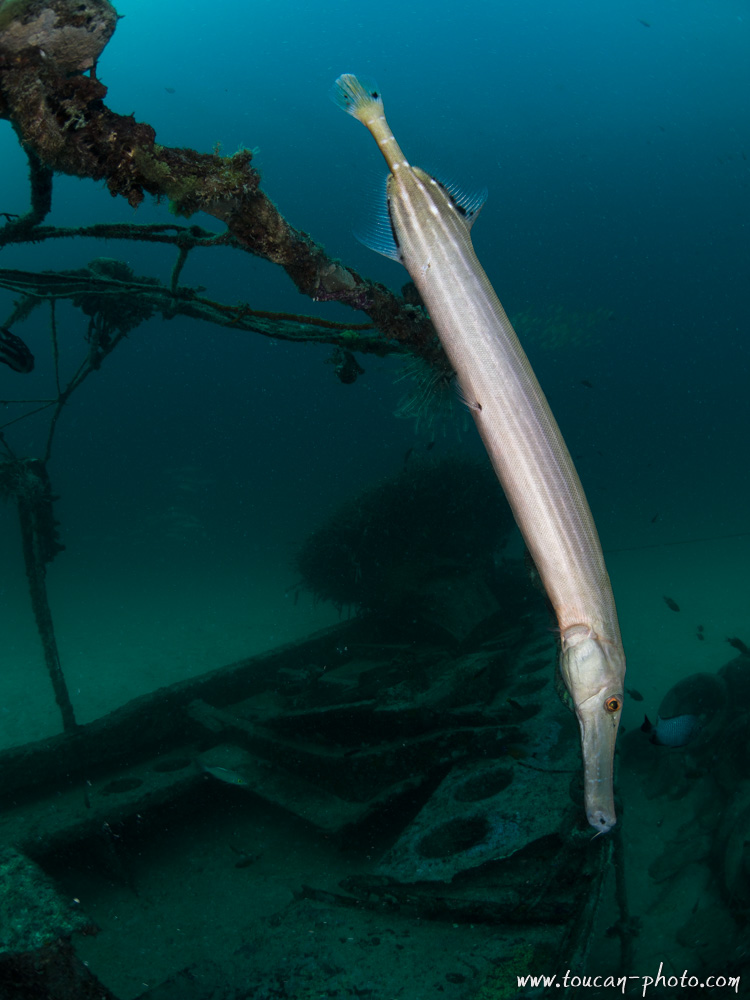 Chinese trumpetfish / Aulostomus chinensis
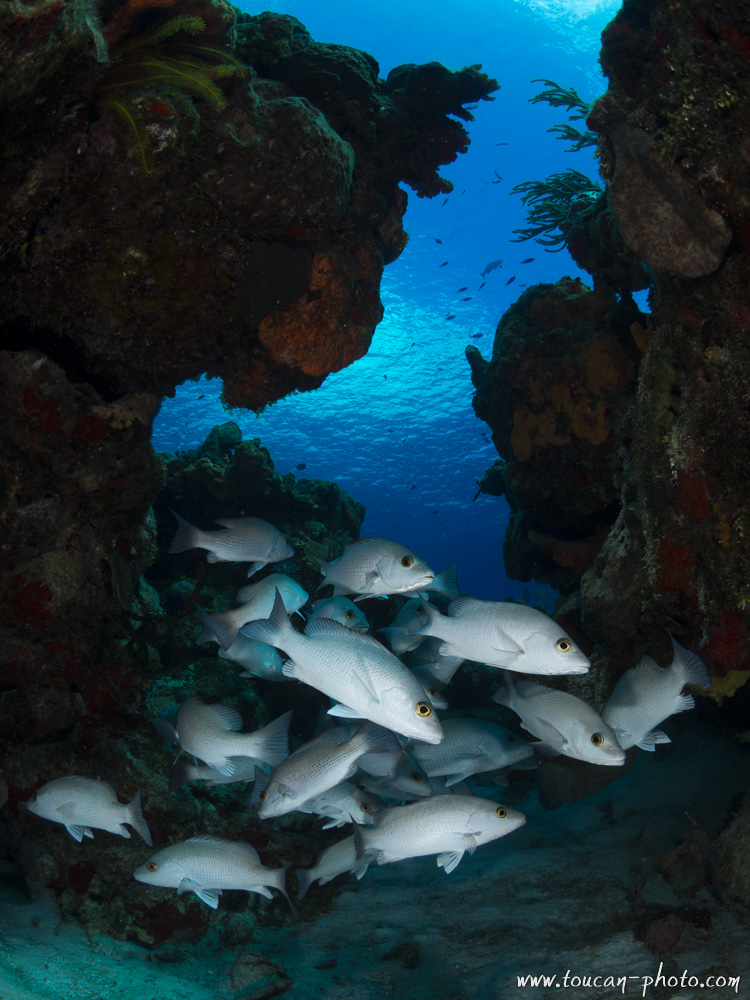 School of Grey Snapper (Lutjanus griseus), Caribbean Sea, Mexican Coast
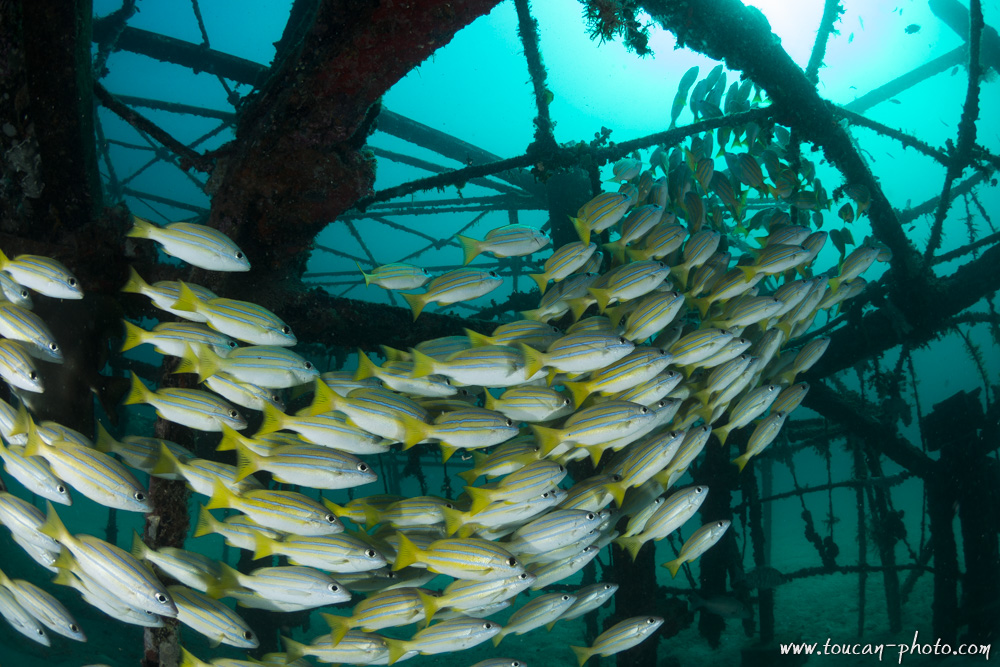 School of bluestripe snapper (Lutjanus kasmira)
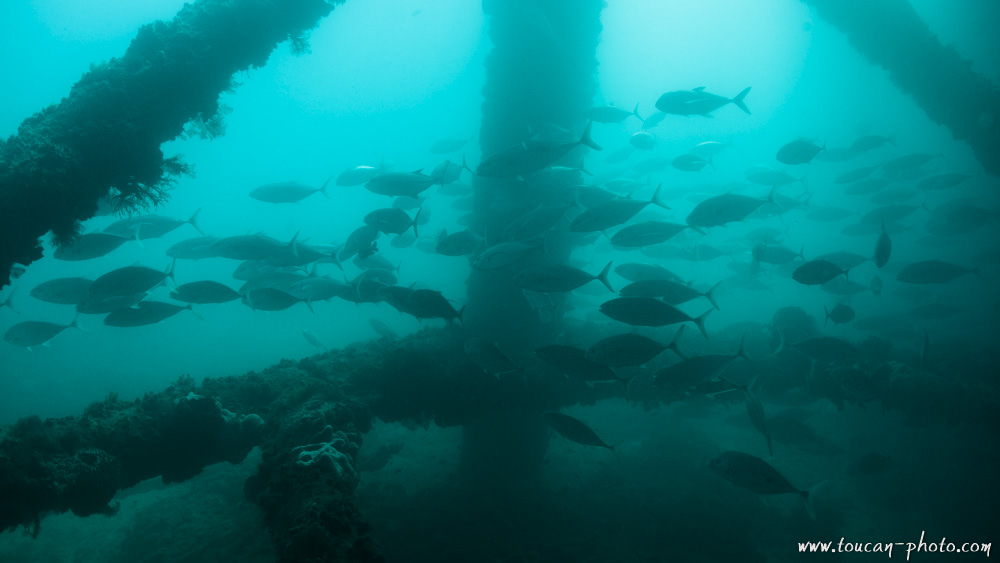 School of yellow-dotted trevally (Carangoides fulvoguttatus), North West Cap, Australia
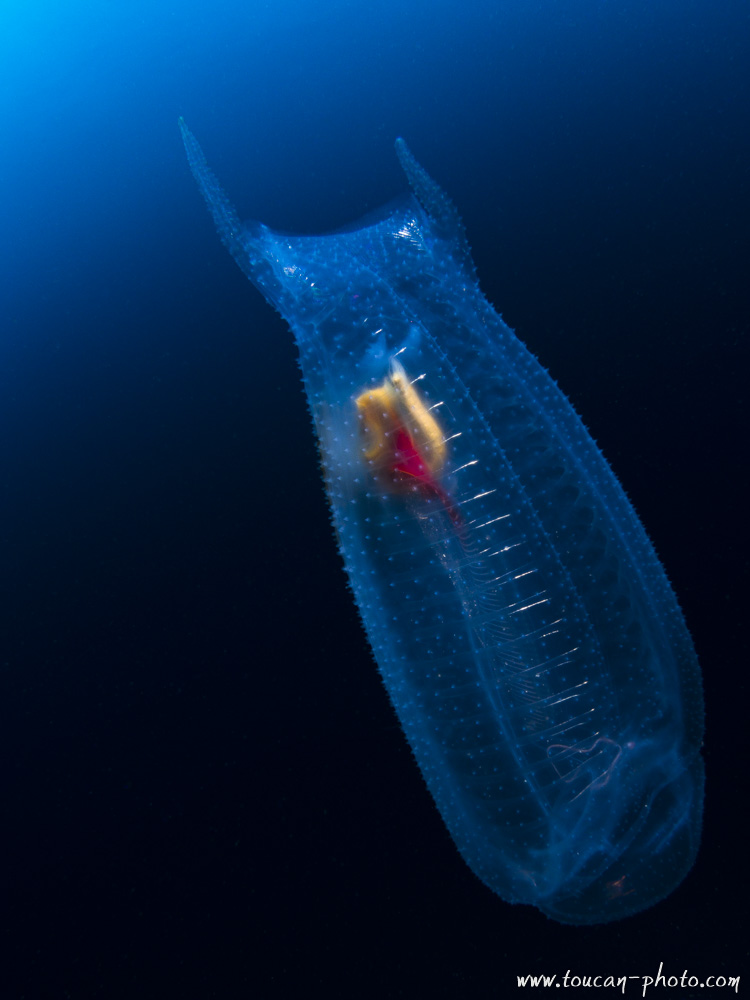 Salpa maggiore (salpa maxima), Celebes Sea, Borneo, Malaysia
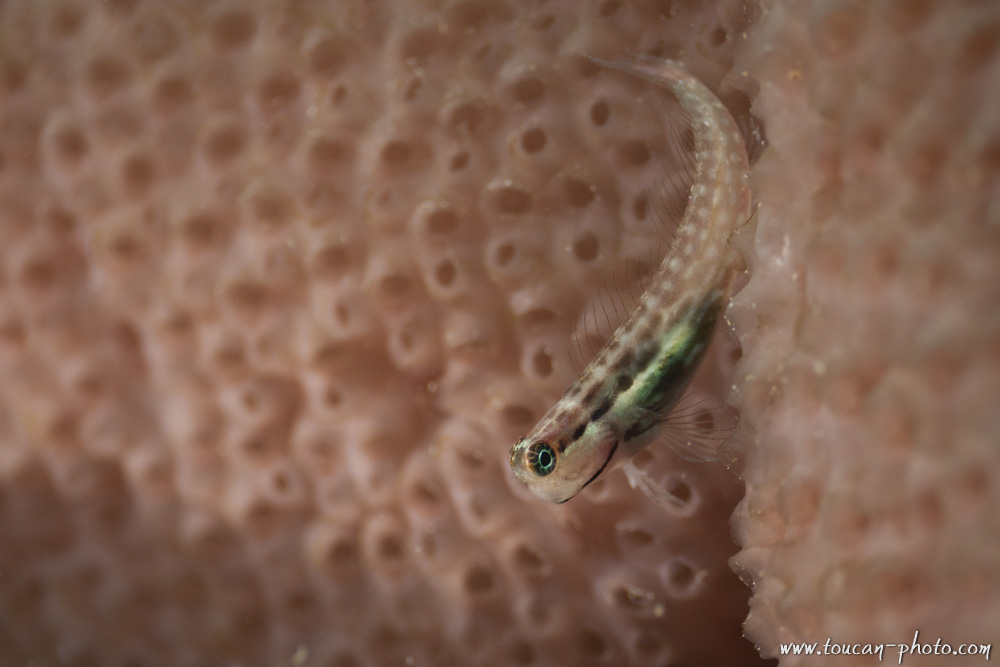 Blenny, Australia
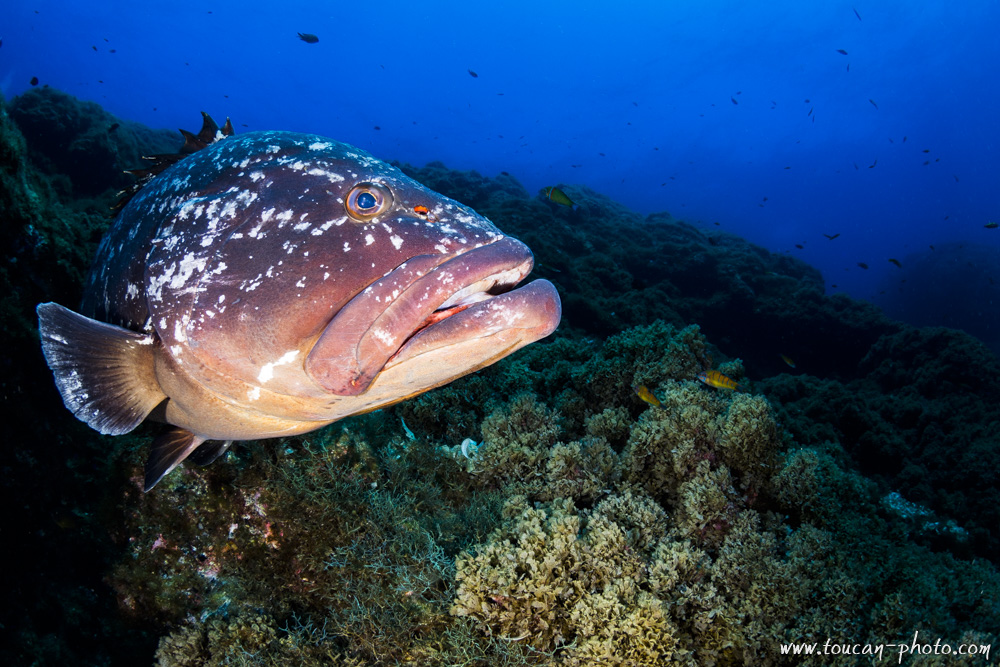 Grouper, Portugal, Azores
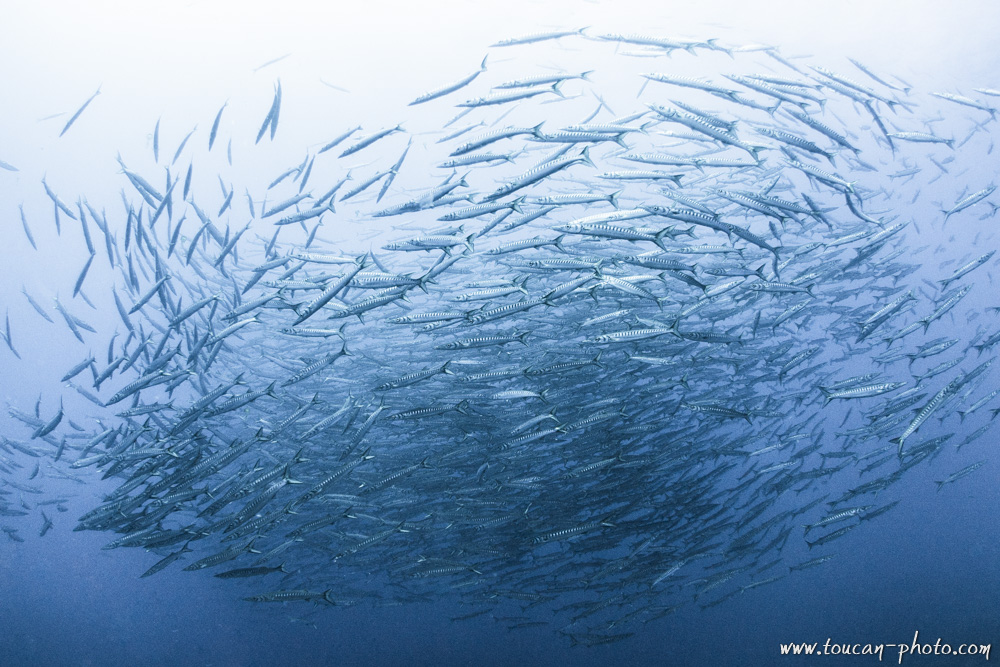 School of Barracudas (Sphyraena)
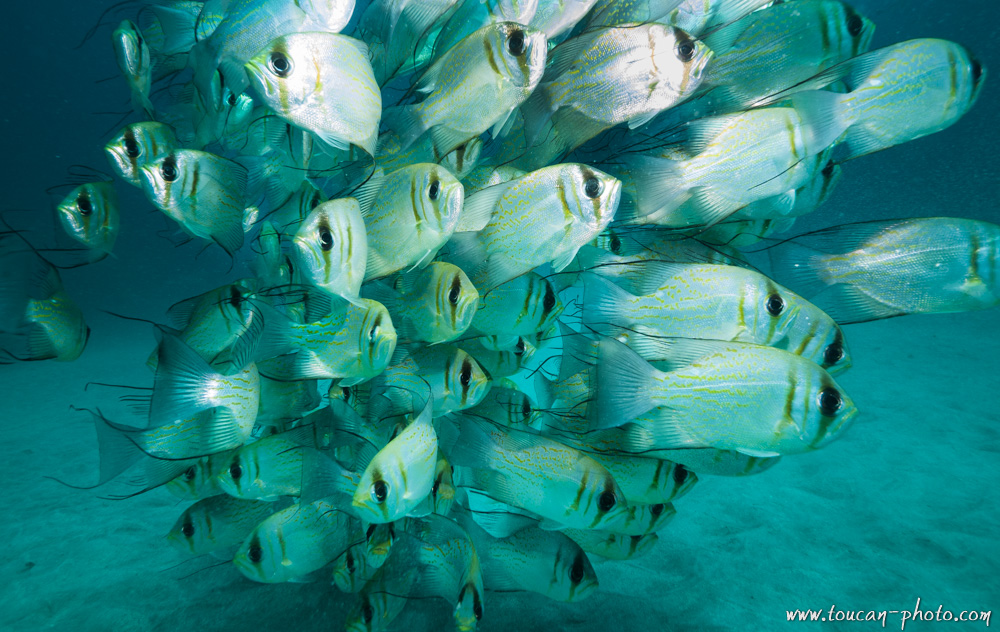 Threadfin pearl-perch (Glaucosoma magnificum)
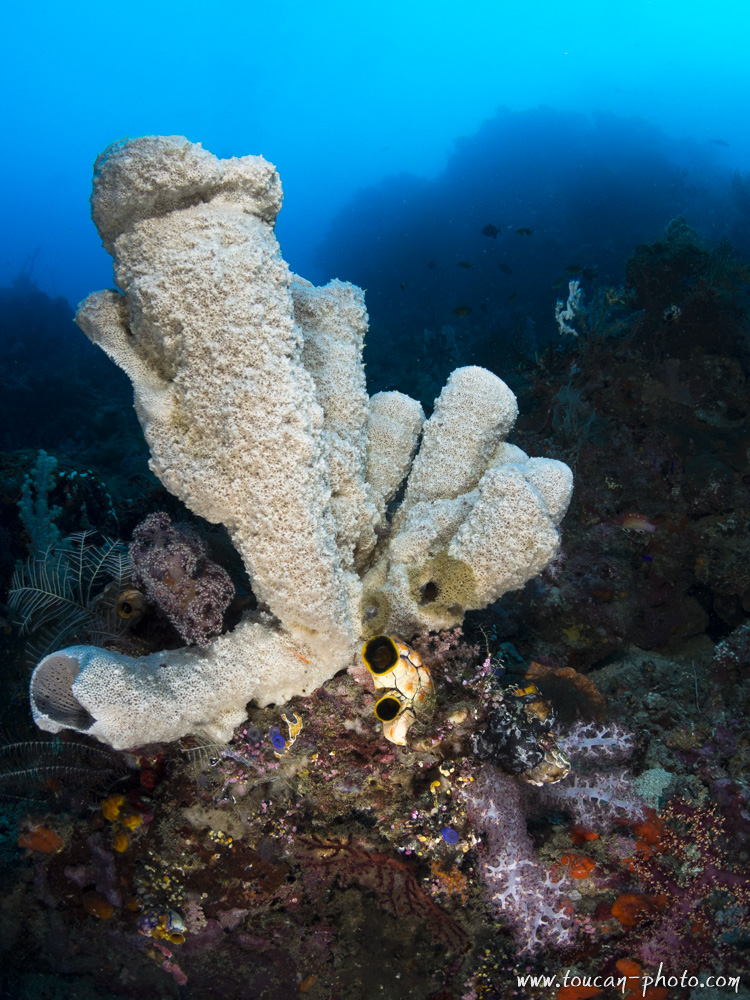 Coral
Coral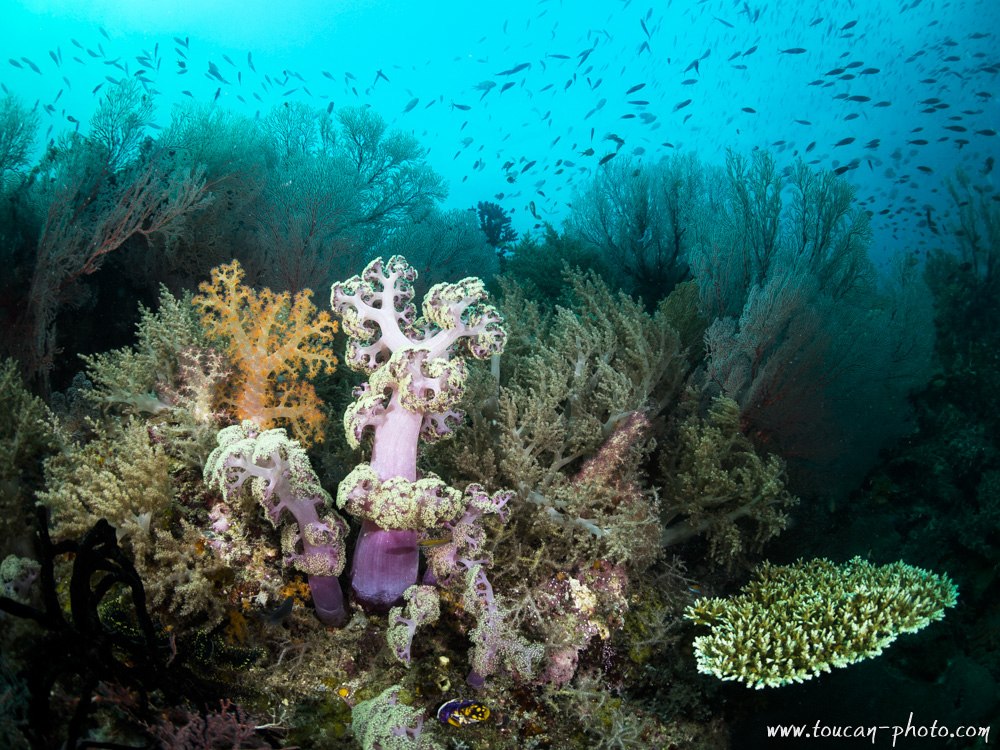 Coral
Coral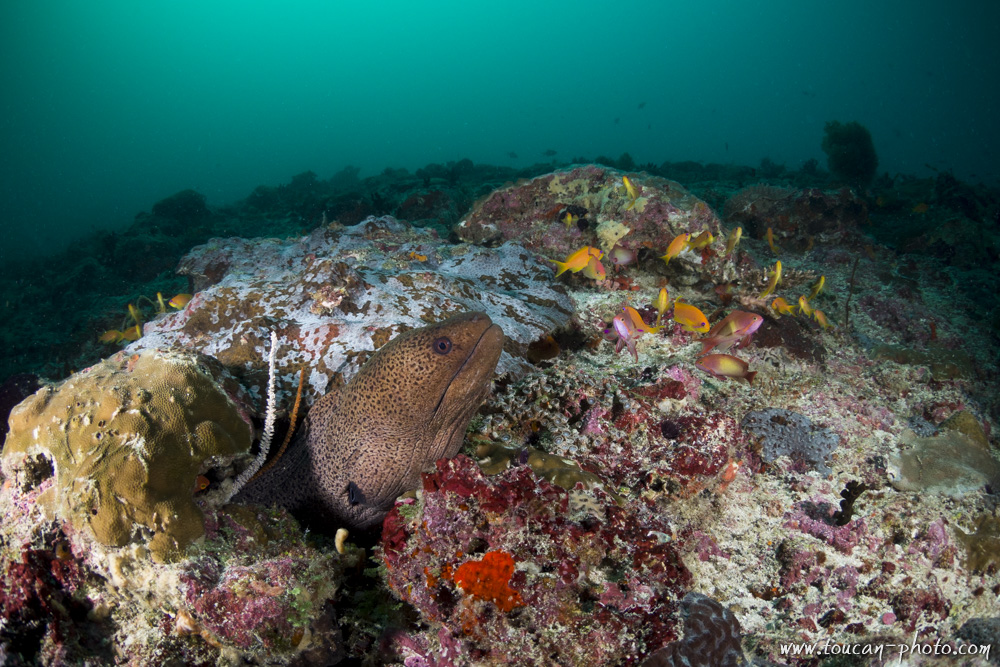 Muray
Muray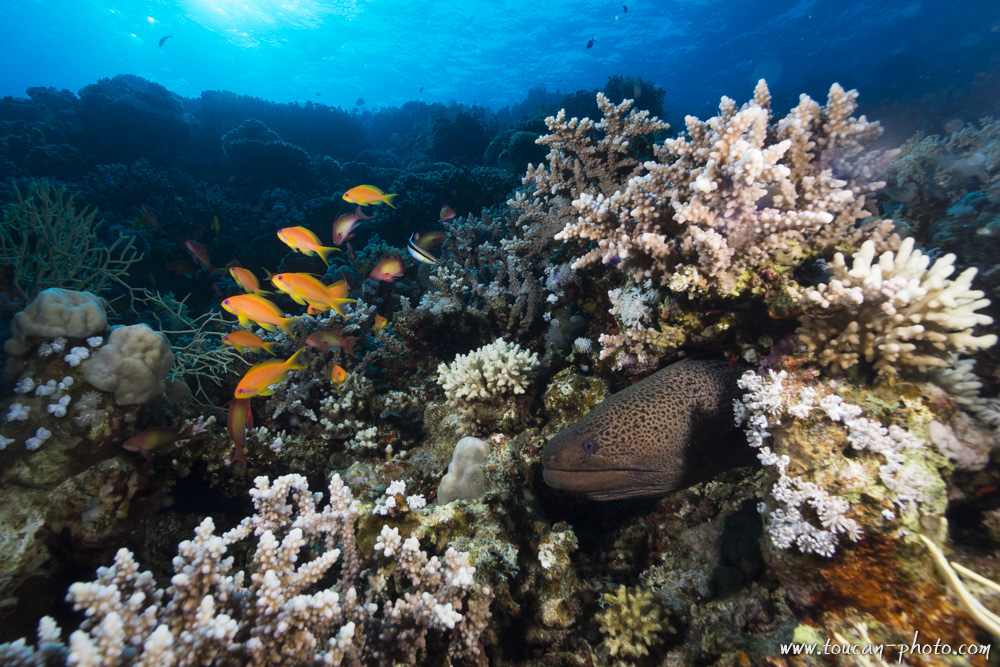 Muray
Muray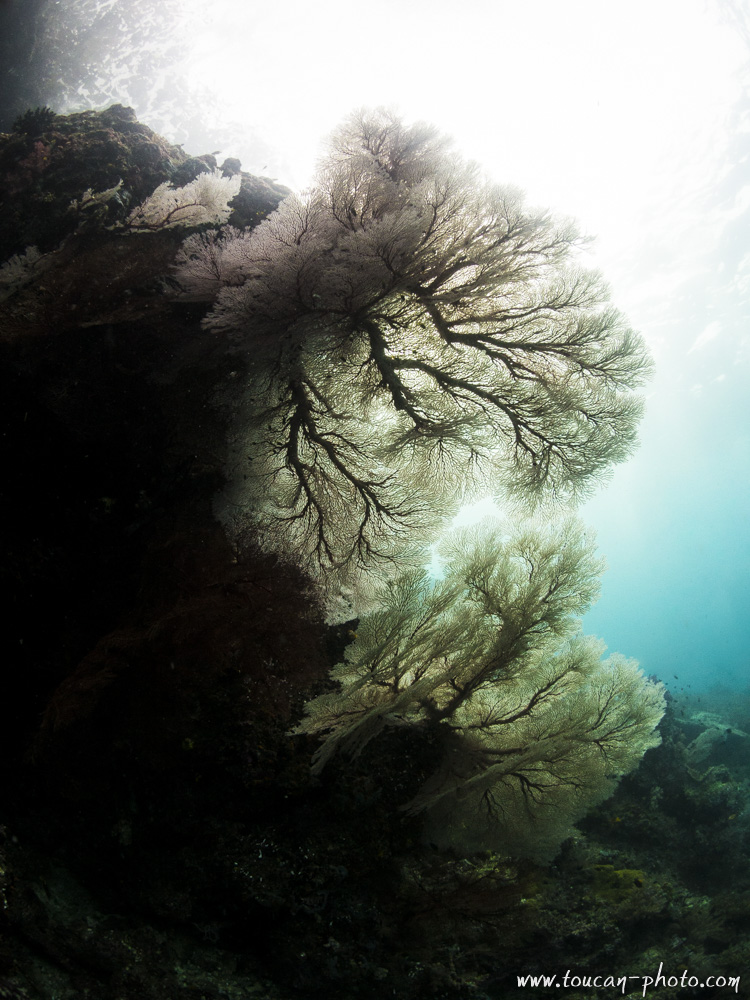 Coral
Coral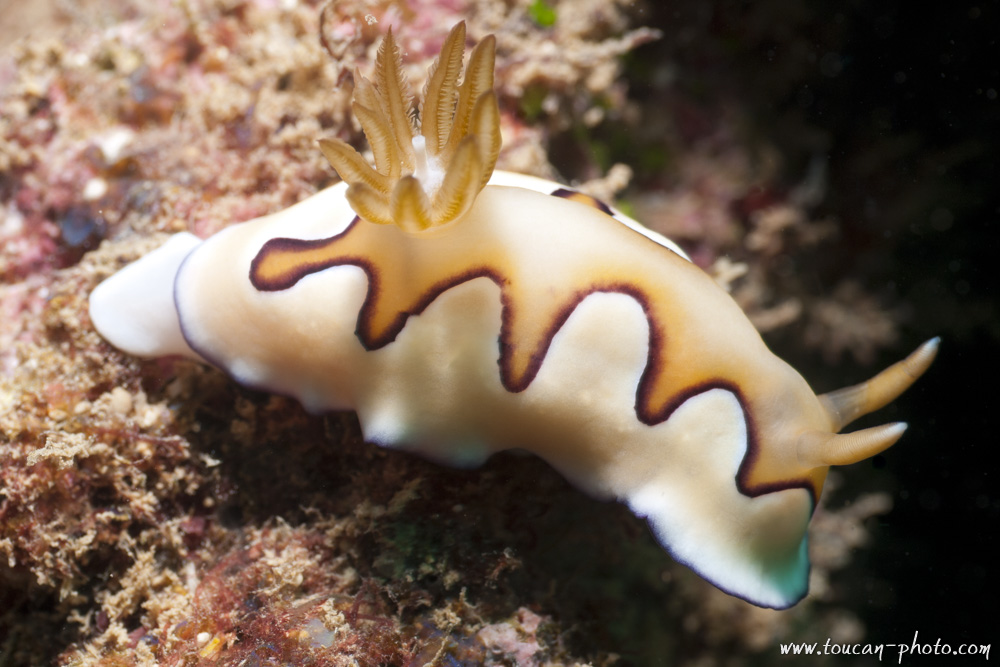 Nudibranch (Chromodoris coi)
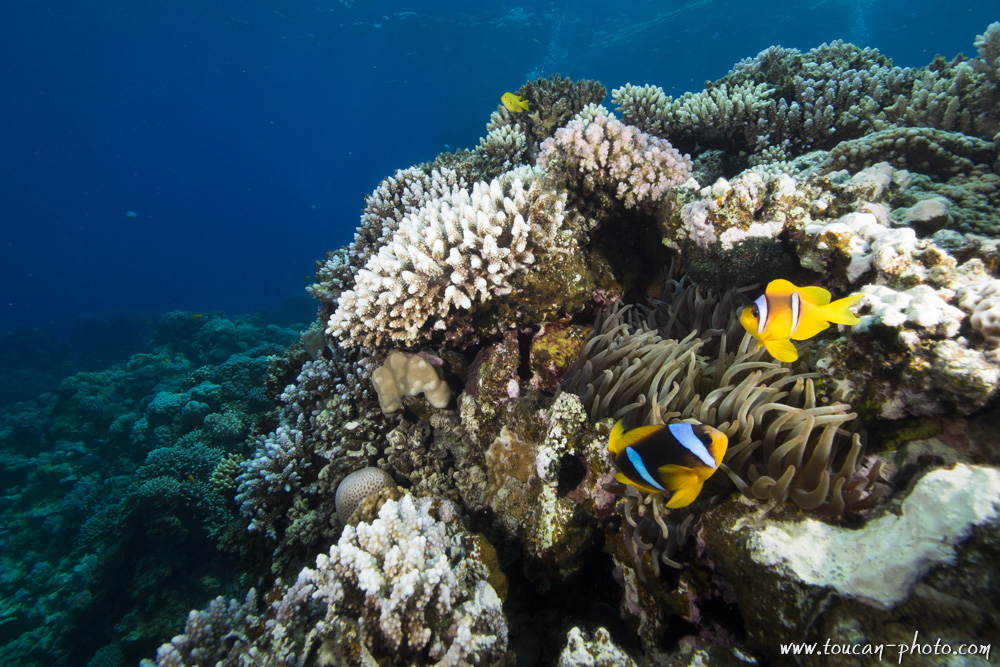 Red Sea, Egypt