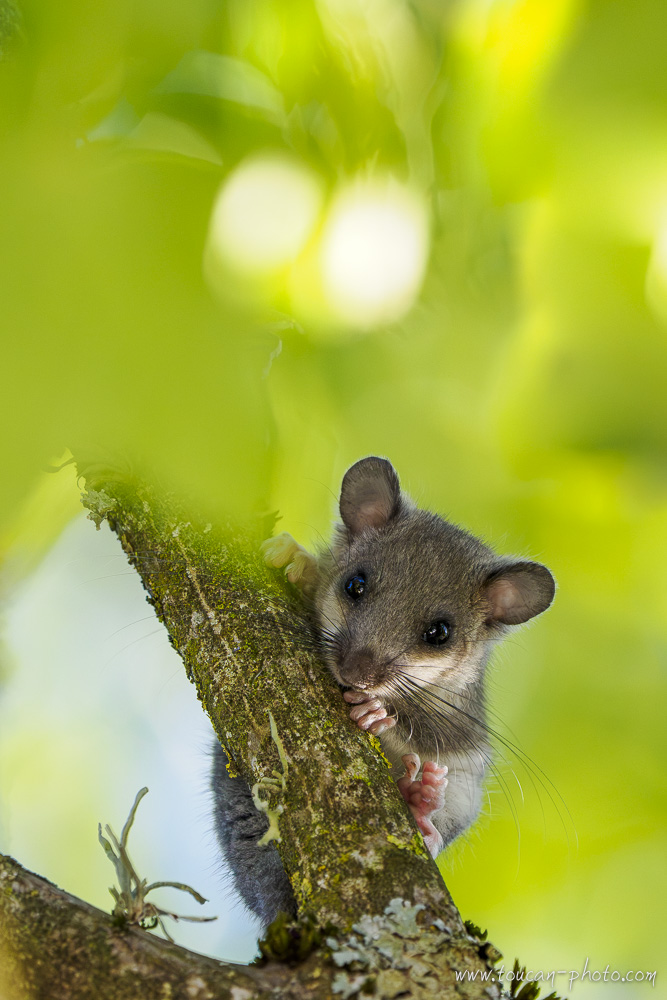
A European edible dormouse watches the photographer while clinging firmly to a branch.
With its large dark eyes, rounded ears and long whiskers, the European edible dormouse is an appealing little mammal. Clinging to a branch dotted with patches of moss, it seems to pause for a moment to observe the photographer. Discreet and mainly nocturnal, it often goes unnoticed, although it inhabits forests and wooded gardens.
An excellent climber, the dormouse moves nimbly through trees in search of fruits, seeds and buds. It may also feed on insects and other small prey. Its nimble paws and claws help it grip branches and travel through vegetation, often several metres above the ground.
Its way of life is closely linked to the seasons. During the warmer months, it builds up fat reserves before entering hibernation. This period is particularly long for the species and can last several months. It spends much of this time in a sheltered refuge, often a tree cavity or another suitable hiding place.
This attentive gaze, captured amid the greenery, offers a glimpse of one of the small inhabitants of our woodlands, a creature that can sometimes be heard more easily than seen.
