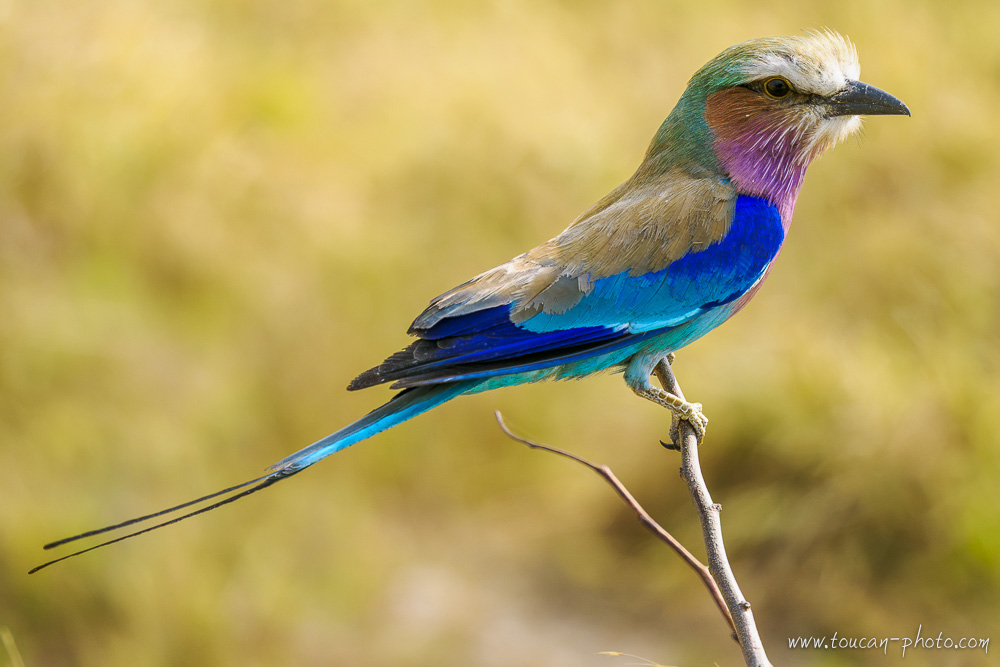
Lilac-breasted Roller, the Rainbow Bird – Botswana

A lilac-breasted roller (Coracias caudatus) perched on a branch in Botswana, displaying its turquoise, blue and violet plumage and long tail streamers.

The lilac-breasted roller, a true rainbow bird, perched in the Botswana savanna.

With its striking combination of turquoise, deep blue, lilac and violet, the lilac-breasted roller is one of the most colourful birds of the African savanna. Its two long tail streamers add elegance to its distinctive silhouette. Perched on a branch, it stands out against a bright, softly blurred background that brings out the full brilliance of its plumage.

Found across much of sub-Saharan Africa, this roller inhabits wooded savannas and open landscapes. It hunts from a perch, watching for insects and small vertebrates before swooping down on its prey. The species is also known for its spectacular aerial displays, featuring steep dives and acrobatic movements.
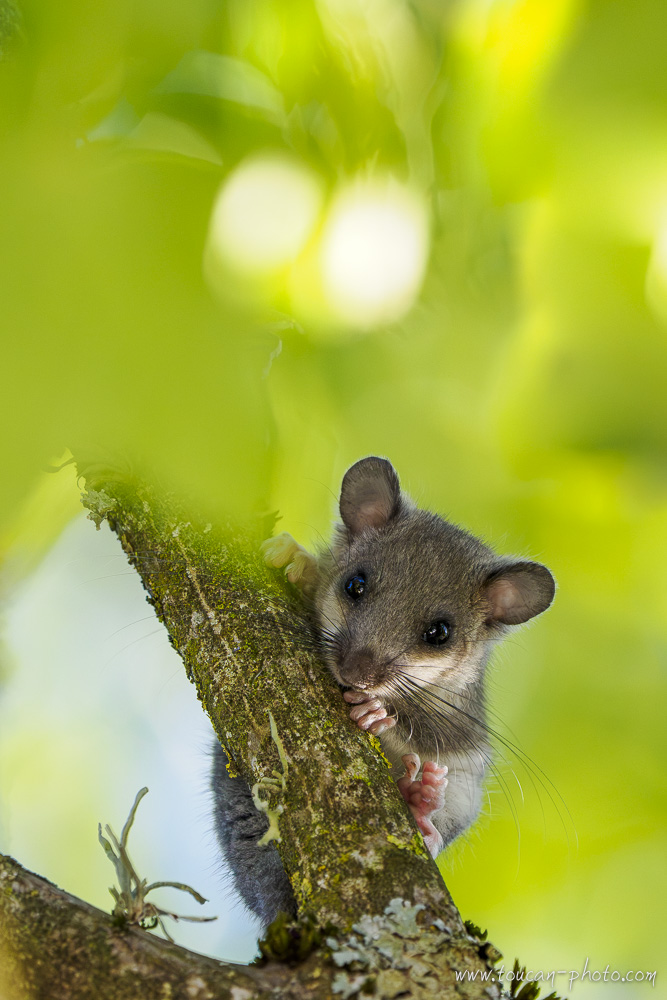
The dormouse, a little acrobat of the woodland

A European edible dormouse (Glis glis) clinging to a branch dotted with moss, watching the photographer among green foliage.

A European edible dormouse watches the photographer while clinging firmly to a branch.

With its large dark eyes, rounded ears and long whiskers, the European edible dormouse is an appealing little mammal. Clinging to a branch dotted with patches of moss, it seems to pause for a moment to observe the photographer. Discreet and mainly nocturnal, it often goes unnoticed, although it inhabits forests and wooded gardens.

An excellent climber, the dormouse moves nimbly through trees in search of fruits, seeds and buds. It may also feed on insects and other small prey. Its nimble paws and claws help it grip branches and travel through vegetation, often several metres above the ground.

Its way of life is closely linked to the seasons. During the warmer months, it builds up fat reserves before entering hibernation. This period is particularly long for the species and can last several months. It spends much of this time in a sheltered refuge, often a tree cavity or another suitable hiding place.

This attentive gaze, captured amid the greenery, offers a glimpse of one of the small inhabitants of our woodlands, a creature that can sometimes be heard more easily than seen.

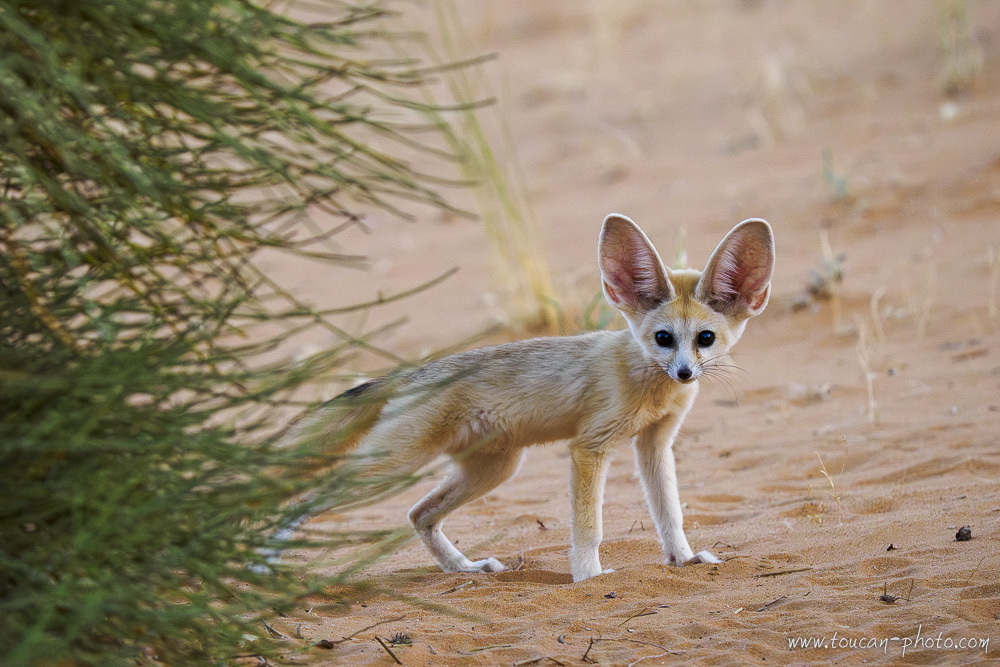
Young fennec fox in the Moroccan desert

Young fennec fox in the Moroccan desert

A young fennec fox pauses to observe its surroundings in the heart of the desert.

The enormous ears of the fennec fox are impossible to overlook. Far more than a distinctive feature, they are an extraordinary adaptation to desert life, allowing the animal both to dissipate heat and to detect prey hidden beneath the sand.

Measuring up to 15 centimetres in height on an animal weighing little more than two kilograms, the fennec’s ears are proportionally the largest of any wild canid. Their thin skin reveals an extensive network of blood vessels. As blood circulates through these capillaries, heat is released into the surrounding air, providing an efficient natural cooling system for survival in the extreme conditions of the Sahara.

The ears also function as highly sensitive acoustic antennas. Their mobility enables the fennec to pinpoint the movements of rodents, reptiles and even insects beneath the sand. This remarkable hearing compensates for the limited visibility often encountered among dunes and desert vegetation.

?>